 ARCHIVE
Flower Council Holland Proves Flowers Change People
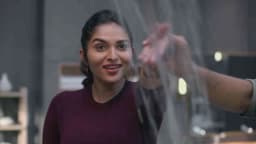
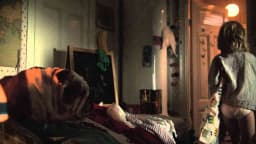
"The Flower Effect" is a 2014 film campaign created by Amsterdam agency Kingsday for Flower Council Holland that uses a hybrid of staged fiction and candid street footage shot in The Netherlands to demonstrate how a single bouquet of flowers can alter the emotional behaviour of strangers in public spaces, according to Nationalfloristday.
Flower Council Holland — known in Dutch as Bloemenbureau Holland — is a category-promotional organisation representing the Dutch flower and plant sector rather than a single commercial brand. Its mandate is to grow collective demand for flowers and plants across European consumer markets, and in 2014 it turned that ambition into a film that sought to prove, visually and emotionally, that flowers do not merely decorate space but actively change the people around them, according to Cbi Eu. The campaign launched in September 2014 and was classified within the House and Garden industry, positioning it squarely within the household product category despite its distinctly cinematic execution.
The creative premise centres on a woman who discovers a bouquet and begins imagining that it was left by an idealised suitor, according to Floraldaily. The film weaves her fictional interior narrative around genuine, unscripted reactions from members of the public in Amsterdam, who encounter the flowers and respond with visible warmth and spontaneous kindness. The voiceover is delivered in English, extending the campaign's emotional reach beyond the Dutch-language market. The film was directed by Basha de Bruijn through production company WeFilm, two names that would become central to the campaign's creative identity, according to Little Black Book. Distribution was anchored to the online platform FunnyHowFlowersDoThat.co.uk, which, according to Clapboard, recorded more than 400,000 views. In The Netherlands, where the flower industry sits at the heart of national agricultural identity, the campaign arrived as both a cultural statement and a demonstration of category marketing at its most emotionally intelligent. The Clapboard Score for this campaign is 69 out of 100.
ARCHIVEFlower Council Holland operates as a collective promotional body, meaning its strategic challenge is fundamentally different from that of a conventional advertiser. Rather than competing with a rival brand for shelf space, it must compete with every other discretionary purchase a consumer might make — a challenge that demands category-level persuasion rather than product-level differentiation.
In The Netherlands, that challenge is set against a market of considerable scale. According to the Centre for the Promotion of Imports from developing countries, known as CBI and operating under the Dutch Ministry of Foreign Affairs, the European cut-flower market was valued at approximately €20 billion in 2014. Royal FloraHolland, the leading European grower-cooperative marketplace, reported a turnover of €4.4 billion in 2014, with cut flowers accounting for approximately €2.5 billion of that figure, according to Royal FloraHolland's own reporting. These numbers underline that The Netherlands is not merely a consumer of flowers but the operational engine of the European flower trade, making Flower Council Holland's work simultaneously local in its cultural specificity and continental in its economic significance.
The strategic insight driving "The Flower Effect" is deceptively simple: flowers generate observable, positive changes in the people around them. Rather than asserting this claim through conventional advertising copy, Kingsday designed a campaign that would demonstrate it through real human behaviour captured on camera in Amsterdam, according to Aiph. This approach positioned the campaign against more transactional flower retail communications from competitors operating in the gifting and occasions space — where purchase intent is driven by calendar events such as Valentine's Day or Mother's Day — by arguing instead for flowers as a year-round emotional tool. The decision to use English-language voiceover extended the strategic ambition beyond The Netherlands, anticipating distribution across the FunnyHowFlowersDoThat.co.uk platform to English-speaking European audiences.
Basha de Bruijn directed "The Flower Effect" for production company WeFilm, bringing a documentary sensibility to material that required both careful staging and the preservation of authentic, unscripted human moments.
The creative process, as documented by Clapboard and elaborated through production notes reported by LBBonline, began with a candid experiment. Creative Director Bram de Rooij at Kingsday led the concept development, and the team initially conducted a test shoot in Amsterdam in which a bouquet of flowers was introduced into real public situations to observe and record genuine bystander reactions. According to LBBonline, those candid responses generated significant emotional material but proved insufficient on their own to sustain a coherent narrative film. The creative team responded by evolving the concept: they retained the authentic street footage and layered over it a fictional story — a woman encountering a bouquet and constructing an elaborate romantic fantasy about who might have left it for her. This structural decision, documented by Clapboard, allowed the film to operate on two registers simultaneously. The staged narrative gave viewers a character to follow and an emotional arc to inhabit, while the candid footage provided evidential weight, grounding the campaign's central claim in visibly real human behaviour rather than manufactured sentiment.
Producer Wibout Warnaar oversaw production logistics for the Amsterdam shoot. Bram de Rooij described director Basha de Bruijn to LBBonline as "the upcoming princess of style", a characterisation that reflects the deliberate aesthetic quality brought to the film. The choice of English voiceover across a Dutch-shot film gave the finished work a cosmopolitan texture that matched the multinational ambitions of the FunnyHowFlowersDoThat.co.uk platform. The single film asset that constitutes the campaign's media footprint reflects a confident creative economy — a single, well-crafted piece designed to travel by its own emotional merit rather than by media weight. Production credits for additional crew members beyond those named above are not publicly documented.
No independently verified third-party performance audit for "The Flower Effect" is publicly available. The primary reach figure on record comes from Clapboard, which reports that the campaign's online platform, FunnyHowFlowersDoThat.co.uk, generated more than 400,000 views following the September 2014 launch in The Netherlands. No agency-reported awards, earned media valuations, or sales uplift data are publicly documented for this campaign.
Analysed on structural grounds, the campaign demonstrates several characteristics associated with high organic distribution potential. The hybrid construction — candid public reactions embedded within a fictional narrative — created the conditions for repeat viewing, because the film operates differently on first watch, when the candid-versus-staged ambiguity is unresolved, than on subsequent viewings. This rewatch quality is a proven driver of organic sharing in film-format content. The English-language voiceover removed the language barrier that would otherwise have constrained distribution to Dutch-speaking audiences, allowing the film to circulate across the broader European market from a single asset. The choice of a single film medium rather than a multi-channel campaign reflects confidence in the creative idea's self-sufficiency and reduces the dilution of emotional impact that often accompanies fragmented executions. For a category-promotional organisation like Flower Council Holland, whose objective is to shift attitudes across an entire product category rather than drive brand preference, the film's structural emphasis on observable human emotion over product demonstration represents a strategically coherent and appropriate creative decision. The Clapboard Score of 69 out of 100 reflects solid craft and a clear strategic rationale, with room for stronger competitive differentiation at the category level.
"The Flower Effect" is a 2014 film campaign created by Kingsday for Flower Council Holland in The Netherlands. It blends candid public reactions to flowers filmed in Amsterdam with a fictional narrative, arguing that flowers generate spontaneous warmth and human connection in everyday situations, delivered in English via FunnyHowFlowersDoThat.co.uk.
Basha de Bruijn directed "The Flower Effect" for production company WeFilm. Creative Director Bram de Rooij at Kingsday led the concept development, with Wibout Warnaar serving as producer. The film was shot on location in Amsterdam, The Netherlands, and launched in September 2014, according to Clapboard.
Kingsday initially filmed candid public responses to flowers in Amsterdam. According to LBBonline, the purely observational footage alone did not work sufficiently as a film, so the team evolved the concept to layer a fictional narrative — a woman imagining a bouquet came from an ideal suitor — over the real street reactions.
The Flower Effect reached more than 400,000 views, according to Clapboard. Distribution was anchored to the online platform FunnyHowFlowersDoThat.co.uk. The English-language voiceover extended the campaign's reach beyond Dutch-speaking audiences across The Netherlands to broader European markets. No independently verified third-party audit of this figure is publicly available.
Flower Council Holland aimed to demonstrate that flowers create observable emotional and social change in people, building year-round category demand rather than occasion-driven purchases. As a collective promotional body for the Dutch flower sector, its goal was attitude shift across the entire House and Garden category, not preference for a single brand.
"The Flower Effect" by Flower Council Holland and Kingsday received a Clapboard Score of 69 out of 100. The score reflects solid craft and a clear strategic rationale in the House and Garden category, with the hybrid candid-and-fiction film format recognised as a structurally strong approach to category-level emotional persuasion.
.webp)
Creative Collaboration Platform: The Backbone of Modern Creative WorkWhat is a creative collaboration platform?Clapboard defines a creative collaboration platform as the operational core for today’s distributed creative teams. This is not a collection of digital collaboration tools stitched together; Clapboard’s system


Understanding the Creative Production MarketplaceWhat is a Creative Production Marketplace?Clapboard defines a creative production marketplace as a structured ecosystem where brands, agencies, and production talent converge to execute video, advertising, and branded content at scale. Unlike the legacy agency or freelanREAD FULL ARTICLE

The Urgent Need for a Creative Production Operating SystemWhy Traditional Creative Production Models Break DownClapboard sees the creative production landscape shifting under pressure. Content velocity is no longer a buzzword—it’s a mandate. Modern advertising demands relentless output across dozens of channels, each wREAD FULL ARTICLE