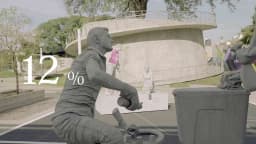
Brite by Colgate Palmolive ran 'No Stained Relationships / Rishton Pay Daagh' in Pakistan in January 2017, connecting laundry stain removal to emotional

How Brite and Colgate Palmolive Turned Laundry Into a Love Letter to Pakistani Relationships
Brite by Colgate Palmolive launched "No Stained Relationships / Rishton Pay Daagh" in Pakistan in January 2017, a film campaign created by VMLY&R that reframes laundry stain removal as an act of protecting personal relationships, positioning the brand's Double Power of Stain Magnets as a household product with genuine emotional stakes, according to Ravimagazine.
The campaign operates on a single, disciplined metaphor. Physical stains on clothing become proxies for the damage that negligence, carelessness, or simple domestic failure can inflict on human bonds. In a Pakistani cultural context, where the home is a site of layered social obligation and familial identity, that metaphor carries considerable weight. The campaign does not treat its audience as passive consumers of a cleaning product; it addresses them as custodians of something more fragile and more valuable than fabric, according to Fp Brecorder.
In Pakistan, the house and garden industry — particularly the laundry care segment — has long relied on functional superiority as its primary creative register, according to Colgate Com Pk. Brite and Colgate Palmolive, working through VMLY&R, chose a different register entirely for this 2017 narrative. The brand's target audience is predominantly female, as noted by Clapboard.com, and the film speaks directly to women navigating the intersection of domestic responsibility and relational identity. That intersection, rather than the product's cleaning chemistry, is where the campaign locates its persuasive energy.
The campaign was submitted to the Clapboard.com archive by strategist Sarah Fahim of ARGONAUT, who is credited as the strategic lead. It exists as a single film asset, distributed across traditional and digital media channels in Pakistan, with additional support at trade and shop level. Clapboard.com assigns the campaign a score of 63 out of 100, reflecting competent emotional positioning within a category that rarely attempts it.
Brite competes in one of Pakistan's most price-sensitive and volume-driven consumer categories. According to research cited on Scribd, the Pakistani detergent market has been estimated at approximately 162,211 tonnes in annual volume, with an aggregate market value of around PKR 19 billion, making it a structurally significant segment of the country's fast-moving consumer goods landscape. A separate estimate, also sourced from Scribd, places annual consumption at approximately 33,000 tonnes at PKR 138,000 per tonne, reflecting the range of methodologies applied to a market with limited centralised data.
In Pakistan, Brite faces direct competition from Ariel, marketed by Procter and Gamble, and Surf Excel, marketed by Unilever — both of which have historically invested in emotionally resonant advertising across South Asia. Surf Excel in particular has built sustained brand equity in the region through campaigns that foreground human relationships rather than cleaning performance. The 2017 "No Stained Relationships" campaign signals that Colgate Palmolive and VMLY&R recognised this emotional territory as strategically necessary, not merely aspirational.
The strategic rationale is grounded in a specific insight: that laundry, in a Pakistani household, is rarely a neutral act. It carries social meaning, particularly for women who manage the domestic sphere. According to reporting contextualised by Clapboard.com, the 2017 campaign was framed against shifting ideas of femininity in Pakistan — a market where female empowerment narratives were beginning to appear with greater frequency in mainstream advertising. Rather than positioning female empowerment as liberation from domestic roles, the campaign repositioned those roles as emotionally intelligent choices made by women who understand that care, expressed through household product use, is a form of relational investment. That reframing is the campaign's most durable strategic contribution.
VMLY&R built the creative execution around a single unbroken narrative logic. The film deploys the stain as a dual signifier: visible on clothing, but implicitly present in relationships that have been allowed to fray. The Double Power of Stain Magnets claim, as noted by Clapboard.com, is integrated into this metaphorical framework rather than presented as a standalone functional proof point. The product becomes the resolution of both problems simultaneously — the physical and the relational — which is an unusually economical creative construction for the house and garden category.
The setting is unmistakably Pakistani. Domestic interiors, family dynamics, and the social rituals that surround laundry in an urban or semi-urban Pakistani household are rendered with enough specificity to feel observed rather than constructed. This cultural grounding is essential to the campaign's emotional credibility. A metaphor about stained relationships only works if the audience recognises the relationships being depicted, and the film's production choices appear designed to minimise that distance.
Production credits for "No Stained Relationships / Rishton Pay Daagh" are not publicly documented in full. Strategist Sarah Fahim of ARGONAUT is the only credited individual named in the Clapboard.com archive submission. The campaign was produced under the VMLY&R banner operating in Karachi, identified in some archival records as Spectrum VMLY&R, as noted by Clapboard.com. The film medium was chosen as the primary vehicle, consistent with the narrative ambition of the brief. A single media asset constitutes the campaign's recorded output, suggesting that the creative investment was concentrated in one carefully constructed piece of storytelling rather than distributed across a high-volume content approach.

No verified performance data for "No Stained Relationships / Rishton Pay Daagh" is publicly available. No sales uplift figures, brand tracking results, or media reach metrics have been attributed to this campaign by any named source. The analysis that follows is therefore structural rather than empirical.
The campaign's effectiveness case rests on three observable qualities. First, the metaphor is genuinely category-breaking for a household product in Pakistan. Laundry advertising in the region has historically defaulted to whiteness, brightness, and comparative cleaning demonstrations. A 2017 film that subordinates those conventions to a relationship narrative represents a meaningful departure, and departures of that kind tend to generate disproportionate attention relative to media spend.
Second, the integration of the functional claim — Double Power of Stain Magnets — into the emotional narrative is coherent rather than forced. The product's reason to believe supports the campaign idea rather than interrupting it, which is a structural condition for advertising that sustains credibility with sceptical audiences.
Third, the female empowerment framing, while present, avoids the overclaiming that has weakened similar campaigns in adjacent markets. The campaign does not argue that doing laundry liberates women; it argues that doing laundry well is an expression of care that protects what matters. That is a more defensible and more culturally specific position for Pakistan in 2017. As reported by Adsoftheworld.com, the campaign has been archived as a notable example of emotionally positioned laundry advertising from South Asia. Clapboard.com assigns the campaign a score of 63 out of 100.
Brite's "No Stained Relationships / Rishton Pay Daagh" is a 2017 Pakistan film campaign by VMLY&R for Colgate Palmolive. It connects the removal of laundry stains to the preservation of personal relationships, using the brand's Double Power of Stain Magnets as both a functional and emotional resolution within a culturally grounded Pakistani narrative.
VMLY&R, operating as Spectrum VMLY&R in Karachi, created the campaign for Colgate Palmolive's Brite brand. Strategist Sarah Fahim of ARGONAUT is the credited individual named in the Clapboard.com archive. The campaign launched in Pakistan in January 2017 as a single film asset distributed across traditional and digital channels.
The campaign was designed exclusively for the Pakistan market, targeting a predominantly female audience within the house and garden laundry care category. It was published in January 2017 and reflects the cultural and social context of Pakistani domestic life, according to the Clapboard.com archive record for the campaign.
Brite's 2017 emotional narrative positions it alongside Surf Excel and Ariel, both of which have used relationship-driven advertising across South Asia. Surf Excel in particular has built sustained regional equity through human storytelling. Brite's campaign follows that strategic logic while grounding its female empowerment framing specifically within Pakistani cultural and domestic norms.
Clapboard.com assigns "No Stained Relationships / Rishton Pay Daagh" a score of 63 out of 100. This reflects competent emotional positioning within a category that rarely attempts narrative-driven advertising in Pakistan. No verified external performance metrics are publicly available to supplement this editorial assessment of the 2017 Colgate Palmolive campaign.
Brite and VMLY&R identified that laundry in Pakistani households carries social and relational meaning beyond hygiene, particularly for women. By linking stain removal to relationship care, the campaign created emotional differentiation in a functionally crowded category. This narrative approach reflected broader shifts in female empowerment advertising emerging across Pakistan's consumer market in 2017.
.webp)
Creative Collaboration Platform: The Backbone of Modern Creative WorkWhat is a creative collaboration platform?Clapboard defines a creative collaboration platform as the operational core for today’s distributed creative teams. This is not a collection of digital collaboration tools stitched together; Clapboard’s system


Understanding the Creative Production MarketplaceWhat is a Creative Production Marketplace?Clapboard defines a creative production marketplace as a structured ecosystem where brands, agencies, and production talent converge to execute video, advertising, and branded content at scale. Unlike the legacy agency or freelanREAD FULL ARTICLE

The Urgent Need for a Creative Production Operating SystemWhy Traditional Creative Production Models Break DownClapboard sees the creative production landscape shifting under pressure. Content velocity is no longer a buzzword—it’s a mandate. Modern advertising demands relentless output across dozens of channels, each wREAD FULL ARTICLE