 ARCHIVE
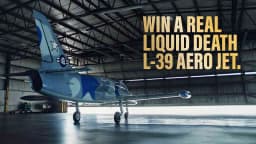
Liquid Death Gives Away a Real Jet in 2024s Boldest Beverage Stunt
How Liquid Death Turned a Real L-39 Aero Jet Into the Ultimate 2024 Drinks Promotion Liquid Death...
Sobe Adrenaline Rush Reframes Energy for El Salvador Parents
Sobe Adrenaline Rush launched 'Turbo Kit for Parents' in El Salvador in May 2016, a direct-medium campaign created by Apex BBDO that repositioned the energy drink as an essential everyday tool for parents navigating the relentless demands of modern family life.
The campaign arrived at a moment when the global energy drink category was undergoing a significant identity shift. Originally launched around 2000 and positioned toward action sports and high-intensity performance, Sobe Adrenaline Rush was built for a younger, more kinetic audience. According to En Wikipedia, PepsiCo acquired South Beach Beverage Company in 2000 for approximately $370 million, as reported by the Los Angeles Times, bringing Adrenaline Rush into one of the world's largest beverage portfolios. By 2016, however, the brand's creative teams were looking beyond the traditional extreme-sports consumer and toward a broader, more relatable archetype — the parent — to find new relevance in the Salvadoran market.
'Turbo Kit for Parents' distilled that strategic pivot into a single media asset: one static image, executed with the economy and directness that the direct medium demands. The campaign concept positioned the product as a metaphorical turbo kit for parents dealing with demanding daily routines. The choice of a single-asset execution was deliberate, forcing maximum communicative weight onto one visual idea. In El Salvador, where direct and out-of-home formats carry strong cultural currency, the format suited both the budget realities of a regional market and the creative ambition of a team trying to land an idea instantly. The campaign received a Clapboard Score of 54/100, reflecting an execution that is recognised as contextually relevant but modest in its overall creative reach.
Sobe Adrenaline Rush identified parents as an underleveraged consumer segment in the energy drink category. The insight is structurally sound: parents, particularly those managing dual-income households and intensive childcare responsibilities, face energy deficits that are functionally identical to those of the athletes and gamers the category traditionally courts. In El Salvador, where extended family structures and demanding working hours are common cultural realities, this insight carried genuine local resonance.
The global energy drink market was estimated at approximately $45 billion in 2015, according to nutritionaloutlook.com, and was projected to grow at approximately 11% compound annual growth rate through 2019, as reported by fooddive.com. Within that expanding market, the competitive landscape was dominated by two players with global scale. Red Bull held approximately 45% global market share around 2015 to 2016, according to a 2016 industry source cited by Markey Senate Gov, while Monster Energy held approximately 40% of the global market, according to statista.com. For a brand like Sobe Adrenaline Rush, competing frontally against Red Bull and Monster Energy on performance credentials in El Salvador would have been strategically untenable. Finding a distinct emotional and demographic lane — the fatigued parent rather than the peak-performance athlete — offered a more defensible creative position.
It is also worth noting the broader category context. According to mynewsdesk.com, energy drinks represented approximately 3% of global soft-drink product launches in 2016, down from roughly 4% five years earlier, suggesting the category's novelty premium was softening. Against that backdrop, a campaign that led with empathy and everyday utility rather than extremity represented a rational strategic adjustment, particularly for a regional market like El Salvador where the brand's positioning needed to work harder with fewer media assets.
Creative director Salvador Martinez led the Apex BBDO team responsible for translating the parent-energy insight into a single static image. Art director Giovanni Martinez and copywriter Rodrigo Oviedo shaped the visual and verbal logic of the execution, while photographer Johao Duke handled the photographic craft, with additional production credit attributed to Marizol Lemus.
The campaign's creative economy is its most defining characteristic. One image, one idea. In a category crowded with kinetic video content, rapid-cut action sequences, and high-decibel celebrity endorsement — the standard vocabulary of Red Bull and Monster Energy communications globally — Apex BBDO chose the opposite register. A still photograph, executed in the direct medium, was asked to carry the entire argument. That argument, as framed by Oviedo's copy and Giovanni Martinez's art direction, was essentially taxonomic: Sobe Adrenaline Rush is not a luxury or an indulgence but a functional kit component, as necessary to a parent's daily performance as any other tool in a well-prepared household.
The 'turbo kit' metaphor itself is mechanically precise, which suits the target audience. Parents, the creative logic implies, are running systems at capacity; what they need is not inspiration but horsepower. By borrowing the language of automotive performance — a turbo kit as a component that extracts additional output from an existing engine — the team positioned the drink as augmentation rather than transformation. This is a subtler and more credible claim than the transcendence narratives common in the energy drink category. Photographically, Duke's execution would have needed to anchor that metaphor in a domestic visual world rather than an extreme-sports one, grounding the brand's heritage in a new and quieter register appropriate for the Salvadoran market.
No verified performance data for 'Turbo Kit for Parents' is publicly available. No documented entries or wins at Cannes Lions, the Effie Awards, The One Show, or D&AD are associated with this campaign, according to searches across clapboard.com, worldvideoads.com, and linkedin.com. This absence of awards recognition is consistent with the campaign's regional scale: a single-asset direct campaign produced for the El Salvador market by a regional agency affiliate is structurally unlikely to enter global award competitions, and its non-appearance in those records does not constitute a negative judgment on its local effectiveness.
What can be assessed structurally is the campaign's internal coherence. The strategic repositioning of Sobe Adrenaline Rush from extreme-sports fuel to parental energy resource is a credible and differentiated move in the Salvadoran market context. The single-asset format enforces clarity and reduces the risk of creative dilution. The team's choice to work through metaphor — the turbo kit as functional augmentation — avoids the hyperbole common to the category and may therefore carry stronger persuasive weight with a sceptical adult consumer.
The Clapboard Score of 54/100 positions this campaign as contextually relevant but relatively modest in its creative ambition and execution. It is a campaign that solves its brief efficiently without pushing meaningfully beyond it. For a regional market like El Salvador, where direct-format campaigns compete primarily on clarity and immediacy, that is a defensible outcome, though the single media asset limits the campaign's ability to build narrative depth or sustain attention across a consumer journey.
Sobe Adrenaline Rush launched 'Turbo Kit for Parents' in El Salvador in May 2016. Created by Apex BBDO, the campaign repositioned the energy drink as essential daily fuel for parents managing demanding routines. It was executed as a single static image in the direct medium, with creative direction by Salvador Martinez.
Apex BBDO, based in El Salvador, created the campaign. The team included creative director Salvador Martinez, art director Giovanni Martinez, copywriter Rodrigo Oviedo, photographer Johao Duke, and Marizol Lemus in an additional production role. The campaign was published in El Salvador in May 2016.
Salvador Martinez served as creative director on the campaign. Giovanni Martinez was art director and Rodrigo Oviedo was copywriter. Johao Duke photographed the single-image execution, with Marizol Lemus also credited. All worked under the Apex BBDO banner in El Salvador for the May 2016 campaign.
Apex BBDO identified parents as an underleveraged segment in the energy drink category. The insight positioned parental fatigue as functionally equivalent to the physical demands the category traditionally targets. In El Salvador, where demanding working hours and family responsibilities are cultural realities, the idea carried direct local relevance.
No documented awards are associated with the campaign. Searches across clapboard.com, worldvideoads.com, and linkedin.com show no entries or wins at Cannes Lions, the Effies, The One Show, or D&AD. The campaign received a Clapboard Score of 54/100, reflecting modest creative ambition within a regionally focused single-asset execution.
Sobe Adrenaline Rush launched around 2000 targeting action sports consumers, according to en.wikipedia.org. PepsiCo acquired South Beach Beverage Company for approximately $370 million, as reported by the Los Angeles Times. By 2016, Apex BBDO's El Salvador campaign represented a deliberate pivot toward adult everyday consumers rather than the brand's original extreme-performance audience.
.webp)
Creative Collaboration Platform: The Backbone of Modern Creative WorkWhat is a creative collaboration platform?Clapboard defines a creative collaboration platform as the operational core for today’s distributed creative teams. This is not a collection of digital collaboration tools stitched together; Clapboard’s system


Understanding the Creative Production MarketplaceWhat is a Creative Production Marketplace?Clapboard defines a creative production marketplace as a structured ecosystem where brands, agencies, and production talent converge to execute video, advertising, and branded content at scale. Unlike the legacy agency or freelanREAD FULL ARTICLE

The Urgent Need for a Creative Production Operating SystemWhy Traditional Creative Production Models Break DownClapboard sees the creative production landscape shifting under pressure. Content velocity is no longer a buzzword—it’s a mandate. Modern advertising demands relentless output across dozens of channels, each wREAD FULL ARTICLE