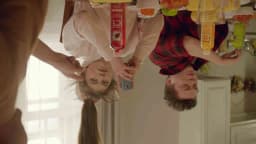
Coca-Cola Zero's 2008 film Tongues and Eyeball used animated body parts arguing over taste to dramatise the brand's zero-calorie, full-taste promise to younger

Coca-Cola Zero Tongues and Eyeball Brought Zero Calories to Life
Coca-Cola Zero's 2008 film "Tongues and Eyeball" is an animated commercial in which personified body parts — a finger, a tongue, an eyeball, and a brain — argue over whether Coke Zero genuinely tastes like Coca-Cola, dramatising the brand's core zero-calorie, full-taste proposition through character-driven comedy.
Published on April 24, 2008, the campaign comprised two media assets, according to Clapboard.com. The film arrived at a moment when Coca-Cola Zero was accelerating rapidly across global markets, extending a brand identity that had been established at launch in the United States in 2005 — what Coca-Cola described, per reporting archived at En Wikipedia, as its largest product launch in 22 years. Rather than restating the functional benefit in conventional advertising language, "Tongues and Eyeball" chose to embody the taste debate itself, staging it as an absurdist argument between the very organs responsible for sensory experience.
The campaign's geographic launch market and agency of record are not established in publicly available sources, as noted by Clapboard.com. What is documented is the creative strategy the film represents: a shift away from the rational product-explanation mode that had characterised early Coke Zero advertising and toward a tone of irreverent, character-led entertainment designed to resonate with younger male consumers. The Clapboard Score for "Tongues and Eyeball" stands at 64 out of 100, reflecting a campaign with clear creative ambition and cultural legibility, even in the absence of verified performance data or major awards recognition. As a Food and Drink execution within the Drinks (Non Alcoholic) category, the film occupies a recognisable creative tradition — using the body as a comic site — while anchoring that comedy firmly to a single, ownable brand claim.
Coca-Cola Zero targeted younger male consumers who were less responsive to Diet Coke's established associations with dieting and femininity, according to reporting archived at en.wikipedia.org. That targeting decision shaped every element of the brand's creative approach, including the tone that "Tongues and Eyeball" would eventually embody.
The competitive context in 2008 was pointed. Contemporary reporting cited by bevindustry.com described Coke Zero volume in United States measured retail outlets increasing approximately 22% that year, while Pepsi Max — the most direct rival in the zero-calorie, full-taste segment — grew approximately 25% over the same period, according to cnbc.com. The broader United States carbonated-soft-drink market declined roughly 3% in 2008, per scribd.com, which meant that Coke Zero's growth was genuinely category-defying rather than simply tide-driven. Diet Coke held approximately 10% of the total United States soft-drink market during this period, according to en.wikipedia.org, making it both a benchmark and a strategic foil — a brand Coke Zero needed to differentiate from without cannibalising.
Globally, Coca-Cola Zero reached nearly 600 million cases in 2008 with approximately 35% growth, and Coca-Cola reported that sparkling-beverage volume increased 4% internationally and 2% overall that year, according to cola-zero.com and Investors Coca-Colacompany respectively. Within that growth story, "Tongues and Eyeball" served a specific strategic function: to move the brand's communication from explaining what zero calories meant to demonstrating, through comedy, that the taste debate had been settled. Surreal personification allowed the film to make a credibility argument — that even the body's own sensory faculties could not detect a difference — without resorting to the kind of earnest product demonstration that would have alienated the target audience.
"Tongues and Eyeball" deploys animation to stage a scene that live action could not credibly produce: four sentient body parts — a finger, a tongue, an eyeball, and a brain — locked in a disagreement about whether Coke Zero tastes like Coca-Cola. The conceit is elegant because it externalises an internal sensory experience, turning the product's core claim into a visible, arguable, and fundamentally comic event.
Kyle O'Brien, Creative Works Editor at The Drum, described the film in a July 2017 retrospective as an early animated Coke Zero commercial that extended the brand's same-taste, zero-calories proposition through surreal personification. The dialogue, partially transcribed in a YouTube upload titled "Funny coca cola ads" posted on May 31, 2008, includes the eyeball character trading insults with the tongue characters — a creative choice that roots the absurdism in recognisable interpersonal comedy rather than pure visual spectacle. The argument structure is not random; each character represents a different mode of perception, and the film's implicit logic is that every available faculty reaches the same conclusion about the taste.
Production credits for "Tongues and Eyeball" are not publicly documented. The animation style — character-driven, dialogue-led, and built around clearly defined personality types — sits within a broader early-2000s tradition of using anthropomorphised body parts or objects to make food and drink advertising feel irreverent without becoming alienating. The two-asset campaign format, confirmed by Clapboard.com, suggests a focused media strategy rather than a wide-format execution, consistent with a film designed to travel efficiently in digital environments that were still maturing in 2008. No awards recognition for the campaign is recorded across Cannes Lions, Effies, One Show, D&AD, Clio, Webby, or WARC, per Clapboard.com.
No verified performance data for "Tongues and Eyeball" is publicly available as a discrete campaign result. Sales lift, brand-tracking movement, or media-spend figures attributable specifically to this film have not been published in any source accessible to this analysis. What can be established is the macro context into which the campaign entered.
Coca-Cola Zero's category-level results in 2008 were demonstrably strong. Volume reached nearly 600 million cases globally with approximately 35% growth, and United States retail volume grew approximately 22% that year, according to cola-zero.com and bevindustry.com respectively. A related German Coca-Cola Zero campaign from 2007 achieved 226% of its stated unit-case sales target, according to gwa.de, establishing a pattern of commercially effective Coke Zero advertising in international markets during this period. None of these figures can be attributed to "Tongues and Eyeball" in isolation, but they situate the film within a brand trajectory that was, by any measure, accelerating.
Structurally, the film's effectiveness argument rests on creative coherence rather than measurable uplift. The single-minded connection between the animated conceit and the brand's zero-calorie, full-taste promise is clear and immediate. The use of the body's own sensory organs as the arguing parties transforms the product claim into a self-contained dramatic situation, which is among the more durable structures in food and drink advertising. The Clapboard Score of 64 out of 100 reflects this — a campaign that executes its strategy with competence and creative distinctiveness, constrained by the absence of public results data and major awards recognition that might otherwise indicate broader industry or commercial impact.
Tongues and Eyeball is a 2008 animated film for Coca-Cola Zero featuring a finger, tongue, eyeball, and brain arguing over whether Coke Zero tastes like Coca-Cola. Published April 24, 2008, it comprised two media assets and extended the brand's zero-calorie, full-taste proposition through surreal character comedy, as described by The Drum.
The agency behind Tongues and Eyeball is not publicly documented. Production credits for the 2008 Coca-Cola Zero film have not been confirmed in available sources, according to Clapboard.com. Earlier Coke Zero brand work, including the 2005 global launch campaign, was created by Crispin Porter and Bogusky, per en.wikipedia.org.
The geographic launch market for Tongues and Eyeball is not established in publicly available sources. Coca-Cola Zero was active across multiple international markets by 2008, reaching nearly 600 million cases globally that year with approximately 35% growth, according to cola-zero.com, making precise regional attribution for this film unavailable.
Tongues and Eyeball has no recorded awards recognition. No entries or wins for the 2008 Coca-Cola Zero film appear across Cannes Lions, Effies, One Show, D&AD, Clio, Webby, or WARC databases, according to Clapboard.com. The campaign carries a Clapboard Score of 64 out of 100, reflecting solid creative execution without major industry recognition.
Coca-Cola Zero grew strongly in 2008. United States retail volume increased approximately 22% that year, according to bevindustry.com, while the broader US carbonated-soft-drink market declined roughly 3%, per scribd.com. Globally, Coke Zero reached nearly 600 million cases with approximately 35% growth, according to cola-zero.com, outperforming a contracting category.
Tongues and Eyeball used personified sensory organs to dramatise Coke Zero's taste claim. Rather than explaining the zero-calorie, full-taste benefit directly, the 2008 film staged the taste debate as a surreal argument between body parts, targeting younger male consumers who were less responsive to Diet Coke's associations, according to en.wikipedia.org.
.webp)
Creative Collaboration Platform: The Backbone of Modern Creative WorkWhat is a creative collaboration platform?Clapboard defines a creative collaboration platform as the operational core for today’s distributed creative teams. This is not a collection of digital collaboration tools stitched together; Clapboard’s system


Understanding the Creative Production MarketplaceWhat is a Creative Production Marketplace?Clapboard defines a creative production marketplace as a structured ecosystem where brands, agencies, and production talent converge to execute video, advertising, and branded content at scale. Unlike the legacy agency or freelanREAD FULL ARTICLE

The Urgent Need for a Creative Production Operating SystemWhy Traditional Creative Production Models Break DownClapboard sees the creative production landscape shifting under pressure. Content velocity is no longer a buzzword—it’s a mandate. Modern advertising demands relentless output across dozens of channels, each wREAD FULL ARTICLE