 ARCHIVE
Ready for This? Xbox 2023 Promotion - Mountain Dew | Clapboard Ad Archive
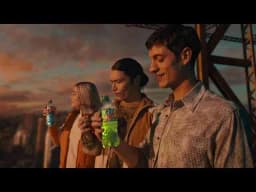
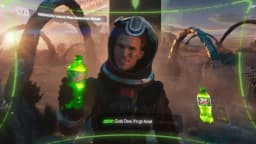
Ready for This? Xbox 2023 Promotion sees Mountain Dew, via TBWA\Chiat\Day, marshal a multi-brand...
Zevia and Jelly Roll Take Aim at Artificial Ingredients in 2025
Zevia's "Get the Fake Outta Here ft. Jelly Roll" is a 2025 film campaign produced by Maximum Effort and launched in the United States in March 2025, positioning Zevia as a zero artificial, zero sugar soda by aligning the brand with musician Jelly Roll and his personal story of transformation and authenticity.
The campaign debuted during the March 9, 2025 premiere episode of American Idol, placing Zevia's message in front of one of broadcast television's most culturally engaged audiences. Its creative premise draws a deliberate parallel to Cindy Crawford's iconic Pepsi commercial, according to reporting by Muse by Clios, with Jelly Roll arriving at a remote gas station in a red pickup truck, cracking open a Zevia Creamy Root Beer, and becoming the object of fascination for two bystanders. The echo of that cultural touchstone is intentional: where Crawford's appearance once signalled aspirational glamour for a legacy soda brand, Jelly Roll's presence here signals something different — unfiltered credibility for a brand built around the rejection of artificial ingredients.
Zevia described the campaign as the most shared and most engaging content in the company's history, according to Business Wire. The brand's tagline for the spot — "Zevia is the real deal. Nothing artificial and still tastes amazing. Unlikely? Yes. But true? Absolutely. As real as it gets." — encapsulates a positioning that the Los Angeles-based company has refined over more than a decade of building credibility around naturally sweetened soda. The campaign ran across broadcast and streaming channels in the United States and included a twelve-week placement on American Idol active through at least May 13, 2025, as reported by iSpot.tv. Clapboard rates this campaign 69 out of 100.
Zevia operates in one of the most competitive segments of the United States beverage landscape. The global zero-sugar beverages market is valued at approximately 70.2 billion US dollars with a compound annual growth rate of 9.7 percent projected through 2035, according to Market Us, reflecting the broad consumer shift away from full-sugar carbonated drinks that has reshaped grocery aisles across the US market. Within that context, Zevia competes directly against well-resourced incumbents including Coca-Cola's diet and zero-sugar portfolio and PepsiCo's sugar-free lines, both of which command substantially greater shelf presence and media budgets in the United States.
The strategic logic behind partnering with Jelly Roll is grounded in audience alignment rather than celebrity reach alone. Jelly Roll built his following among consumers who value candour over polish — an audience that maps closely onto the growing cohort of American shoppers scrutinising ingredient labels and gravitating toward products that carry fewer artificial additives. According to Ingredients Network, consumer demand for clean-label beverages has intensified considerably in recent years, with ingredient transparency emerging as a primary purchase driver in the non-alcoholic drinks category across the United States. Zevia had spent roughly a decade cultivating relationships with dietitians and nutritionists before arriving at this moment, as documented by Marketing Dive, meaning the Jelly Roll partnership layered cultural currency onto an already established health-credibility platform rather than building from scratch.
Maximum Effort, the agency behind the campaign, approached the brief through what its principals Van Gould and Chris Sheldon have described as performance-driven entertainment — creative work designed to earn attention rather than buy it passively, according to Muse by Clios. That philosophy suits Zevia's position as a challenger brand in the US Food and Drink market, where earned media amplification offers a meaningful equaliser against competitors with far larger paid media footprints.
Really Original served as the production company on "Get the Fake Outta Here ft. Jelly Roll," according to documentation cited by Muse by Clios. The spot's creative architecture is built around a single, legible visual idea: Jelly Roll pulls up to a remote gas station in a red pickup truck, drinks a Zevia Creamy Root Beer, and draws the transfixed attention of two onlookers — a sequence that mirrors, with obvious intentionality, the composition and cultural weight of Cindy Crawford's 1992 Pepsi commercial. The allusion works on two levels simultaneously. It invokes a memory of soda advertising at its most culturally dominant while redirecting that nostalgia toward a brand whose entire proposition is the rejection of what legacy sodas represent.
Jelly Roll's wardrobe choice during the shoot — jean shorts — was noted as a deliberate creative decision reflective of his public persona, according to Muse by Clios, a detail that illustrates how thoroughly the production was calibrated to feel unforced. The campaign's tone, encapsulated in the colloquial phrase "Get the Fake Outta Here," does similar work: it functions as a product claim and a cultural statement at once, matching the directness associated with Jelly Roll's public identity. The phrase doubles as a rejection of artificial ingredients and as a reflection of broader consumer skepticism toward conventional soda brands operating in the United States.
Maximum Effort's creative concept, developed by Van Gould and Chris Sheldon according to Business Wire, treats the commercial format itself as part of the message. By referencing a canonical piece of soda advertising history and then subverting its brand allegiance, the agency signals that Zevia belongs in a conversation that has historically been dominated by far larger players in the US Food and Drink category. Production credits beyond Really Original and the named Maximum Effort principals are not fully documented in publicly available sources.
The campaign generated 2.4 billion earned impressions, according to Business Wire, a figure Zevia cited when describing the work as the most shared and most engaging content in the company's history. That scale of earned media is particularly meaningful for a brand competing without the paid media infrastructure available to Coca-Cola or PepsiCo in the United States.
The film asset accumulated 875,357 views and 839 likes on the primary video platform tracked by Clapboard, with 99 comments reflecting active audience engagement rather than passive consumption. The campaign received coverage from People magazine and a range of broad-reach digital media outlets, according to Business Wire, extending its reach well beyond the non-alcoholic drinks category's core enthusiast audience and into mainstream US pop culture conversation.
The twelve-week American Idol placement, documented by iSpot.tv, provided sustained broadcast frequency across a demographic that skews toward exactly the kind of values-driven consumer Zevia targets: audiences attentive to authenticity, personal transformation, and lifestyle credibility. Jelly Roll's own public narrative of personal reinvention made him a structurally coherent choice for a campaign built around rejecting artificiality, and that coherence appears to have translated into the kind of organic sharing that inflated earned impression totals well beyond what paid distribution alone could achieve. No additional third-party verified performance metrics — including sales lift or brand equity movement — are publicly available for this campaign at this time. Clapboard scores this campaign 69 out of 100, reflecting strong cultural execution and measurable earned reach, with room to develop longer-term brand equity evidence as the campaign's full impact is assessed.
Zevia's "Get the Fake Outta Here ft. Jelly Roll" is a 2025 film campaign created by Maximum Effort and launched in the United States in March 2025. It positions Zevia as a zero artificial, zero sugar soda by featuring Jelly Roll in a spot that deliberately echoes Cindy Crawford's iconic Pepsi commercial, according to Muse by Clios.
Jelly Roll's public identity centres on candour and personal transformation. Zevia selected him because his audience closely mirrors the US consumers who prioritise ingredient transparency and clean-label beverages. According to Marketing Dive, Zevia had spent roughly a decade building credibility with dietitians and nutritionists before the partnership, making Jelly Roll a culturally coherent extension of that platform.
Maximum Effort created the campaign. The agency's principals Van Gould and Chris Sheldon developed the creative concept, according to Business Wire, with Really Original serving as the production company. Maximum Effort's approach treats advertising as performance-driven entertainment designed to generate earned attention, according to Muse by Clios.
The campaign debuted in the United States during the March 9, 2025 premiere episode of American Idol, according to Muse by Clios. It subsequently ran across broadcast and streaming channels and included a twelve-week placement on American Idol active through at least May 13, 2025, as documented by iSpot.tv.
The campaign generated 2.4 billion earned impressions, according to Business Wire, which Zevia described as the most shared and most engaging content in the company's history. Clapboard scores the campaign 69 out of 100. The film asset recorded 875,357 views and received coverage in People magazine and broad-reach digital outlets across the United States.
The campaign features Zevia's Creamy Root Beer variant as its hero product, according to Muse by Clios. The spot reinforces Zevia's brand-wide positioning as a zero sugar, zero artificial ingredients soda. The tagline — "Zevia is the real deal. Nothing artificial and still tastes amazing" — applies across the broader Zevia product range in the United States.
.webp)
Creative Collaboration Platform: The Backbone of Modern Creative WorkWhat is a creative collaboration platform?Clapboard defines a creative collaboration platform as the operational core for today’s distributed creative teams. This is not a collection of digital collaboration tools stitched together; Clapboard’s system


Understanding the Creative Production MarketplaceWhat is a Creative Production Marketplace?Clapboard defines a creative production marketplace as a structured ecosystem where brands, agencies, and production talent converge to execute video, advertising, and branded content at scale. Unlike the legacy agency or freelanREAD FULL ARTICLE

The Urgent Need for a Creative Production Operating SystemWhy Traditional Creative Production Models Break DownClapboard sees the creative production landscape shifting under pressure. Content velocity is no longer a buzzword—it’s a mandate. Modern advertising demands relentless output across dozens of channels, each wREAD FULL ARTICLE