PUMA's Street Legend film campaign launched in China in August 2018 via The Hype | Pixomondo, starring Liu Wen and anchored in B-boy and B-girl dance culture.

PUMA Street Legend Brings B-Boy Culture to China in 2018
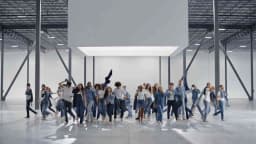
PUMA Street Legend is a fashion film campaign produced by The Hype | Pixomondo and published in China in August 2018, starring supermodel Liu Wen and built around a narrative of secret parties, B-boy and B-girl dance battles, and the kinetic energy of street culture.
The campaign centres on a single film asset in which Liu Wen receives a mysterious invitation to a secret party. The narrative intercutting her journey with preparations unfolding aboard a plane before culminating in an explosive gathering of B-boy and B-girl dancers gives the work the pacing of a short film rather than a conventional apparel advertisement. PUMA positions itself not merely as a clothing brand but as a credential within a specific cultural world — one where movement, rhythm, and community are the currency of belonging. In the Chinese market, where youth culture in 2018 was rapidly absorbing global street and dance influences, that positioning carried genuine strategic weight.
In China, the campaign arrived at a moment when PUMA was working to strengthen its standing among a younger, style-conscious urban audience. The choice to anchor the film in B-boy and B-girl culture rather than conventional sport performance reflects PUMA's broader creative direction during this period, which, as documented on clapboard.com, had leaned into fashion-forward territory following the brand's celebrated partnership with Rihanna from 2014 onward. Street Legend extends that sensibility into the Chinese market with a locally resonant cast and an unmistakably global visual language. Clapboard.com assigns the campaign a Clapboard Score of 63 out of 100, reflecting competent creative craft within a category where breakthrough work sets a high bar.
PUMA identified street dance culture as a credible entry point into Chinese youth fashion in 2018. That instinct was grounded in observable shifts in the market. Street dance competitions and hip-hop-influenced entertainment had moved from subcultural margins toward mainstream visibility in China during the preceding two years, creating an audience primed to receive exactly the kind of B-boy and B-girl imagery that Street Legend delivers.
The broader context for this strategic choice is the intensity of competition within the global sportswear and apparel sector. According to Textiletoday Com Bd, Nike held an estimated 41% share of the global sportswear market in 2018, while Adidas held approximately 22%. PUMA, operating in the space between those two dominant competitors, had pursued a consistent strategy of cultural differentiation rather than direct performance-category confrontation. In the Chinese market specifically, both Nike and Adidas had invested heavily in basketball and running narratives, leaving street dance and B-boy culture as comparatively less contested creative territory.
Liu Wen's inclusion as the campaign's central figure is a precise strategic decision. She is one of China's most internationally recognised supermodels, and her presence gives Street Legend immediate aspirational currency without requiring the campaign to rely solely on athletic credentials. The combination of a globally known Chinese face with raw, local street culture energy allows PUMA to speak simultaneously to cosmopolitan aspiration and subcultural authenticity — a dual register that is particularly effective in China's major urban markets, where both registers carry weight among the target demographic of young, fashion-aware consumers.
Aslan Malik directed and served as Creative Director on PUMA Street Legend, with cinematography by Jason Michael Lopez. The production was overseen by producer Yanyie Tran, with art direction and consultancy provided by Jingo Li, as documented on adsoftheworld.com.
The film's visual grammar is built on intercutting — a device that sustains tension by moving between Liu Wen's anticipatory journey and the preparations of the dancers and party organisers. This structural choice keeps the destination perpetually just out of reach until the film earns its release in the climactic dance battle sequence. Lopez's cinematography gives the film a high-contrast, high-motion energy that suits both the B-boy and B-girl performance sequences and the more controlled, fashion-forward shots of Liu Wen in transit. The result is a piece that can function credibly in both a fashion and a street culture context without feeling incoherent.
The soundtrack is equally deliberate. The track selected is "Full Trap To The Future" by JAM Studio, licensed through PremiumBeat, as noted in production credits documented on adsoftheworld.com. The choice of a trap-influenced composition reinforces the campaign's street culture positioning and gives the edit a rhythmic architecture that the dance sequences can inhabit naturally. Together, the directorial approach, the cinematography, and the music selection form a coherent creative package that lifts Street Legend above the level of a purely functional product film. The collaboration between The Hype and Pixomondo as co-producing agencies brings together narrative storytelling and production capability in a way that is visible in the finished work's technical ambition.
No verified performance data for PUMA Street Legend is publicly available. No campaign-specific sales lift, market-share movement, brand-tracking data, or published KPI results have been identified in public sources. The campaign has not been recognised in the Cannes Lions, Effie, One Show, D&AD, Clio, Webby, or WARC award databases.
Structural analysis offers a more productive frame for evaluation. The campaign's decision to deploy Liu Wen — one of the most recognisable Chinese faces in global fashion — as its lead ensures immediate attention in a crowded apparel media environment. The B-boy and B-girl narrative anchors the film in a cultural movement that had genuine momentum in China in 2018, lending the campaign earned relevance rather than manufactured cool. The single-asset format, while limiting in terms of cross-channel deployment potential, concentrates creative investment into a film that functions as a premium brand statement rather than a tactical retail driver.
The Clapboard Score of 63 out of 100 reflects a campaign that executes competently across direction, casting, and music but does not reach the level of cultural disruption that would push it into the upper tier of fashion film work from the same period. The absence of a formal global campaign platform, as noted on clapboard.com, means Street Legend functions as a market-specific statement rather than the anchoring expression of a broader brand idea. Within that more limited brief, it achieves what it sets out to do.
PUMA Street Legend is a fashion film campaign published in China in August 2018, created by The Hype and Pixomondo. The film stars supermodel Liu Wen and builds a narrative around a secret party featuring B-boy and B-girl dance battles, positioning PUMA within Chinese youth street culture.
Aslan Malik directed PUMA Street Legend and also served as its Creative Director. Cinematography was handled by Jason Michael Lopez, with production by Yanyie Tran and art direction by Jingo Li, as documented on adsoftheworld.com.
Liu Wen is one of China's most internationally recognised supermodels, giving the campaign immediate aspirational credibility in the Chinese market. Her presence allowed PUMA to combine global fashion authority with local cultural relevance, reaching urban Chinese consumers who respond to both registers simultaneously.
The PUMA Street Legend film uses "Full Trap To The Future" by JAM Studio, licensed through PremiumBeat. The trap-influenced track reinforces the campaign's B-boy and B-girl street culture positioning and provides the rhythmic architecture that supports the film's dance battle sequences.
PUMA Street Legend has not been recognised in the Cannes Lions, Effie, One Show, D&AD, Clio, Webby, or WARC award databases, according to clapboard.com. The campaign received a Clapboard Score of 63 out of 100, reflecting solid craft without reaching the upper tier of fashion film work.
.webp)
Creative Collaboration Platform: The Backbone of Modern Creative WorkWhat is a creative collaboration platform?Clapboard defines a creative collaboration platform as the operational core for today’s distributed creative teams. This is not a collection of digital collaboration tools stitched together; Clapboard’s system


Understanding the Creative Production MarketplaceWhat is a Creative Production Marketplace?Clapboard defines a creative production marketplace as a structured ecosystem where brands, agencies, and production talent converge to execute video, advertising, and branded content at scale. Unlike the legacy agency or freelanREAD FULL ARTICLE

The Urgent Need for a Creative Production Operating SystemWhy Traditional Creative Production Models Break DownClapboard sees the creative production landscape shifting under pressure. Content velocity is no longer a buzzword—it’s a mandate. Modern advertising demands relentless output across dozens of channels, each wREAD FULL ARTICLE