Puma's Run Therapy campaign, created by Peppery Comunic in Brazil in 2014, repositioned running as emotional therapy through real runner testimonials and Usain

Puma Run Therapy Reframes Running as Emotional Healing in Brazil
Puma's Run Therapy campaign, created by Brazilian agency Peppery Comunic and published in Brazil in May 2014, repositioned running not as a competitive sport but as a form of emotional therapy, using real runner testimonials and global sprint icon Usain Bolt to anchor the concept across film.
The campaign emerged from a specific strategic ambition. As reported by Exame on April 10, 2014, Run Therapy was presented as Puma's effort to deepen its foothold in the Brazilian running category, moving beyond performance metrics to claim emotional territory that neither its product specifications nor its competitors' messaging had occupied. The central idea, expressed in a single compact proposition, was that running functions as genuine psychological therapy for the people who do it regularly. In Brazil, where urban running culture had grown substantially through the early 2010s, that proposition carried authentic resonance.
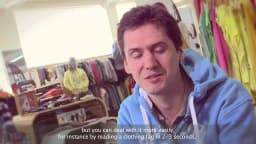
The campaign's mechanics were documentary in nature. According to Clapboard's editorial record, the activation began in November 2013, several months before the public launch, when Peppery gathered Puma-sponsored running groups in Brazil for what participants understood to be a standard training session. That session was then converted into a group therapy format, drawing out candid personal testimonials about what running meant to participants emotionally. Those testimonials were edited into a documentary film that served as both a creative teaser and the campaign's primary media asset. Usain Bolt appeared as the campaign's presenter, lending global recognition to a campaign built on Brazilian voices. The film medium was the singular executional vehicle, consistent with Peppery's intent to let the participants' own words carry the persuasive weight rather than conventional advertising copy.

Puma made a deliberate strategic choice in Run Therapy: to compete on emotional meaning rather than product technology. That choice was grounded in a specific consumer insight articulated by Peppery's own leadership. Bruno Bernardo, Partner and Executive Director at Peppery Comunic, stated that the agency observed running to be far more than a sport for its participants, describing it as a genuine form of therapy — a finding that became both the campaign's strategic foundation and its creative title.
The strategic rationale was sharpened by competitive pressure. In the global sportswear market, Nike held approximately seventeen percent of global sportswear share with revenues of approximately twenty-five billion US dollars in 2014, according to data sourced via LinkedIn industry analysis, while Adidas held approximately twelve percent share with revenues of approximately twenty billion US dollars in the same period. Puma, by contrast, held a considerably smaller position, with company revenues of approximately three billion euros around 2014 and a global sportswear share of roughly two percent, per data cited on Scribd industry reports. In Brazil, where Nike and Adidas both maintained strong performance-driven brand presence, Puma could not compete on the same register without disproportionate investment. Repositioning running as an emotional and therapeutic act created a lane that larger spenders were not occupying.
Guilherme Pierri, CEO of Peppery Comunic, described the launch as a landmark moment for Puma's ambitions in the running category across Brazil, citing the brand's intent to expand its running presence with high-technology products for both amateur and professional athletes. Run Therapy served as the brand platform to make that expansion legible to Brazilian consumers on human rather than technical terms.
Run Therapy was produced as a documentary film, with production handled by Conspiração Filmes and soundtrack composed by Marroquino Music. The creative direction was led by Thiago Lins and Marcelo Moura, who served as Creative Directors on the campaign, with Rodrigo Curvo as Head of Art, Felipe Branquinho and Marcelo Moura as Art Directors, and Bruno Varandas and Thiago Lins as Copywriters. Planning was managed by Leandro Lange, media by Thais Altschuller, and account management by Guilherme Pierri.
The executional strategy was rooted in authenticity rather than construction. Rather than scripting testimonials or staging performances, the team began in November 2013 by embedding a therapeutic session within what participants believed to be a routine Puma-sponsored training event in Brazil. The resulting footage captured unscripted emotional responses — runners articulating in their own words what the act of running provided them psychologically. That material was then shaped into a documentary film that functioned simultaneously as an earnest cultural document and as a campaign asset.
The decision to use a single film asset, rather than a broad multi-format campaign, concentrated the creative intent. Usain Bolt's presence as campaign presenter provided an internationally recognisable figure without displacing the Brazilian runners whose testimonials formed the film's emotional core. The juxtaposition of the world's fastest man alongside everyday Brazilian runners reinforced the campaign's democratising thesis: that running's therapeutic value belongs equally to elite athletes and amateur participants. Marroquino Music's soundtrack served to unify the documentary's testimonial segments into a cohesive emotional arc rather than a series of disconnected vignettes.
No verified performance data for Run Therapy is publicly available in terms of view counts, earned media reach, or measurable sales impact attributable to the campaign in Brazil. The absence of publicly documented metrics is consistent with the campaign's documentary format and its pre-launch activation structure, which prioritised authentic participant experience over trackable digital performance.
Structural analysis suggests the campaign was designed for depth of impression rather than breadth of immediate response. By initiating the activation in November 2013 and allowing the documentary material to mature into a teaser before the April and May 2014 public rollout — as reported by Exame and confirmed in Clapboard's archive — Peppery built a narrative lead time that is characteristic of brand-building work rather than conversion-driven campaigns. The use of real Brazilian runners as primary voices, rather than actors or brand ambassadors alone, gave the film a credibility that conventional advertising in the fashion and apparel category rarely achieves.
Usain Bolt's involvement provided a globally legible anchor to what was otherwise a locally grounded piece of work, creating a potential bridge between Puma's international brand identity and its ambitions within the Brazilian running market specifically. Run Therapy earns a Clapboard Score of 62 out of 100, reflecting a campaign with a genuinely differentiated strategic idea and credible creative execution, constrained by its reliance on a single media asset and the absence of a documented broader campaign ecosystem to amplify its core insight.
Puma's Run Therapy is a 2014 Brazilian film campaign created by agency Peppery Comunic. It repositioned running as emotional therapy rather than sport, using real runner testimonials gathered in a group therapy session and presented by Usain Bolt. The campaign launched publicly in May 2014 in Brazil, as confirmed by Clapboard's archive.
Peppery Comunic, a Brazilian agency, created Run Therapy for Puma. Creative Directors Thiago Lins and Marcelo Moura led the work, with production by Conspiração Filmes and soundtrack by Marroquino Music. The campaign was submitted to Clapboard's archive as a May 2014 publication from Brazil.
Puma and Peppery used documentary format to capture authentic emotional responses from real Brazilian runners. The activation began in November 2013, embedding a therapy session within a training event to generate unscripted testimonials. This approach prioritised credibility over constructed advertising in a category dominated by performance messaging from Nike and Adidas.
Usain Bolt served as the campaign's presenter in Run Therapy, providing global recognition alongside the everyday Brazilian runners whose testimonials formed the film's core. As reported by Exame in April 2014, Bolt's involvement helped anchor Puma's emotional repositioning within the Brazilian running market to an internationally legible figure.
Puma's Run Therapy campaign receives a Clapboard Score of 62 out of 100. The score reflects a differentiated strategic concept and credible documentary execution, while noting the campaign's reliance on a single film asset and the absence of a documented broader ecosystem to extend its core emotional insight across the Brazilian market.
Peppery Partner and Executive Director Bruno Bernardo observed that running functions as genuine therapy for its participants, making that insight the campaign's strategic and creative foundation. The agency translated the finding into a documentary activation beginning November 2013, well ahead of the May 2014 public launch in Brazil confirmed in Clapboard's archive.
.webp)
Creative Collaboration Platform: The Backbone of Modern Creative WorkWhat is a creative collaboration platform?Clapboard defines a creative collaboration platform as the operational core for today’s distributed creative teams. This is not a collection of digital collaboration tools stitched together; Clapboard’s system


Understanding the Creative Production MarketplaceWhat is a Creative Production Marketplace?Clapboard defines a creative production marketplace as a structured ecosystem where brands, agencies, and production talent converge to execute video, advertising, and branded content at scale. Unlike the legacy agency or freelanREAD FULL ARTICLE

The Urgent Need for a Creative Production Operating SystemWhy Traditional Creative Production Models Break DownClapboard sees the creative production landscape shifting under pressure. Content velocity is no longer a buzzword—it’s a mandate. Modern advertising demands relentless output across dozens of channels, each wREAD FULL ARTICLE