Pringles and FCB New York revive the iconic Once You Pop tagline in 2025 with a Gen Z-targeted snack campaign built on decades of brand equity and unhinged

Pringles Revives Once You Pop for a New Generation of Snackers
Pringles revives its iconic 1990s tagline with "Once You Pop, The Pop Don't Stop," a 2025 United States campaign created by FCB New York that blends nostalgic brand equity with unhinged internet humor to reach Gen Z snackers while re-engaging longtime fans of the stackable crisp.
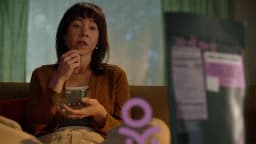
The campaign launches with "Duck King," a thirty-second film directed by Thomas Ormonde in which a young man fashions duck lips from Pringles crisps, prompting real ducks to anoint him as their leader. The spot captures a specific register of absurdist comedy that mirrors the scrollable, shareable content Gen Z encounters daily across social platforms. A companion fifteen-second execution, "Duck Lips," extended the premise in a tighter format suited to social distribution, launching on October 20, 2025, according to Clapboard's archive.
The strategic logic behind the revival is grounded in verified consumer research. Pringles found that sixty-nine percent of consumers surveyed remain familiar with the "Once You Pop" tagline, and fifty-one percent associate it directly with Pringles, according to the brand. That residual awareness gave FCB New York a rare starting point: creative that could feel simultaneously fresh and deeply familiar. The campaign runs nationwide across television and social platforms in the United States, targeting both the Gen Z cohort discovering the brand and older consumers who grew up with the original line. Mauricio Jenkins, U.S. Head of Marketing for Pringles, described the campaign as bringing back "one of the most iconic taglines in pop culture" with a twist calibrated to today's audience. The Clapboard Score for this campaign is 63 out of 100.

Pringles operates inside a fiercely competitive global potato-chip market. Fortune Business Insights estimates the global potato-chip market at sixty point two nine billion US dollars in 2025, while Mordor Intelligence places the figure at fifty-six point two three billion dollars with a compound annual growth rate of six point one two percent projected from 2026 through 2031. In the United States, that growth translates into sustained shelf-space battles where differentiation through brand personality carries as much weight as flavour innovation.
Lay's, produced by PepsiCo's Frito-Lay division, holds the position of global category leader and represents Pringles' most direct competitive pressure in the US snack aisle. Kettle Brand, known for its artisan positioning, targets overlapping premium snack consumers. Against these rivals, Pringles' stackable-can format and decades of brand character give it a structural distinctiveness that the "Once You Pop" campaign works to activate rather than manufacture from scratch.
The agency shift is also significant. Grey New York created Pringles' 2022 "Stuck In" campaign, which built a single extended joke around a man whose hand became lodged in a Pringles can through various life milestones. Grey London separately produced a fortieth-anniversary "Stay in the Game" campaign in 2022 connecting the brand to video-game culture, as reported by Adweek. The 2025 work marks a creative realignment under FCB New York, moving from single-gag long-form storytelling toward a revived tagline platform designed to generate recurring cultural moments. Dan Kelly, Executive Creative Director at FCB New York, described the creative mandate as finding "the fun in the functional" and taking authentic Pringles truths to an "unhinged place that mirrors Gen Z's feed". That framing reflects a broader industry shift, documented by LSN Global among others, toward brands adopting internet-native absurdism rather than conventional aspirational narratives in snack advertising.
Thomas Ormonde directed the "Duck King" launch film. The production was handled by ProdCo, with Zico Judge serving as founding partner and Emma Wilcockson as managing director, according to campaign credits documented by Clapboard. Patrick Wood served as executive producer, Yvonne Ortiz as head of production, and Max Brook as producer on the project.
The creative team at FCB New York was led by Chief Creative Officer Michael Aimette and Executive Creative Director Dan Kelly, with Jim Robbins serving as Creative Director. The campaign also involved Weber Shandwick for communications, Starcom for media planning and buying, and CIEN+ for multicultural outreach, as reported by Snack and Bakery. That roster reflects a deliberately coordinated effort to reach distinct audience segments within the United States simultaneously rather than sequentially.
The central creative mechanism of "Duck King" is deceptively simple. A man places Pringles crisps against his lips to create the shape of a duck bill, and the film's comic engine turns on the logic that real ducks accept this as a legitimate claim to leadership. The joke requires no setup beyond the product itself, which is precisely what makes it function as snack advertising. Dan Kelly's stated ambition to take something functionally true about Pringles — its distinctive crisp shape — and escalate it into absurdity is visible in every frame. The fifteen-second "Duck Lips" cut strips the narrative to its essential visual payoff, optimising the same idea for social media environments where attention is captured or lost within the first two seconds. The tonal choice is consistent with what Pringles U.S. Head of Marketing Mauricio Jenkins called the brand's "flavor forward roots" delivered through "humor and energy Gen Z loves".
Verified performance data exists for the "Duck Lips" execution. According to iSpot, the fifteen-second film achieved eighty-eight percent unaided Pringles brand recall, a figure fifteen percentage points above the candy-and-snacks category norm. That result is measurably significant: category norm benchmarks in iSpot's methodology represent average recall performance across comparable snack and confectionery advertising in the United States, making a fifteen-point gap a substantive rather than marginal outperformance.
According to Clapboard's archive, sixty-four percent of viewers reported increased purchase intent following exposure to the "Duck Lips" execution. Purchase intent lift at that level, combined with above-norm brand recall, indicates that the campaign's absurdist creative approach did not come at the cost of commercial effectiveness — a trade-off that snack brands adopting unconventional humor sometimes encounter.
No verified performance data for the full thirty-second "Duck King" spot or the broader campaign's social reach is publicly available at the time of writing. What the iSpot figures do confirm is that the decision to revive a tagline carrying decades of consumer familiarity — with sixty-nine percent of surveyed consumers still recognising "Once You Pop" per Pringles' own research — created measurable resonance at the point of execution. The Clapboard Score of 63 out of 100 reflects competent creative craft and a sound strategic platform, with room to grow as the campaign's social extensions and multicultural activations through CIEN+ accumulate further data across the US market.
Pringles launched "Once You Pop, The Pop Don't Stop" in October 2025 in the United States. Created by FCB New York, the campaign revives the brand's iconic 1990s tagline with new creative built around absurdist internet humor, targeting Gen Z while re-engaging long-time fans through television and social platforms nationwide.
Thomas Ormonde directed the "Duck King" launch film for Pringles. The production was handled by ProdCo, with Zico Judge as founding partner and Emma Wilcockson as managing director. The FCB New York creative team was led by Chief Creative Officer Michael Aimette and Executive Creative Director Dan Kelly.
The "Duck Lips" execution achieved eighty-eight percent unaided Pringles brand recall, according to iSpot. That figure sits fifteen percentage points above the candy-and-snacks category norm, indicating the campaign's absurdist creative approach generated above-average memorability among US viewers exposed to the fifteen-second spot.
Pringles revived the tagline because sixty-nine percent of consumers surveyed still recognise it, per the brand's own research. With fifty-one percent associating it directly with Pringles, the tagline offered rare pre-built equity. FCB New York updated it with unhinged internet humor designed to connect with Gen Z snackers in the United States.
FCB New York served as Pringles' creative agency of record on the campaign. Weber Shandwick handled communications, Starcom managed media planning and buying, and CIEN+ led multicultural outreach, as reported by Snack and Bakery. Together, the agencies coordinated a nationwide US launch across television and social platforms in October 2025.
Clapboard assigned the Pringles "Once You Pop, The Pop Don't Stop" campaign a score of 63 out of 100. The score reflects competent creative craft and a sound strategic platform built on verified consumer familiarity with the revived tagline, with potential to grow as social and multicultural extensions across the US market accumulate performance data.
.webp)
Creative Collaboration Platform: The Backbone of Modern Creative WorkWhat is a creative collaboration platform?Clapboard defines a creative collaboration platform as the operational core for today’s distributed creative teams. This is not a collection of digital collaboration tools stitched together; Clapboard’s system


Understanding the Creative Production MarketplaceWhat is a Creative Production Marketplace?Clapboard defines a creative production marketplace as a structured ecosystem where brands, agencies, and production talent converge to execute video, advertising, and branded content at scale. Unlike the legacy agency or freelanREAD FULL ARTICLE

The Urgent Need for a Creative Production Operating SystemWhy Traditional Creative Production Models Break DownClapboard sees the creative production landscape shifting under pressure. Content velocity is no longer a buzzword—it’s a mandate. Modern advertising demands relentless output across dozens of channels, each wREAD FULL ARTICLE