 ARCHIVE
Wipe it! - BEE Environmental Communication | Clapboard Ad Archive
Wipe It!, the 2017 creative campaign from BEE Environmental Communication, disrupts the everyday...
Oui FM Makes Censorship the Creative Brief
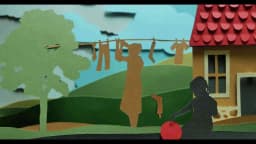
Oui FM's "Censorship" campaign is a 2014 French radio brand film, created by BBDO, that positions the station as a defender of free expression and authentic voices by using visual metaphor to dramatise the suppression of information and cultural freedom.
Oui FM released the campaign in April 2014, targeting the French media landscape at a moment when questions of editorial independence and media control carried genuine cultural weight. The brief was not to advertise a programme or a playlist. It was to assert an identity. The station chose censorship — the act of suppression itself — as its creative subject, placing Oui FM on the side of openness against forces of control. That is a positioning statement as much as it is a film concept.
The campaign consists of one film asset, a deliberate economy of means that concentrates all creative force into a single, sustained argument. In France, where the radio advertising market was described as mature and structurally competitive, according to reporting aggregated via Slideshare, a brand film of this nature serves a dual purpose: it speaks to existing listeners who already align with the station's rock and alternative identity, and it signals cultural seriousness to a broader audience. Oui FM had built its brand on music heritage and critical credibility, and "Censorship" extended that lineage into the domain of values and civic expression.
The Clapboard concept classification for this campaign is "Symbolize the Problem" — a creative approach that does not sell a product feature but instead renders an abstract threat visible and emotionally legible. That classification places "Censorship" within a tradition of brand films that use allegorical or documentary-adjacent storytelling to elevate a commercial entity into a cultural position. The campaign earns a Clapboard Score of 63 out of 100, reflecting genuine creative ambition tempered by the structural limitations of a single-asset execution with no verified award recognition or documented audience metrics.
Oui FM operates in the French radio sector, a market that faced measurable pressure in 2014. The French radio advertising market stood at approximately €726 million that year, encompassing national, local, and Île-de-France advertising, according to data cited via Echanges Dila Gouv. That market subsequently declined by approximately 0.8 percent year-over-year into 2015, falling to roughly €720 million, according to the same source. Within that environment, differentiation through brand character rather than audience volume was a rational strategic choice for a station of Oui FM's scale.
The competitive context sharpens that logic. RTL Group held an estimated 22.0 percent gross advertising-market share in French radio in 2014, according to Legrandnetwork Blogspot, a dominant position that Oui FM could not match through reach alone. NRJ Group, another major competitor, reported more than 12.6 million daily listeners across its stations in early 2014, according to reporting via Lalettre Pro, while simultaneously recording a 7.1 percent year-over-year decline in Q1 2014 radio revenue in what it described as a difficult advertising environment, also per lalettre.pro. Against rivals of that scale, Oui FM's strategic response was to compete on identity rather than volume — to position the station as the choice for listeners who value editorial independence and cultural authenticity over mainstream programming.
The "Censorship" campaign reflects a clear consumer insight. Oui FM's core audience, rooted in rock and alternative music culture in France, held a self-image bound up with non-conformity and resistance to commercial homogenisation. By framing the station as a defender of free expression, BBDO translated that audience self-image into a brand promise. The film did not ask listeners to tune in for a particular show. It asked them to recognise Oui FM as a values-aligned institution in the French media landscape — a more durable and emotionally resonant proposition than any format-led message could achieve.
Pierre Edelmann directed the "Censorship" film for Oui FM, bringing the campaign's allegorical concept to screen through production house Henry de Czar. The creative team at BBDO France was led by creative directors Benjamin Marchal, Olivier Lefebvre, and Matthieu Elkaim, with art direction handled by Philippe Boucheron and Julia Deshayes, and copywriting by Patrice Lucet. That is a substantial creative infrastructure committed to a single film asset, and the depth of the team signals the seriousness with which BBDO and Oui FM approached the brief.
The Clapboard concept classification — "Symbolize the Problem" — defines the creative method at work. Rather than depicting Oui FM's programming, its DJs, or its audience, the film renders censorship itself as a visible, experiential phenomenon. This approach draws from a lineage of social-experiment and documentary-adjacent filmmaking that treats the advertisement as an act of witness rather than promotion. In France, that mode of brand communication carries particular cultural resonance, given the country's long tradition of political cinema and public intellectual engagement with questions of freedom and expression.
Art director Philippe Boucheron and his collaborators made a choice, explicit in the campaign's Clapboard classification, to work through metaphor rather than argument. The film does not present a case for Oui FM's editorial independence; it creates a felt sense of what its absence would mean. That is a harder creative problem to solve than straightforward brand storytelling, and it carries a higher risk of abstraction. The involvement of a dedicated director and a named production house rather than a purely in-agency execution suggests the team understood that the concept required cinematic discipline to land with the intended emotional weight. The economy of the single-asset format places all responsibility for impact on the film itself, with no supporting print, outdoor, or digital layer to carry residual messaging.
No verified performance data for the "Censorship" campaign is publicly available. Audience reach figures, media impressions, brand-lift studies, and digital engagement metrics have not been documented in any publicly accessible source reviewed by Clapboard. Similarly, no verified award wins or finalist placements for this campaign have been confirmed across major industry recognition programmes, according to Clapboard's awards verification process.
In the absence of metrics, structural analysis offers a meaningful measure of the campaign's likely effectiveness. The decision to concentrate the entire creative argument into one film asset is both a strength and a constraint. It produces a singular, uncompromised statement — the kind of work that earns cultural currency if it reaches the right audience through the right context. It also limits the campaign's ability to build frequency, extend its narrative, or adapt its message across different touchpoints. For a station competing against RTL Group's estimated 22.0 percent market share in French radio advertising, according to legrandnetwork.blogspot.com, a single film is an act of creative ambition that requires earned media amplification to achieve meaningful scale.
The Clapboard Score of 63 out of 100 reflects this tension accurately. The campaign demonstrates a coherent strategic rationale, a clearly defined creative concept, and a credible production team. What it lacks — or what cannot be verified — is evidence of the audience reach and industry recognition that would elevate a well-crafted brand film into a demonstrably effective piece of communications. For Oui FM, "Censorship" stands as a sincere expression of brand values at a structurally challenging moment in the French radio market, and its creative architecture remains sound even without a measurable outcome attached to it.
Oui FM's "Censorship" campaign is a 2014 French brand film created by BBDO that positions the radio station as a defender of free expression. The campaign uses a single film asset and a visual metaphor approach, classified by Clapboard as "Symbolize the Problem," to dramatise the suppression of voices and information in the French media landscape.
Pierre Edelmann directed the Oui FM Censorship film for production house Henry de Czar. The BBDO France creative team included creative directors Benjamin Marchal, Olivier Lefebvre, and Matthieu Elkaim, art directors Philippe Boucheron and Julia Deshayes, and copywriter Patrice Lucet, making it a fully credited, professionally produced brand film.
Oui FM chose censorship to assert a values-based identity in a competitive French radio market. Competing against large operators like RTL Group, which held an estimated 22.0 percent advertising-market share according to legrandnetwork.blogspot.com, Oui FM used the theme of free expression to differentiate through cultural positioning rather than audience scale or format-led messaging.
The Oui FM Censorship campaign has no verified award wins or finalist placements on record. According to Clapboard's awards verification process, no confirmed recognition across major industry programmes has been documented for this campaign, which is reflected in its Clapboard Score of 63 out of 100.
France's radio advertising market stood at approximately €726 million in 2014, according to echanges.dila.gouv.fr, before declining roughly 0.8 percent into 2015. NRJ Group reported a 7.1 percent revenue drop in Q1 2014 per lalettre.pro, confirming the difficult advertising environment Oui FM navigated when releasing the Censorship campaign.
The Censorship campaign extended Oui FM's brand evolution beyond music heritage into issue-led messaging. A 2011 Oui FM campaign had centred on visual nostalgia and music recognition, according to Clapboard's archive records. By 2014, BBDO repositioned the station as an active defender of free expression, reflecting a deliberate shift toward values-driven brand communication in France.
.webp)
Creative Collaboration Platform: The Backbone of Modern Creative WorkWhat is a creative collaboration platform?Clapboard defines a creative collaboration platform as the operational core for today’s distributed creative teams. This is not a collection of digital collaboration tools stitched together; Clapboard’s system


Understanding the Creative Production MarketplaceWhat is a Creative Production Marketplace?Clapboard defines a creative production marketplace as a structured ecosystem where brands, agencies, and production talent converge to execute video, advertising, and branded content at scale. Unlike the legacy agency or freelanREAD FULL ARTICLE

The Urgent Need for a Creative Production Operating SystemWhy Traditional Creative Production Models Break DownClapboard sees the creative production landscape shifting under pressure. Content velocity is no longer a buzzword—it’s a mandate. Modern advertising demands relentless output across dozens of channels, each wREAD FULL ARTICLE