 ARCHIVE
The Pigeon Workout - ASICS | Clapboard Ad Archive
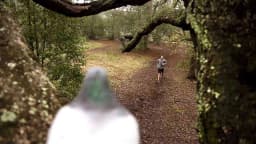
ASICS returned to the United States market in 2013 with The Pigeon Workout campaign, deploying a...
How Nike and HMDG Charted Shoe Evolution in 2011
Nike's 'Shoe Evolution' is a 2011 UK fashion film created by London agency HMDG and directed by Cristiano Civitillo, tracing the design lineage of Nike footwear through a single cinematic asset produced by Great Guns and released on 12 July 2011.
Nike commissioned the film to speak directly to the United Kingdom market at a moment when heritage and product provenance were gaining renewed cultural currency in fashion and apparel. Rather than leading with an athlete endorsement or a competitive sporting moment, 'Shoe Evolution' takes a product-history approach, allowing the shoes themselves to carry the narrative weight. The execution sits in a tradition of brand filmmaking that treats the archive as the hero, inviting audiences to understand Nike not merely as a performance label but as a design institution with a continuous, evolving story to tell, according to Businessinsider.
The campaign comprises one media asset — a single film — which concentrates its ambition entirely on craft and compression, according to The New York Times. In the United Kingdom, where fashion consumers have historically responded to brand authenticity and archival depth, this strategy carries particular strategic logic. HMDG, operating from London, shaped the campaign's identity around clarity of concept rather than scale of production, a choice that distinguishes 'Shoe Evolution' from the stadium-scale ambition of Nike's concurrent global work. The Clapboard Score for this campaign is 56 out of 100, reflecting a piece that is competent and considered but operates within a narrow creative register that limits its broader cultural impact, according to Adruby.
Nike entered 2011 in the United Kingdom as the dominant force in athletic footwear and apparel, competing directly against adidas, Reebok, and Puma across both performance and lifestyle categories. The strategic context for 'Shoe Evolution' was shaped by a broader industry shift: heritage and design narrative were becoming as commercially potent as performance claims, particularly in the UK fashion and apparel sector.
Adidas was itself active on this front. According to research documented by Highsnobiety, adidas launched its 'All In' global campaign in 2011, a high-production push that consolidated the brand's lifestyle positioning and put pressure on Nike to articulate its own design identity with equal conviction. In the United Kingdom, where both brands competed intensely for the same fashion-conscious consumer, the battleground was increasingly cultural rather than purely technical. Nike's response with HMDG was to go narrow and deep — a single film, a single idea — rather than to match adidas's scale.
The UK sportswear and fashion apparel sector in this period was undergoing a convergence between athletic and lifestyle purchasing behaviour, a trend that made product-history storytelling commercially viable beyond specialist sneaker audiences. By 2011, Nike's global competitive set, as documented by sources including Marketing91 and Wikipedia, included not only adidas and Puma but also VF Corporation brands and an emerging Under Armour. In the United Kingdom specifically, the contest between Nike and adidas was the defining rivalry, and 'Shoe Evolution' can be read as a quiet assertion of design authority in that contest — grounding Nike's present-day credibility in a traceable, visual history of footwear innovation.
Cristiano Civitillo directed 'Shoe Evolution' for Nike, working with production company Great Guns to render a product-history narrative through the discipline of film. The creative team at HMDG was led by creative director Paul Shearer, with art direction by Raymond Chan and copy by Simon Cenamor — a tight unit whose collective task was to make chronology cinematic.
The single-asset format is itself a creative statement. Where many fashion and apparel campaigns in 2011 were expanding into multi-platform, digitally distributed ecosystems, 'Shoe Evolution' concentrated its energy into one piece of film. This restraint demands that every frame carry conceptual and visual weight, and it places an unusual degree of trust in the director's ability to sustain momentum across a narrative driven not by human drama but by object transformation. Civitillo, working with Great Guns, approached the material as a design film rather than a conventional advertising spot, a distinction that shapes both its visual grammar and its intended audience relationship.
Raymond Chan's art direction is central to the campaign's identity. The visual sequencing of shoe designs across time requires a rigorous sense of graphic logic — decisions about proportion, colour, rhythm, and transition that read as editorial rather than promotional. Simon Cenamor's copy, meanwhile, would have needed to provide structural clarity without overwhelming the visual argument. Together, the team produced a film that sits closer to branded content and archival documentary than to a conventional thirty-second product advertisement, a positioning that reflects both HMDG's creative disposition and Nike's willingness, in the United Kingdom context, to experiment with form.
No verified performance data for 'Shoe Evolution' is publicly available. No published sales lift, revenue impact, market-share change, or audience-reach figure has been attributed to this campaign in accessible sources, and no verified awards were recorded at Cannes Lions, the D&AD Awards, The One Show, Clio Awards, Effie Awards, or the Webby Awards. No substantive trade press reviews have been located in Campaign, Ad Age, Adweek, The Drum, or Contagious.
Structural analysis offers a more productive lens. The decision to produce a single film for the United Kingdom market — rather than a multi-asset campaign — concentrates creative and production resource in a way that either pays off entirely or leaves limited room for recovery if the core idea does not land. 'Shoe Evolution' is a concept-first execution: if the audience accepts the premise that a shoe's design history constitutes a compelling story, the film succeeds on its own terms. If that premise requires more persuasion than one asset can provide, the campaign's reach is inherently bounded.
The campaign's placement within Nike's broader 2011 timeline is also instructive. As documented in publicly accessible sources, Nike's principal global campaigns in this period — including the 2010 'Write the Future' work created by Wieden+Kennedy — were operating at a different scale of cultural ambition and media investment. 'Shoe Evolution' reads as a market-specific, product-focused complement to that global activity rather than a flagship statement, which contextualises both its modest profile in the trade press and its Clapboard Score of 56 out of 100.
Nike's 'Shoe Evolution' is a 2011 UK fashion film created by HMDG and directed by Cristiano Civitillo for Great Guns. Released on 12 July 2011, it traces the design history of Nike footwear through a single cinematic asset, positioning the brand as a design institution rather than leading with athlete performance.
HMDG, a London-based agency, created Nike's 'Shoe Evolution' film in 2011. The creative team included creative director Paul Shearer, art director Raymond Chan, and copywriter Simon Cenamor. Production was handled by Great Guns, with Cristiano Civitillo directing the finished film for the United Kingdom market.
Cristiano Civitillo directed 'Shoe Evolution' for Nike through production company Great Guns. Civitillo approached the material as a design film rather than a conventional advertising spot, using visual sequencing of shoe designs across time to create a narrative driven by object transformation rather than human drama or performance storytelling.
No verified awards for Nike's 'Shoe Evolution' are recorded. Research finds no recognised accolades at Cannes Lions, D&AD, The One Show, Clio Awards, Effie Awards, or the Webby Awards. The campaign also drew no documented substantive reviews in major trade publications including Campaign, Adweek, Ad Age, or The Drum.
Nike's 'Shoe Evolution' served as a market-specific, product-focused complement to the brand's larger global campaigns. While Nike's principal 2011 global work operated at a broader cultural scale, 'Shoe Evolution' addressed United Kingdom audiences by grounding Nike's credibility in a traceable visual history of footwear design rather than sporting spectacle.
.webp)
Creative Collaboration Platform: The Backbone of Modern Creative WorkWhat is a creative collaboration platform?Clapboard defines a creative collaboration platform as the operational core for today’s distributed creative teams. This is not a collection of digital collaboration tools stitched together; Clapboard’s system


Understanding the Creative Production MarketplaceWhat is a Creative Production Marketplace?Clapboard defines a creative production marketplace as a structured ecosystem where brands, agencies, and production talent converge to execute video, advertising, and branded content at scale. Unlike the legacy agency or freelanREAD FULL ARTICLE

The Urgent Need for a Creative Production Operating SystemWhy Traditional Creative Production Models Break DownClapboard sees the creative production landscape shifting under pressure. Content velocity is no longer a buzzword—it’s a mandate. Modern advertising demands relentless output across dozens of channels, each wREAD FULL ARTICLE