Microsoft Bets on Touch to Reframe Windows 10 in Sweden
Microsoft's 'Addictive' is a film campaign created by Stockholm agency JMW and published in Sweden in December 2016, positioning Windows 10's touchscreen capabilities — pointing, swiping, and pinching — as a more intuitive and efficient alternative to conventional mouse-and-keyboard interaction on compatible computers.
The campaign carries a single media asset, a film, and targets Swedish consumers at a moment when touch-native behaviour, shaped by years of smartphone and tablet use, was increasingly becoming the default expectation for how people interact with any screen. The strategic premise is direct: if pointing, swiping, and pinching feel entirely natural on a phone, they should feel equally compelling on a Windows 10 device. 'Addictive' is the word the campaign uses to capture that frictionless pull — the idea that once a user experiences touch on a full computing platform, reverting to a peripheral feels like a step backward. Clapboard Ad Archive assigns the campaign a score of 53 out of 100, reflecting a competent but modestly differentiated execution within a crowded technology advertising landscape. The campaign sits within Microsoft's broader mid-decade shift away from specification-led product advertising toward human-centred demonstrations of how technology actually feels to use, a direction the brand had been developing since at least 2013. In the Swedish market specifically, where consumer electronics adoption rates rank among the highest in Europe, the argument for touch-first computing carried particular cultural and commercial weight.
Sweden represents a mature, highly connected consumer electronics market where digital literacy is exceptionally high. Microsoft's decision to frame Windows 10 as a touchscreen platform in this geography reflects an understanding that Swedish consumers were already fluent in touch interaction through smartphones and tablets, making the transition argument more credible than in less mobile-saturated markets. The campaign's central insight — that pointing, swiping, and pinching are behaviours people perform instinctively on mobile devices and should therefore expect from their computers — is grounded in a real behavioural shift rather than a speculative one.
By 2016, global digital advertising expenditure had reached a scale that underscored just how competitive the technology category had become for audience attention, though market-specific figures for Sweden were not independently published at the granular level needed for direct comparison. What is documented is that Google and Facebook together accounted for approximately 54% of global digital advertising spend in 2016, according to Digiday, illustrating the intensity of the platform environment in which Microsoft was attempting to reassert relevance for its Windows ecosystem. Apple, with its iPad and MacBook lines promoting touch and Force Touch respectively, and Google, with its Chromebook and Android tablet push, represented the two most direct competitive pressures on Microsoft's pitch to consumers considering a touch-capable personal computer. Against these rivals, JMW's approach for Microsoft leaned into the sensory and behavioural language of touch itself rather than into benchmark comparisons, a choice that positioned Windows 10 on emotional terrain rather than specification terrain.
JMW produced the 'Addictive' film through production company Chimney, with Creative Director Samuel Garlöv and Executive Creative Director Joakim Karlsson leading the creative work, as documented in the Clapboard Ad Archive. The campaign's format — a single film asset — concentrates its entire persuasive burden on one piece of moving-image work, a structural decision that demands both tonal clarity and visual economy to succeed.
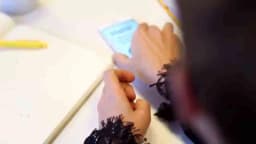
The creative execution centres on the physical vocabulary of touch: the gesture language of pointing, swiping, and pinching rendered on a Windows 10 device in a way that mirrors the effortless quality those same gestures carry on a smartphone. By drawing a direct parallel between mobile touch behaviour and PC touch behaviour, the film attempts to collapse the psychological distance between two device categories that consumers had long treated as separate. The word 'addictive' functions as both the campaign title and its core emotional claim — suggesting that the pleasure of touch interaction is not merely functional but compulsive, that it creates a preference that is difficult to walk back once experienced. This is a notably confident rhetorical move for a product category — personal computers — that had spent much of the preceding decade struggling to define itself against the experiential clarity of smartphones and tablets. The film's reliance on a single media asset rather than a multi-format campaign suggests a focused, market-specific deployment calibrated for the Swedish context rather than a broad international rollout. Chimney's involvement as production company brings established Swedish post-production expertise to the execution.
No verified performance data for the 'Addictive' campaign is publicly available. No independently verifiable trade-press reviews, effectiveness awards entries, or reported commercial outcomes for this campaign appear in Campaign, Ad Age, Adweek, or equivalent Swedish industry publications. The Clapboard Ad Archive assigns the campaign a Clapboard Score of 53 out of 100, a result that places it in the functional middle range of archived work — competent and coherent but not a landmark execution.
Structurally, the campaign's effectiveness argument is strongest at the level of insight clarity. The behavioural truth it identifies — that touch interaction has become instinctive through mobile device use and that Windows 10 can inherit that instinct — is a genuinely useful strategic observation. Where the campaign is more limited is in differentiation: Apple and Google were making adjacent arguments about natural interaction in the same period, and a single film asset in one market provides limited surface area for an idea to build cultural resonance. The decision to anchor the campaign in Sweden in December 2016 is contextually sensible — a high-engagement consumer electronics market at a peak retail moment — but without measurable outcomes, the structural logic can only be assessed, not validated. What 'Addictive' demonstrates clearly is Microsoft's willingness, in partnership with JMW, to invest in emotionally framed technology advertising rather than the specification-led formats the brand had historically favoured.
Microsoft's 'Addictive' campaign promotes Windows 10's touchscreen capabilities in Sweden. Created by JMW in December 2016, it argues that pointing, swiping, and pinching on a Windows 10 device are more intuitive and efficient than mouse-and-keyboard interaction, drawing on the touch habits consumers already formed through smartphone use.
JMW, a Stockholm-based advertising agency, created the 'Addictive' campaign for Microsoft. The film was produced by Chimney, with Creative Director Samuel Garlöv and Executive Creative Director Joakim Karlsson leading the creative work, as documented in the Clapboard Ad Archive.
Microsoft's 'Addictive' campaign was published in Sweden in December 2016. It was a market-specific film deployment rather than a broad international rollout, targeting Swedish consumers in a high-engagement electronics market during a peak retail period for technology purchases.
The Clapboard Ad Archive assigned Microsoft's 'Addictive' campaign a score of 53 out of 100. This places the work in the functional middle range of archived advertising — coherent in its strategic premise and creative approach, but not a landmark execution within the competitive Internet and Technology category.
Microsoft shifted toward human-centred technology demonstrations around this period, moving away from specification-led advertising. 'Addictive' reflects that direction by making Windows 10 touchscreen feel behavioural and instinctive rather than technical, continuing a creative approach the brand had been developing since at least 2013, according to the Clapboard Ad Archive.
Apple and Google were Microsoft's most direct competitive pressures in the touch-capable personal computing space during 2016. Apple promoted touch and Force Touch across its iPad and MacBook lines, while Google advanced its Chromebook and Android tablet ecosystem, creating a crowded market context for Windows 10's touchscreen proposition in Sweden.
.webp)
Creative Collaboration Platform: The Backbone of Modern Creative WorkWhat is a creative collaboration platform?Clapboard defines a creative collaboration platform as the operational core for today’s distributed creative teams. This is not a collection of digital collaboration tools stitched together; Clapboard’s system


Understanding the Creative Production MarketplaceWhat is a Creative Production Marketplace?Clapboard defines a creative production marketplace as a structured ecosystem where brands, agencies, and production talent converge to execute video, advertising, and branded content at scale. Unlike the legacy agency or freelanREAD FULL ARTICLE

The Urgent Need for a Creative Production Operating SystemWhy Traditional Creative Production Models Break DownClapboard sees the creative production landscape shifting under pressure. Content velocity is no longer a buzzword—it’s a mandate. Modern advertising demands relentless output across dozens of channels, each wREAD FULL ARTICLE