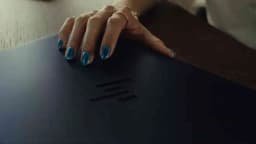
Microsoft's Productivity Future Vision, published in the United States in March 2015, depicts emerging technologies reshaping collaboration across a

Microsoft Productivity Future Vision Imagines Work in 2025
Microsoft's Productivity Future Vision is a digital film published in the United States in March 2015 that depicts how emerging technologies — including augmented reality, smart surfaces, next-generation wearables, and fluid mobility — could transform professional collaboration across a five-to-ten-year horizon.
The campaign follows two protagonists: Kat, a young independent marine biologist, and Lola, a corporate executive. Working across geographies and disciplines, the two characters navigate a highly interconnected and information-rich future where the boundaries between physical and digital workspaces have dissolved. The choice of characters is deliberate — a field scientist and a boardroom leader represent the full breadth of professional life that Microsoft's ecosystem aspires to serve, from remote data collection to real-time executive decision-making.
Published as a single digital media asset, the film operates as both a public-facing brand statement and an internal strategic tool for Microsoft's own teams. As reported by GeekWire, David Jones, executive producer on Microsoft's Envisioning Team, discussed precisely this dual purpose in a GeekWire Radio interview on February 28, 2015, describing the video as a resource for articulating future-of-work scenarios across internal and external audiences. In the United States, where Microsoft competes directly against Apple and Google across hardware, software, and cloud services, the film positions the company not as a device or software maker but as the connective tissue of a smarter working world. The Clapboard Score for this campaign is 79 out of 100, reflecting strong conceptual ambition and production coherence against a backdrop of limited independently verifiable performance data.

Microsoft's Envisioning Team designed Productivity Future Vision to shift perception rather than sell a product. The film presents Microsoft as the platform layer underneath an entire ecosystem of emerging technologies, a positioning that responds to competitive pressure from Apple and Google, both of which had spent years cultivating aspirational brand identities around hardware design and consumer experience respectively. By centering the narrative on work — marine biology fieldwork, cross-continental executive collaboration — Microsoft staked its claim on the professional and enterprise imagination rather than the consumer one.
The strategic timing is significant. In the United States, the cloud services market was expanding rapidly in 2015, with global cloud revenues reaching approximately one hundred and ten billion dollars for the four quarters ending September 2015, growing at twenty-eight percent year over year, according to CRN. Microsoft's Azure platform was a direct participant in that expansion, and a film depicting seamless, device-agnostic, data-rich professional environments serves as implicit advocacy for cloud-first infrastructure. The film does not name a product; it names a condition — the highly interconnected workplace — that only a company with Microsoft's breadth of services could credibly promise to deliver.
The choice of a speculative five-to-ten-year horizon, as described in Clapboard's editorial documentation, also insulates the campaign from accountability to present-day product limitations. It is an envisioning exercise, not a product demonstration, which allows the creative team to depict 3D holograms, bendable displays, and digital wrist cuffs — technologies that, as reported by InformationWeek on February 27, 2015, were central to Microsoft's depicted vision — without requiring immediate commercial availability.
Microsoft's Productivity Future Vision was published by McCann New York, according to Clapboard's campaign records. The film's creative approach is rooted in environmental storytelling: rather than staging product demonstrations, it constructs plausible professional worlds and allows the technology to function as ambient infrastructure within those worlds. The marine biology setting — Kat working in a data-rich field environment — and Lola's corporate context are rendered with enough specificity to feel inhabited rather than staged, a distinction that separates effective future-vision content from generic concept reels.
David Jones, executive producer on Microsoft's Envisioning Team, and Anton Andrews participated in a Channel 9 interview discussing the 2015 Future Vision project, as documented on Julian Kay's blog on November 18, 2015. Their involvement points to a production process that was tightly integrated with Microsoft's internal research and strategy functions, rather than delegated entirely to an external creative agency. This inside-out approach to production lends the film a degree of technical credibility that purely agency-originated concept films sometimes lack.
The visual language of the film centres on surfaces: tables, windows, walls, and wearables that respond to gesture and presence. As reported by InformationWeek, the depicted technologies include thin tablet-like devices, earpieces, and a digital wrist cuff for notifications and directions — objects that feel grounded in near-future extrapolation rather than science fiction. The interconnected quality of every surface and device in the film is not incidental; it is the argument. Every visual choice reinforces the idea that in Microsoft's vision of 2025, the network is the workspace, and the workspace is everywhere.
No verified performance data for Productivity Future Vision is publicly available in terms of view counts, earned media reach, or conversion metrics attributable to this specific campaign. What the public record does confirm is the film's reception as a credible and widely circulated technology statement. Coverage appeared across GeekWire, InformationWeek, and Hacker News in the days surrounding its February and March 2015 release, suggesting organic amplification well beyond any paid distribution Microsoft may have employed.
Structurally, the campaign demonstrates several properties associated with durable brand content. Its speculative five-to-ten-year horizon, as noted in Clapboard's editorial documentation, means the film aged gracefully rather than becoming obsolete at product cycle. The dual-protagonist structure — a field scientist and a corporate executive — maximises audience identification across Microsoft's enterprise customer base. And the absence of explicit product branding within the film's narrative reduces the friction that often limits sharing of overtly commercial content.
In the United States, where Microsoft was navigating intensifying competition from Google's G Suite and Apple's expanding enterprise ambitions in 2015, a film that reframes the company as the architect of the future working environment carries strategic value that outlasts any single campaign metric. The Integral Conversation's coverage, cited from Content Integral-Conversation, further documents the film's circulation within professional and academic communities interested in future-of-work research, extending its reach into audiences that traditional advertising rarely penetrates.
Microsoft's Productivity Future Vision is a digital film published in the United States in March 2015. It depicts two professional women — a marine biologist and a corporate executive — navigating a highly interconnected, technology-rich working environment projected five to ten years into the future, as documented in Clapboard's campaign records.
Productivity Future Vision was published by McCann New York, according to Clapboard's records. David Jones served as executive producer on Microsoft's Envisioning Team, and both Jones and Anton Andrews discussed the project's purpose and production in a Channel 9 interview documented on Julian Kay's blog in November 2015.
Microsoft's Productivity Future Vision depicts 3D holograms, smart surfaces, next-generation wearables, and fluid mobility. As reported by InformationWeek on February 27, 2015, the film specifically featured thin tablet-like devices, earpieces, and a digital wrist cuff, all framed within a seamlessly interconnected professional environment across field and office settings.
Microsoft released Productivity Future Vision as both a public brand statement and an internal strategic tool, as described by executive producer David Jones in a GeekWire Radio interview on February 28, 2015. The film repositioned Microsoft as the connective infrastructure of future professional work rather than a conventional software or device manufacturer.
Productivity Future Vision differs from Microsoft's product-led campaigns such as the Windows Phone 8 launch in November 2012, which featured celebrity talent including Jessica Alba and Gwen Stefani and was created by Crispin Porter and Bogusky. The 2015 film avoids product placement entirely, operating instead as a speculative vision of interconnected working life.
Microsoft's Productivity Future Vision received a Clapboard Score of 79 out of 100. The score reflects the campaign's strong conceptual ambition, coherent visual storytelling, and strategic positioning of emerging technologies within credible professional scenarios, assessed against publicly available creative and contextual evidence rather than independently verified performance metrics.
.webp)
Creative Collaboration Platform: The Backbone of Modern Creative WorkWhat is a creative collaboration platform?Clapboard defines a creative collaboration platform as the operational core for today’s distributed creative teams. This is not a collection of digital collaboration tools stitched together; Clapboard’s system


Understanding the Creative Production MarketplaceWhat is a Creative Production Marketplace?Clapboard defines a creative production marketplace as a structured ecosystem where brands, agencies, and production talent converge to execute video, advertising, and branded content at scale. Unlike the legacy agency or freelanREAD FULL ARTICLE

The Urgent Need for a Creative Production Operating SystemWhy Traditional Creative Production Models Break DownClapboard sees the creative production landscape shifting under pressure. Content velocity is no longer a buzzword—it’s a mandate. Modern advertising demands relentless output across dozens of channels, each wREAD FULL ARTICLE