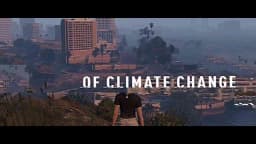
MGI's Plastic Farming campaign, created by Asiatic Marketing Communications Limited in December 2023, transformed discarded plastic bottles into floating farms

How MGI Turned Plastic Waste Into Floating Farms Across Bangladesh
MGI's Plastic Farming campaign is a 2023 experiential initiative from Meghna Group of Industries, created by Asiatic Marketing Communications Limited, that converts discarded plastic bottles into floating farm beds, enabling landless farmers in flood-affected regions of Bangladesh to grow winter vegetables and reclaim agricultural livelihoods.
Bangladesh loses approximately 69,000 hectares of agricultural land annually to flooding and climate-induced erosion, according to the campaign's documented brief. Against that backdrop, Meghna Group of Industries spent two years researching a structural response before arriving at Plastic Farming — an initiative that transforms plastic waste into productive agricultural infrastructure. The campaign launched on December 25, 2023, with Asiatic Marketing Communications Limited as the creating agency, working alongside Bidyanondo, a voluntary organisation, and local government agriculture officers to deploy the solution at community scale.
The mechanics of Plastic Farming are deliberately low-tech and replicable. Landless farmers construct floating platforms using simple bamboo frames, reclaimed plastic bottles, water hyacinth, compost, and crop seeds. MGI supported adoption through nationwide activations, a dedicated website at plasticfarming.com, Bangla-language video tutorials, and printed product manuals — removing barriers for communities with limited digital access. Initial implementation reached 2,100 farmers across 20 villages in Tungipara, Gopalganj, and Pirojpur, as reported by TBS News. The campaign subsequently scaled: the MGI project website documents more than 15,232 farmers reached across 117 training sessions, with 117 tons of plastic collected through the programme. Plastic Farming earned a Clapboard Score of 79 out of 100, reflecting its integration of genuine social utility with creative communication craft.

Bangladesh faces a compounding environmental and economic challenge that made Plastic Farming a strategically inevitable idea. The country's rivers carry approximately 73,000 tons of plastic waste every day, according to the campaign's documented research, while simultaneously, the agricultural land base available to smallholder and landless farmers continues to shrink under annual flood cycles. MGI, operating as a major conglomerate in the fast-moving consumer goods sector, recognised that its own product lines contribute to plastic waste in the supply chain — and that acknowledging this responsibility publicly, through action rather than messaging, was the only credible strategic posture available to the brand.
In Bangladesh, food inflation averaged approximately ten percent year-on-year in 2023, according to Bangladesh Bank, placing acute pressure on rural farming households already displaced by climate events. The Bangladesh FMCG market was estimated at approximately four billion US dollars in 2023, according to Invest Bangladesh, with food and beverage accounting for a substantial share of that value. Within this market, MGI competes with multinational FMCG operators including Nestlé Bangladesh and Unilever Bangladesh, both of which maintain sustainability narratives centred on packaging reduction and corporate social responsibility communications. What differentiates Plastic Farming strategically is that it bypasses conventional CSR messaging entirely: the campaign does not describe a commitment but demonstrates a working system, validated by real farmers in named districts. The partnership with Bidyanondo lent grassroots credibility, while the involvement of government agriculture officers signalled institutional endorsement — a combination that Campaign Brief Asia noted positively in its roundup of Bangladesh's strongest creative contenders of the period.
Asiatic Marketing Communications Limited built the creative execution of Plastic Farming around the principle that the intervention itself is the advertisement. The campaign's creative architecture is documentary and instructional rather than aspirational: it shows real farmers in Tungipara, Gopalganj, and Pirojpur constructing and harvesting from floating beds, presenting the method as a learnable, repeatable skill rather than a branded spectacle. This choice reflects a mature understanding of the target audience — landless farming communities who require practical utility, not persuasive imagery.
The agency's leadership team on the project included Executive Creative Director Mohammad Akrum Hossain and Senior Creative Director Md. Abdullah Al Rana, with Managing Director Ferdous Hasan Neville overseeing the broader initiative. Strategic direction was led by Protyoi Sinha Raeq, Director of Strategic Planning, while account management was handled by Arabi Rahman. The digital advertising layer was executed by Sumsuddin Al-Mahmud, known as Shezan, in the Executive Digital Advertising role, and creative management by Kazi Naim Uddin. Lead Growth Officer Sadib Ehsan coordinated the growth and scaling dimension of the campaign.
The production centred on Bangla-language video tutorials designed for accessibility in rural contexts, complemented by physical MGI product manuals distributed during village activations. The dedicated platform at plasticfarming.com served as a persistent instructional resource beyond the activation period. The visual language of the campaign draws from agricultural documentary traditions — observational, unhurried, and rooted in the physical reality of floating farm construction — ensuring the content functions as genuine education while simultaneously carrying the MGI brand into communities that conventional advertising rarely reaches. The experiential medium classification reflects how fully the campaign dissolved the boundary between brand communication and community infrastructure.
Plastic Farming achieved verified, documented results across both community reach and international recognition. TBS News reported the initial phase of the campaign reached 2,100 farmers across 20 villages in Tungipara, Gopalganj, and Pirojpur, with participants producing winter vegetables using the floating-farm method. The MGI project website subsequently documented growth to more than 15,232 farmers engaged across 117 training sessions, with 117 tons of plastic collected as part of the programme — figures that establish Plastic Farming as a campaign with measurable real-world output rather than symbolic gesture.
On the awards circuit, the campaign earned the SDG Brand Champion Award 2024 in the Climate and Environment category. At Commward 2024, Plastic Farming took five awards. At MAD STARS 2024, the campaign received Gold in Brand Experience and Activation, Silver in SDGs, and Bronze in Innovation — a result that positions it among the most-decorated Bangladeshi advertising campaigns of the 2023 to 2024 cycle. Campaign Brief Asia covered the campaign as part of its roundup of Bangladesh's strongest international creative contenders, providing further third-party editorial validation. The Food and Agriculture Organization of the United Nations has documented floating garden agriculture — locally known as baira — as a climate-adaptive practice in Bangladesh, according to FAO, providing an authoritative framework that contextualises why Plastic Farming's method holds structural credibility. Clapboard assigns the campaign a score of 79 out of 100, reflecting strong execution across social utility, creative coherence, and measurable community impact, with room to grow in media amplification and longitudinal documentation of agricultural outcomes.
MGI's Plastic Farming campaign is a 2023 experiential initiative that converts discarded plastic bottles into floating farm beds for landless farmers in Bangladesh. Created by Asiatic Marketing Communications Limited and launched on December 25, 2023, it combines bamboo frames, water hyacinth, and seeds to enable food production on flood-affected water surfaces.
Plastic Farming initially reached 2,100 farmers across 20 villages in Tungipara, Gopalganj, and Pirojpur, according to TBS News. The MGI project website subsequently documented growth to more than 15,232 farmers across 117 training sessions, with 117 tons of plastic collected through the programme across Bangladesh.
Asiatic Marketing Communications Limited created Plastic Farming for Meghna Group of Industries. The Dhaka-based agency led the campaign's creative, strategic, and digital execution, with Executive Creative Director Mohammad Akrum Hossain and Managing Director Ferdous Hasan Neville among the key figures named in the campaign credits.
Plastic Farming won Gold in Brand Experience and Activation, Silver in SDGs, and Bronze in Innovation at MAD STARS 2024. The campaign also received five awards at Commward 2024 and the SDG Brand Champion Award 2024 in the Climate and Environment category, establishing it as one of Bangladesh's most-recognised campaigns of the period.
Farmers build floating platforms using bamboo frames, reclaimed plastic bottles, water hyacinth, compost, and crop seeds. The platforms sit on water surfaces created by Bangladesh's annual floods, allowing landless farmers to cultivate winter vegetables without conventional soil. MGI supported adoption through village activations, Bangla video tutorials, and the plasticfarming.com website.
Clapboard assigns MGI's Plastic Farming campaign a score of 79 out of 100. The score reflects strong performance across social utility, creative coherence, and measurable community impact in Bangladesh, with identified room to grow in sustained media amplification and longitudinal documentation of agricultural and environmental outcomes over time.
.webp)
Creative Collaboration Platform: The Backbone of Modern Creative WorkWhat is a creative collaboration platform?Clapboard defines a creative collaboration platform as the operational core for today’s distributed creative teams. This is not a collection of digital collaboration tools stitched together; Clapboard’s system


Understanding the Creative Production MarketplaceWhat is a Creative Production Marketplace?Clapboard defines a creative production marketplace as a structured ecosystem where brands, agencies, and production talent converge to execute video, advertising, and branded content at scale. Unlike the legacy agency or freelanREAD FULL ARTICLE

The Urgent Need for a Creative Production Operating SystemWhy Traditional Creative Production Models Break DownClapboard sees the creative production landscape shifting under pressure. Content velocity is no longer a buzzword—it’s a mandate. Modern advertising demands relentless output across dozens of channels, each wREAD FULL ARTICLE