 ARCHIVE
The Art of Self Examination - MACMA | Clapboard Ad Archive
MACMA’s 2022 campaign The Art of Self Examination, created by DAVID Buenos Aires in the healthcare...
Melatol Bets on Empathy to Reclaim Sleep for Argentines
Melatol's 'Volvé a tener sueño' is a 2021 Argentine pharmaceutical film campaign created by ad school ds in Buenos Aires, built around the insight that six in ten people in Argentina suffer from sleep disorders, positioning the brand not as a clinical remedy but as a means of reclaiming a fundamental human experience.
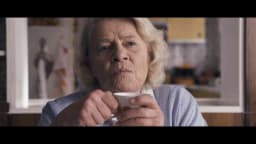
The campaign launched in Argentina in January 2021, produced as a student initiative under the creative direction of ds. Art director David Salcedo and copywriter Santiago Pelaez developed the work, which spans four documented media assets. The lead execution, titled 'Melatol – Extrañaste tener pesadillas,' translates loosely as 'Did you miss having nightmares,' an unexpected and disarming question that anchors the campaign's emotional logic. The title 'Volvé a tener sueño' — meaning 'Start dreaming again' or 'Go back to sleep' — operates on a deliberate double meaning, invoking both the physiological act of sleeping and the broader idea of restored hope and vitality.
Melatol is a branded melatonin product manufactured by Laboratorio Gramon in Argentina, commonly available in a three-milligram presentation, according to Argentina's national medicines regulator ANMAT. The brand carries more than twenty-five years of market presence, according to Melatol Com Ar, and held a dominant position in Argentina's sleep-inducing pharmaceutical category at the time of the campaign's release. In the United States, melatonin is classified as a dietary supplement, but in Argentina the regulatory framework positions products like Melatol differently within the pharmaceutical landscape, a distinction that shapes how the brand may communicate with consumers. The campaign's geographic focus is entirely on Argentina, and its messaging is calibrated precisely to the lived experience of Argentine audiences navigating disrupted sleep.
Melatol held more than seventy percent market share in Argentina's sleep-inducing pharmaceutical category at the time this campaign launched, according to melatol.com.ar. That dominance does not eliminate competitive pressure — it sharpens the strategic imperative to defend category leadership through emotional relevance rather than functional differentiation alone. Rival sleep-aid options available in the Argentine market, including broader sedative and anxiolytic categories regulated by ANMAT, compete less on brand warmth and more on clinical framing, a gap that 'Volvé a tener sueño' moves to occupy.
The campaign's consumer insight is precise and locally anchored. Six in ten people in Argentina experience sleep disorders, a figure that transforms the target audience from a niche of insomnia sufferers into a near-majority of the adult population. This statistical reality, drawn directly from the campaign's own stated rationale as documented on clapboard.com, reframes Melatol's relevance from a specialist remedy to an everyday necessity. The creative team at ds recognized that the brand's greatest strategic asset was not its pharmaceutical efficacy but its capacity to name a widespread, underacknowledged source of suffering and offer return to normalcy.
In Argentina, the intersection of economic stress, social disruption from the pandemic period, and historically elevated rates of anxiety created fertile ground for a sleep-focused healthcare campaign in 2021. Adlatina has documented the broader trend of Argentine pharmaceutical brands moving toward empathetic, lifestyle-led narratives during this period, a shift that 'Volvé a tener sueño' reflects with precision. By positioning Melatol as the path back to vivid, uninterrupted sleep — complete with the irreverent detail of dreaming again, even nightmares — the campaign sidesteps the clinical register entirely and speaks to the emotional texture of what good sleep actually feels like.
Art director David Salcedo led the visual execution of 'Volvé a tener sueño,' working alongside copywriter Santiago Pelaez at ds, the Buenos Aires advertising school responsible for the campaign, as documented on clapboard.com. The campaign's production credits beyond these two individuals are not publicly documented in available sources.
The campaign's creative logic is built on narrative inversion. Rather than opening with the problem of sleeplessness and arriving at Melatol as the solution, the lead execution — 'Melatol – Extrañaste tener pesadillas' — begins at the far end of restored sleep, at the absurd and intimate detail of having nightmares again. Nightmares are not pleasant, but their presence signals deep, uninterrupted REM sleep, the kind of sleep a person with genuine sleep disorders cannot access. By asking whether the viewer has missed having nightmares, the campaign simultaneously acknowledges the depth of their prior suffering and reframes recovery in unexpectedly human terms. This rhetorical move is compact and durable, the kind of copywriting that pharmaceutical advertising in Argentina rarely attempts.
The film medium carries this narrative register well. Across four media assets, the campaign builds a consistent emotional world rather than delivering a single product message. The choice to work in film — rather than out-of-home, print, or digital display formats — signals a commitment to sustained storytelling over impressionistic coverage. In the context of a student campaign, this is a notable production ambition. The Spanish-language execution is calibrated for Argentine vernacular, with the intimate second-person address of 'Volvé' reflecting the Rioplatense Spanish used throughout Buenos Aires and the surrounding region, grounding the campaign linguistically as well as geographically in Argentina.
No verified third-party performance data for 'Volvé a tener sueño' is publicly available beyond the archive record held on clapboard.com. The lead execution, 'Melatol – Extrañaste tener pesadillas,' accumulated three hundred eighty-one views on its archived platform record, with zero public comments and zero likes documented at the time of submission, as recorded on clapboard.com. These figures reflect the campaign's status as a student-produced work submitted to a creative archive rather than a commercially deployed media buy with tracked reach and conversion metrics.
Clapboard rates 'Volvé a tener sueño' at 58 out of 100, reflecting a campaign that demonstrates genuine strategic clarity and an unusually sharp creative premise for a healthcare brief, while falling short of full execution polish and documented real-world deployment. The campaign's structural effectiveness is strongest at the insight level. Its central consumer statistic — six in ten Argentines affected by sleep disorders — provides an immediately legible and emotionally resonant foundation for all creative decisions that follow. The narrative inversion at the heart of the lead execution, asking whether viewers have missed nightmares, is a copywriting device with real originality in the pharmaceutical advertising category.
Where the campaign's impact remains unmeasurable is precisely where student campaigns typically stall: without media investment, distribution, or brand-side adoption, the ideas remain proof-of-concept rather than market-tested communication. Melatol's established position in Argentina — built over more than twenty-five years, according to melatol.com.ar — means any campaign carrying its name enters a market with pre-existing consumer trust. Whether 'Volvé a tener sueño' contributed to reinforcing that trust in practice is a question the available record cannot answer.
'Volvé a tener sueño' is a 2021 Argentine pharmaceutical campaign for Melatol created by ad school ds in Buenos Aires. It targets the sleep disorder crisis affecting six in ten people in Argentina, using narrative film to reframe Melatol not as a clinical product but as a way to reclaim normal, vivid sleep.
The campaign was created by ds, a Buenos Aires advertising school. Art director David Salcedo and copywriter Santiago Pelaez led the work, as documented on clapboard.com. The campaign was submitted as a student project and spans four media assets, with the lead execution titled 'Melatol – Extrañaste tener pesadillas.'
Six in ten people in Argentina suffer from sleep disorders, according to the campaign's own stated rationale as recorded on clapboard.com. This local consumer insight transforms Melatol's audience from a niche of clinical insomnia patients into a near-majority of Argentine adults, justifying an empathetic, lifestyle-led narrative approach over functional pharmaceutical messaging.
Melatol is the leading sleep-inducing pharmaceutical brand in Argentina. According to melatol.com.ar, the brand held more than seventy percent market share in its category and carries over twenty-five years of market presence. It is manufactured by Laboratorio Gramon and regulated by Argentina's national medicines authority ANMAT.
Clapboard rates 'Volvé a tener sueño' at 58 out of 100. The score reflects genuine strategic clarity and an original creative premise within healthcare advertising, balanced against limited documented deployment and the campaign's status as a student production without verified commercial distribution or third-party performance metrics.
Earlier Melatol campaigns were produced by professional agencies. According to adlatina.com and totalmedios.com, agency Verne developed the 'Cabeceadores' 360-degree campaign covering Melatol, Melatol Plus, and Melatol Difen, directed by Henry Meziat. The 2021 ds campaign represents a student reinterpretation, narrower in scope but sharper in its single-insight narrative focus.
.webp)
Creative Collaboration Platform: The Backbone of Modern Creative WorkWhat is a creative collaboration platform?Clapboard defines a creative collaboration platform as the operational core for today’s distributed creative teams. This is not a collection of digital collaboration tools stitched together; Clapboard’s system


Understanding the Creative Production MarketplaceWhat is a Creative Production Marketplace?Clapboard defines a creative production marketplace as a structured ecosystem where brands, agencies, and production talent converge to execute video, advertising, and branded content at scale. Unlike the legacy agency or freelanREAD FULL ARTICLE

The Urgent Need for a Creative Production Operating SystemWhy Traditional Creative Production Models Break DownClapboard sees the creative production landscape shifting under pressure. Content velocity is no longer a buzzword—it’s a mandate. Modern advertising demands relentless output across dozens of channels, each wREAD FULL ARTICLE