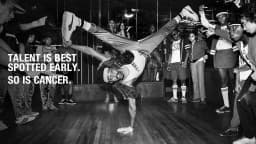
Deciphera's LettersToGIST, created by Klick Health in the United States, uses patient narrative film to humanize gastrointestinal stromal tumor care and

How Deciphera and Klick Health Put GIST Patients at the Center of Pharma Storytelling
LettersToGIST is a 2024 pharmaceutical film campaign created by Klick Health for Deciphera, published in the United States in January 2024, that uses personal narrative to humanize gastrointestinal stromal tumor disease and position Deciphera as a compassionate partner in rare cancer care rather than solely a drug manufacturer.
Deciphera is a pharmaceutical company focused on gastrointestinal stromal tumors. Its drug Qinlock, known generically as ripretinib, launched commercially in May 2020 as a fourth-line GIST treatment, according to pharmalive.com. LettersToGIST represents a creative evolution in Deciphera's patient communications strategy, shifting emphasis away from product- and access-oriented messaging toward emotional resonance and lived patient experience, as documented by Clapboard's editorial archive. The campaign comprises a single film asset, archived by Clapboard on January 16, 2024.
The strategic objective is clear: raise awareness of GIST — a rare cancer with limited public recognition — while reinforcing Deciphera's identity as an advocate for patients navigating the disease. In the United States, where rare disease communities are often underserved by mainstream health communications, narrative-driven film offers a format capable of reaching both patients and the healthcare professionals who treat them. The campaign title itself, LettersToGIST, signals the personal register the creative team chose to adopt, framing patient stories as direct communications directed at the disease itself. The Clapboard Score for LettersToGIST is 61 out of 100, reflecting a campaign that is creatively purposeful but limited in documented reach and measurable impact.
Rare cancer communications present a distinct strategic challenge. GIST affects a relatively small patient population, which means campaigns must work harder within tightly defined communities rather than broadcasting to mass audiences. In the United States, the GIST therapeutics market represents a growing but still specialised segment of oncology. The global GIST therapeutics market was estimated at approximately 1.5 billion dollars in 2024, growing at a compound annual rate of 8.3 percent, according to Global Market Insights. Strategic Market Research places the 2024 market value higher, at approximately 2.1 billion dollars, projecting 7.9 percent CAGR through 2030. These figures reflect a competitive and expanding landscape where patient loyalty and physician trust carry outsized commercial weight.
Klick Health's strategic choice to anchor LettersToGIST in personal narrative directly addresses this dynamic. Deciphera operates in a space where competitors including Novartis, which markets imatinib under the brand name Gleevec, and Pfizer, which markets sunitinib as Sutent, have long-established clinical presences. In that context, emotional differentiation through patient storytelling becomes a credible competitive lever. Oral tyrosine-kinase inhibitors accounted for approximately 62.3 percent of 2024 GIST market revenue, according to Global Market Insights, underscoring how intensely product-focused the category has historically been. LettersToGIST positions Deciphera outside that purely clinical frame.
The film format was a deliberate choice. Klick Health had previously demonstrated its ability to activate quickly around Deciphera's regulatory milestones — producing and deploying 62 print and digital assets within one hour of Qinlock's label approval, according to pharmalive.com. LettersToGIST reflects a longer creative arc: from rapid product launch support to sustained patient engagement through storytelling. This evolution reflects broader trends in United States pharmaceutical marketing, where patient-centricity has moved from a talking point to an expected creative posture.
LettersToGIST uses film as its sole medium. The campaign's single-asset structure concentrates its entire communicative weight on one piece of narrative film, a choice that demands craft precision rather than reach through volume. The creative approach centers on personal narrative — letters addressed to the disease itself — which frames GIST not as an abstract clinical condition but as a presence that patients have lived alongside, challenged, and attempted to name on their own terms.
Production credits for LettersToGIST are not publicly documented. What the archive record establishes is that Klick Health served as the creating agency, and that the campaign was submitted to the CreativeFloor archive under the year 2023, with publication recorded in January 2024. Klick Health is a Toronto-founded health-specialist agency with an established track record in United States pharmaceutical campaigns, including its rapid multi-asset Qinlock launch activation documented by pharmalive.com. That lineage informs the craft sensibility visible in LettersToGIST: a preference for emotional clarity over clinical density.
The epistolary conceit — letters written to a disease — carries significant creative risk. It asks audiences to inhabit a subjective, emotionally exposed register that pharmaceutical communications frequently avoid in favour of reassuring clinical authority. For a rare cancer like GIST, where patients often spend years without a correct diagnosis and where the treatment landscape has only recently expanded, this posture of direct, personal address resonates with authentic patient experience. The film format amplifies this through the natural intimacy of camera, voice, and performance. In the United States healthcare content landscape, where patient-facing pharmaceutical films often default to testimonial formats built around product claims, LettersToGIST's commitment to pure narrative marks it as a considered creative departure from category conventions.
No verified performance data attributing sales lift, market-share change, brand-tracking shifts, or awareness metrics to LettersToGIST specifically is publicly available. The campaign's archive listing records 280 views and one like at the time of documentation, figures that reflect the limited scale of specialist pharmaceutical content distribution rather than a meaningful proxy for campaign effectiveness. No reviews of LettersToGIST appear in Campaign, Ad Age, Adweek, The Drum, or Contagious, and no verifiable social media reaction data has been documented on Twitter/X, Reddit, LinkedIn, or YouTube.
No awards for LettersToGIST have been verified across Cannes Lions, Effies, The One Show, D&AD, Clios, Webby Awards, or WARC Awards. A separate Deciphera and Klick Health campaign, Trapped by TGCT, was identified as a finalist at New York Festivals, but this recognition does not apply to LettersToGIST.
Structurally, the campaign's single-asset film format is well-suited to educational outreach within rare disease communities in the United States, where depth of engagement within a small, informed audience often matters more than broad reach metrics. The epistolary narrative approach creates content that functions as both emotional advocacy and brand positioning. These are durable communicative assets in rare cancer categories where physician relationships and patient community trust develop over years rather than campaign cycles. The Clapboard Score of 61 out of 100 reflects a campaign with clear creative intent and sound strategic rationale that remains constrained by limited documented distribution and the inherent reach ceiling of rare disease pharmaceutical communications.
LettersToGIST is a pharmaceutical film campaign created by Klick Health for Deciphera, published in the United States in January 2024. It uses personal narrative storytelling to humanize gastrointestinal stromal tumor disease and position Deciphera as a patient advocate rather than solely a drug manufacturer, comprising a single film asset archived on January 16, 2024.
Klick Health created LettersToGIST for Deciphera. Klick Health is a health-specialist agency with an established track record in United States pharmaceutical campaigns, including the rapid multi-asset launch activation for Deciphera's Qinlock drug in 2020, documented by pharmalive.com, making LettersToGIST a continuation of that agency-client relationship.
LettersToGIST has not won verified awards. No recognition for this campaign has been confirmed across Cannes Lions, Effies, The One Show, D&AD, Clios, Webby Awards, or WARC Awards. A separate Deciphera and Klick Health campaign, Trapped by TGCT, reached finalist status at New York Festivals, but that distinction does not apply to LettersToGIST.
Deciphera chose film because the format supports intimate, story-driven engagement suited to rare cancer communications. In the United States, where GIST awareness remains limited, film allows the campaign to reach both patients and healthcare professionals through emotional narrative rather than clinical messaging, differentiating Deciphera from competitors including Novartis and Pfizer in the GIST therapeutics space.
LettersToGIST receives a Clapboard Score of 61 out of 100. The score reflects clear creative intent and a sound patient-centric strategy, offset by limited documented distribution reach, the absence of verified performance metrics, and no confirmed industry award recognition, which together constrain the campaign's overall effectiveness rating on Clapboard's editorial scale.
LettersToGIST represents a creative evolution in Deciphera's patient communications. According to pharmalive.com, Klick Health produced 62 assets within one hour of Qinlock's 2020 regulatory approval. LettersToGIST shifts that rapid product-launch orientation toward sustained emotional storytelling, marking a deliberate move from access-focused messaging to long-term patient advocacy within the United States rare cancer communications landscape.
.webp)
Creative Collaboration Platform: The Backbone of Modern Creative WorkWhat is a creative collaboration platform?Clapboard defines a creative collaboration platform as the operational core for today’s distributed creative teams. This is not a collection of digital collaboration tools stitched together; Clapboard’s system


Understanding the Creative Production MarketplaceWhat is a Creative Production Marketplace?Clapboard defines a creative production marketplace as a structured ecosystem where brands, agencies, and production talent converge to execute video, advertising, and branded content at scale. Unlike the legacy agency or freelanREAD FULL ARTICLE

The Urgent Need for a Creative Production Operating SystemWhy Traditional Creative Production Models Break DownClapboard sees the creative production landscape shifting under pressure. Content velocity is no longer a buzzword—it’s a mandate. Modern advertising demands relentless output across dozens of channels, each wREAD FULL ARTICLE