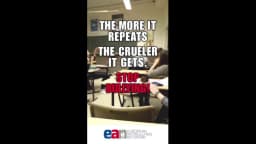
MACMA's Man Boobs for Boobs campaign by David Buenos Aires used male nipples to bypass social media censorship and teach breast self-examination in Argentina

MACMA Man Boobs for Boobs and the Censorship Loophole That Changed Breast Cancer Awareness
MACMA's "Man Boobs for Boobs" is a 2016 digital public service campaign created by ad agency David in Buenos Aires, Argentina, that used a male model's chest to demonstrate breast self-examination, exploiting social media platforms' permissive policies on male nipples to bypass the restrictions routinely applied to female nudity in breast cancer awareness content.
MACMA — Movimiento Ayuda Cáncer de Mama, Argentina's breast cancer support organisation — commissioned David Buenos Aires to solve a persistent problem in breast cancer communication. Social platforms including Facebook were routinely removing or restricting videos that featured female nipples, even in clinical or educational contexts, making it structurally difficult to reach women with life-saving self-examination guidance. The campaign's answer was precise and counterintuitive: film a male model performing the identical examination technique, narrating each step in the same clinical language a woman would use on herself. Because the platforms' content policies permitted male nipples without restriction, the instructional video circulated freely, reaching the audiences that health organisations had struggled to access.
Published in Argentina in April 2016, the campaign operated in the digital medium and was classified under the public interest category. Its primary objective was early detection promotion — equipping Argentine women with the practical knowledge to conduct self-examinations, delivered in a format the algorithmic gatekeepers of major social platforms could not suppress. The strategic simplicity of that objective gave the creative execution unusual clarity: every production decision served the instructional purpose, and the instructional purpose served the platform workaround. The result was a campaign that functioned simultaneously as health education, social commentary on censorship, and earned-media engine — a combination that would propel it far beyond the borders of Argentina and into the upper tier of recognised public service advertising globally.
Social platforms enforced an asymmetric content policy that became the campaign's entire strategic foundation. Facebook and comparable platforms permitted male nipples unconditionally while systematically removing or age-restricting content featuring female nipples, regardless of medical or educational intent. For organisations working in breast cancer awareness, this created a direct operational barrier: the most natural way to demonstrate self-examination was the one the platforms would not allow.
David Buenos Aires identified this policy gap not as an obstacle but as the brief itself. By substituting a male torso for a female one, the agency produced content that was functionally identical in its instructional value but categorically exempt from the restrictions that had frustrated previous efforts. The move was grounded in a genuine consumer insight: Argentine women were not receiving consistent, accessible guidance on breast self-examination because the digital channels best suited to reach them were actively suppressing the content designed to help them. According to campaignsoftheworld.com, the campaign addressed the reality that female-led health demonstrations were being removed before they could accumulate meaningful reach.
In the competitive landscape of public service advertising, campaigns addressing women's health in Argentina faced the same structural censorship challenge as those mounted by larger international organisations. Avon's breast cancer awareness programmes, documented by avonworldwide.com, and broader global health communication efforts had encountered identical platform friction. What distinguished the MACMA approach was its refusal to petition the platforms for an exemption and its decision instead to work entirely within the existing rules, rendering censorship irrelevant. That strategic posture — compliance as subversion — gave the campaign a news angle that amplified its reach far beyond the audience David and MACMA could have purchased directly, generating substantial earned media coverage across Argentina and internationally from the moment of its April 2016 launch.
The creative execution of "Man Boobs for Boobs" depended on restraint. Executive Creative Directors Joaquín Cubría and Ignacio Ferioli, working with Art Director Ricardo Casal and Copywriter Juan Peña at David Buenos Aires, made a deliberate choice to shoot the instructional video in the register of a straightforward how-to demonstration rather than a conventional advertising film, according to credits documented by Little Black Book and media-marketing.com. The tone is clinical and unhurried. A male model guides the viewer through each stage of breast self-examination — how to position the hand, how to apply pressure, what to feel for — using language drawn directly from medical guidance.
Production was handled by Landia, the Buenos Aires-based production company, with Executive Producer Adrián D'Amario and Producer Thomas Amoedo overseeing physical production, as documented by lbbonline.com. Head of Production at the agency was Brenda Morrison Fell, with Felipe Calviño serving as Agency Producer, per the same source. The deliberate simplicity of the visual approach — a single subject, a neutral background, direct address to camera — served two functions simultaneously. It kept production cost low enough to be appropriate for a nonprofit client in Argentina, and it made the video look indistinguishable from the kind of organic health content that platform algorithms were less likely to flag. The absence of conventional advertising production values was itself a strategic decision.
The campaign also carried a local-language variant operating under the title "Tetas x Tetas," as noted by Rianswart Co Za, which allowed it to circulate in Spanish-language digital communities across Latin America with idiomatic directness. The account was managed by General Accounts Director Emanuel Abeijón, Account Director Lucila Castellani, and Account Executive Brenda Ranieri, per credits reported by lbbonline.com and media-marketing.com, ensuring the campaign's distribution strategy matched the precision of its creative rationale.
"Man Boobs for Boobs" produced measurable results at a scale rare in nonprofit public service advertising. According to campaignsoftheworld.com and adsspot.me, the campaign accumulated more than 8 million views within its first four days of publication in Argentina in April 2016. By the end of the first week, that figure had reached 48 million views, with approximately 700,000 shares, according to the same sources. Total impressions across the campaign's documented lifecycle reached 193 million, with an estimated 17 million US dollars in earned media value, as reported by adsspot.me. MACMA gained approximately 20,000 social media followers over the months following launch, also per adsspot.me.
The industry recognition was equally substantial. The campaign won three Golden Lions at Cannes Lions 2016 and received the Grand Prix for Good at the same festival, according to Branding News and thedrum.com. The Drum ranked "Man Boobs for Boobs" third among the most awarded advertising campaigns of 2016, assigning it 215 points in its ranking published on January 11, 2017, as reported by thedrum.com. These results place the campaign among the most decorated public service advertising works to emerge from Argentina in the digital era.
Clapboard rates "Man Boobs for Boobs" 82 out of 100. The score reflects the campaign's near-perfect alignment between creative mechanism and strategic objective, its exceptional earned-media leverage from a nonprofit budget, and the structural innovation of using platform policy compliance as a distribution strategy — a model with direct applicability beyond breast cancer awareness.
"Man Boobs for Boobs" is a 2016 digital public service campaign created by David Buenos Aires for MACMA, Argentina's breast cancer support organisation. It used a male model to demonstrate breast self-examination, exploiting social platforms' permissive policy on male nipples to distribute instructional content that female-led versions could not reach.
Social media platforms restricted female nipple content, including medical demonstrations, while permitting male nipples without restriction. David Buenos Aires used this policy asymmetry to publish an instructional self-examination video that circulated freely, reaching Argentine women through channels that had previously removed equivalent female-led health content, according to campaignsoftheworld.com.
David Buenos Aires created the campaign for MACMA in April 2016. Executive Creative Directors were Joaquín Cubría and Ignacio Ferioli, with Art Director Ricardo Casal and Copywriter Juan Peña. Production was handled by Landia, with Executive Producer Adrián D'Amario, as documented by lbbonline.com and media-marketing.com.
The campaign reached 48 million views in its first week, with approximately 700,000 shares, according to campaignsoftheworld.com and adsspot.me. It had already surpassed 8 million views within four days of its April 2016 launch in Argentina. Total documented impressions across the campaign's lifetime reached 193 million, per adsspot.me.
The campaign won three Golden Lions at Cannes Lions 2016 and received the Grand Prix for Good, according to branding.news and thedrum.com. The Drum subsequently ranked it third among the most awarded advertising campaigns of the entire 2016 calendar year, awarding it 215 points in its January 2017 ranking.
Clapboard rates "Man Boobs for Boobs" 82 out of 100. The score reflects the campaign's precise alignment between creative mechanism and strategic objective, its exceptional earned-media leverage on a nonprofit budget, and its innovation in using platform content policy compliance as an active distribution strategy for public service advertising in Argentina.
.webp)
Creative Collaboration Platform: The Backbone of Modern Creative WorkWhat is a creative collaboration platform?Clapboard defines a creative collaboration platform as the operational core for today’s distributed creative teams. This is not a collection of digital collaboration tools stitched together; Clapboard’s system


Understanding the Creative Production MarketplaceWhat is a Creative Production Marketplace?Clapboard defines a creative production marketplace as a structured ecosystem where brands, agencies, and production talent converge to execute video, advertising, and branded content at scale. Unlike the legacy agency or freelanREAD FULL ARTICLE

The Urgent Need for a Creative Production Operating SystemWhy Traditional Creative Production Models Break DownClapboard sees the creative production landscape shifting under pressure. Content velocity is no longer a buzzword—it’s a mandate. Modern advertising demands relentless output across dozens of channels, each wREAD FULL ARTICLE