 ARCHIVE
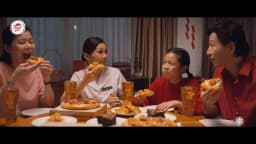
Pizza Hut Malaysia Turns Family Distance Into a CNY Reunion
How Pizza Hut's CNY 2024 Film Reframes the Lunar New Year Reunion Pizza Hut Malaysia's "No One Is...
KFC and the National Museum of China Turn Shanghai Metro Into a Museum
KFC partnered with the National Museum of China and STDecaux to transform Xujiahui Station on the Shanghai Metro into an interactive mini-museum, running for one month from February 2018, converting station infrastructure into replica artifact displays and digital interactive installations aligned with Chinese New Year.
The campaign, titled in Chinese as "KFC 国宝耀中华—地铁互动博物馆" (KFC National Treasures Shine China — Interactive Metro Museum), operated exclusively within China's largest city by passenger throughput. It represents a rare instance of a global quick-service restaurant brand co-producing a cultural heritage experience with a national state institution, channelling the prestige of the National Museum of China into a high-traffic commuter environment. The activation sat at the intersection of out-of-home outdoor advertising, ambient installation, and branded cultural storytelling — a format increasingly pursued by food and drink advertisers seeking relevance beyond transactional messaging.
In China, the Lunar New Year period constitutes one of the most competitive advertising windows of the calendar year, with brands competing intensely for emotional resonance alongside commercial recall. KFC's decision to anchor its 2018 activation to themes of national heritage and cultural pride reflected a deliberate localisation strategy distinct from the brand's simultaneous Western campaigns. By selecting Xujiahui Station — a major interchange node on the Shanghai Metro network — KFC and its partners ensured maximum daily audience exposure across a sustained one-month media period. The campaign earned a Clapboard Score of 71 out of 100, reflecting strong strategic ambition and cultural integration alongside acknowledged execution constraints.
KFC China identified a clear consumer insight driving the 2018 Shanghai activation. Pride in Chinese national heritage intensifies sharply during the Lunar New Year period, and commuters passing through major metro stations represent a captive, emotionally receptive audience during what is culturally the most significant season of the year. By aligning with the National Museum of China — an institution of unambiguous national authority — KFC positioned itself not as a foreign fast-food chain but as a participant in Chinese cultural life.
This approach reflects a broader localisation strategy that KFC China has pursued since its earliest years of operation in the market. According to Winner Roifestival, the campaign was recognised at the ROI Festival 2018 with a Bronze Award in the Media category, affirming industry recognition of its strategic merit. The partnership with STDecaux, the Shanghai-based outdoor media operator, gave KFC access to premium station inventory and the technical capability to execute large-format and digital installations within a working transit environment.
The competitive context in China's quick-service restaurant sector was acute. McDonald's held an estimated 21.40% global fast-food market share in 2018, according to T4, making it the clear market leader against which KFC — holding an estimated 2.82% global share per the same source — consistently measures brand differentiation. In China specifically, both brands competed for cultural relevance as much as price leadership, making heritage-anchored storytelling a meaningful strategic lever. The food and drink category in China commanded growing advertiser investment in OOH outdoor formats during this period, as transit media offered scale unavailable through digital channels alone. KFC's selection of a cultural institution rather than a celebrity or entertainment property as its creative partner was a deliberate signal of long-term brand positioning rather than short-cycle promotional intent.
The physical execution of the KFC and National Museum of China activation was precise in its use of station architecture. Four station pillars at Xujiahui Station were converted into transparent display cases housing replica national-treasure artifacts, each accompanied by lightboxes, explanatory text panels, and wall sticker graphics consistent with museum interpretive design conventions, as documented by adsspot.me and designyourway.net.
The installation's centrepiece was a nine-LCD-screen digital wall that animated a Ming-dynasty Lantern Festival scene, translating a static museum artefact tradition into a dynamic, time-responsive media format suited to transit dwell time. The choice to animate a Ming-dynasty subject connected the activation to a period of Chinese history with broad cultural familiarity, while the Lantern Festival theme created direct temporal resonance with the Chinese New Year timing of the February 2018 launch. Per designyourway.net, the overall aesthetic deliberately echoed institutional museum design — cream tones, serif typography, and curatorial labelling — rather than KFC's standard brand visual language, subordinating commercial branding to cultural credibility.
The media infrastructure was delivered through STDecaux's managed inventory within the Shanghai Metro system, enabling the seamless integration of branded content across column, wall, and digital screen formats within a single station environment. Production credits for the KFC National Museum of China campaign are not publicly documented beyond the confirmed involvement of KFC China, the National Museum of China, and STDecaux as the out-of-home media partner. No agency of record has been disclosed for this activation. The creative decision to render KFC's involvement as a cultural sponsor rather than a traditional advertiser — foregrounding artefacts and heritage text rather than product imagery — was the defining craft choice of the execution, and the one most directly responsible for its awards recognition.
KFC China's 2018 Shanghai Metro activation earned a Bronze Award in the Media category at the ROI Festival 2018, as confirmed by winner.roifestival.com. The ROI Festival is a Polish-originated international advertising effectiveness awards programme, and recognition in its Media category specifically reflects evaluated deployment of media strategy rather than purely creative merit. This award constitutes the primary independently verified performance signal for this campaign.
No additional verified audience measurement, footfall data, brand lift metrics, or sales attribution figures for the KFC National Museum of China campaign are publicly available. What the structural evidence does support is a strong efficiency argument: Xujiahui Station is one of the Shanghai Metro's highest-throughput interchange stations, meaning the one-month media period generated substantial passive impressions at no incremental per-contact cost beyond the fixed installation investment. The decision to run for a full month — spanning the core Chinese New Year period into its aftermath — extended the cultural relevance window beyond the peak holiday itself.
The campaign's effectiveness as a brand-building instrument can also be assessed through its awards trajectory. Recognition at ROI Festival 2018 indicates that the campaign was formally entered and evaluated against effectiveness criteria by the client or its partners, suggesting internal confidence in measurable outcomes. The Clapboard Score of 71 out of 100 reflects a campaign that executes its cultural strategy with genuine coherence and earns credible third-party validation, while stopping short of the documented consumer impact metrics that would place it in the highest performance tier. The activation stands as a structural benchmark for food and drink brands in China seeking to use OOH outdoor formats for cultural positioning rather than promotional conversion.
KFC partnered with the National Museum of China and STDecaux to transform Xujiahui Station into an interactive mini-museum in February 2018. The one-month OOH outdoor activation featured replica artifact displays, lightboxes, and a nine-LCD digital wall animating a Ming-dynasty Lantern Festival scene during Chinese New Year, as documented by adsspot.me and winner.roifestival.com.
The campaign won a Bronze Award in the Media category at the ROI Festival 2018. According to winner.roifestival.com, the recognised title was "KFC 国宝耀中华—地铁互动博物馆" — KFC National Treasures Shine China — Interactive Metro Museum. The ROI Festival evaluates advertising campaigns specifically against effectiveness and media deployment criteria.
Xujiahui Station on the Shanghai Metro hosted the activation. The station is one of the network's major interchange nodes, providing high daily passenger throughput across the one-month campaign period beginning in February 2018, as confirmed by adsspot.me, designyourway.net, and winner.roifestival.com.
STDecaux served as the out-of-home media partner for the activation. The Shanghai-based outdoor media operator provided access to Xujiahui Station's column, wall, and digital screen inventory, enabling KFC and the National Museum of China to execute a fully integrated station environment across multiple OOH outdoor format types simultaneously.
KFC China pursued a heritage-anchored localisation strategy distinct from its Western campaigns. Aligning with the National Museum of China during Chinese New Year 2018 allowed KFC to position itself as a participant in Chinese cultural life rather than a foreign fast-food brand, addressing competitive brand-relevance pressure from McDonald's and other quick-service restaurant rivals in the market.
The KFC National Museum of China Shanghai Metro campaign holds a Clapboard Score of 71 out of 100. This reflects strong cultural strategy and coherent creative integration across OOH outdoor formats, alongside the absence of publicly documented consumer impact metrics that would support a higher effectiveness rating.
.webp)
Creative Collaboration Platform: The Backbone of Modern Creative WorkWhat is a creative collaboration platform?Clapboard defines a creative collaboration platform as the operational core for today’s distributed creative teams. This is not a collection of digital collaboration tools stitched together; Clapboard’s system


Understanding the Creative Production MarketplaceWhat is a Creative Production Marketplace?Clapboard defines a creative production marketplace as a structured ecosystem where brands, agencies, and production talent converge to execute video, advertising, and branded content at scale. Unlike the legacy agency or freelanREAD FULL ARTICLE

The Urgent Need for a Creative Production Operating SystemWhy Traditional Creative Production Models Break DownClapboard sees the creative production landscape shifting under pressure. Content velocity is no longer a buzzword—it’s a mandate. Modern advertising demands relentless output across dozens of channels, each wREAD FULL ARTICLE