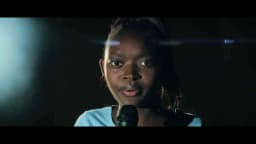
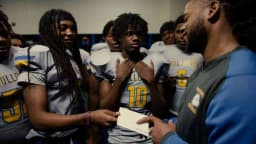
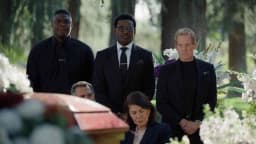
Kansas City Royals' Bobby Baseball's Bobblehead campaign recreated 1980s TV spots to promote a limited Opening Day bobblehead of Bobby Witt Jr. in March 2024.

How the Kansas City Royals Turned a Bobblehead Into an 80s TV Moment
The Kansas City Royals' Bobby Baseball's Bobblehead campaign is a 2024 integrated advertising effort that promotes an Opening Day-exclusive bobblehead of shortstop Bobby Witt Jr. by recreating the visual language and sound of 1980s American television commercials, running in the United States ahead of the team's March 28, 2024 season opener.
The campaign launched in March 2024 with a series of spots styled as late-night and Saturday-afternoon television advertisements from the 1980s. Complete with retro title cards, simulated commercial-break formatting, and original music evoking the thematic jingles of classic American sitcoms such as Cheers and Full House, the ads position the bobblehead not as merchandise but as a cultural artifact. The creative execution draws an explicit line between the emotional memory of watching baseball as a child in the 1980s and the live experience of attending Opening Day 2024 at Kauffman Stadium in Kansas City, as reported by mlb.com.
The bobblehead itself — officially named the Bobby Witt Jr. Slidin' Bobby Bobblehead per mlb.com — was available only to the first 30,000 fans through the gate on Opening Day, when the Royals hosted the Minnesota Twins at Kauffman Stadium on March 28, 2024, according to mlb.com and kmbc.com. That hard cap on availability transforms the promotional object into a scarcity-driven collectible, giving the campaign a clear and time-bound call to action: buy your tickets today. The campaign comprises two media assets and is classified as an integrated campaign within the sports industry. Clapboard awarded the campaign a score of 72 out of 100.
The Kansas City Royals identified a dual audience for the Bobby Baseball's Bobblehead campaign. The first group consists of committed Royals fans motivated by game-day collectibles and the ritual of Opening Day. The second is a broader demographic of baseball followers who grew up watching the sport on American television during the 1980s and carry a lived emotional connection to that era's media landscape.
The strategic logic is grounded in exclusivity and emotional resonance working together. The 30,000-unit limit on the Bobby Witt Jr. Slidin' Bobby Bobblehead, as confirmed by mlb.com and kmbc.com, creates urgency. The nostalgic creative wrapper creates desire. Neither mechanism would work as well in isolation. By anchoring the campaign to the Opening Day calendar — March 28, 2024, a fixed and culturally significant date for MLB fans across the United States — the Royals compressed the decision window and amplified the sense of occasion.
The broader market context supports this approach. MLB generated an estimated $11.8 billion in revenue in 2023, up approximately nine percent year over year, according to sportico.com. MLB team sponsorship revenue reached approximately $1.9 billion in 2024, up from earlier baselines, according to sponsorunited.com. Within this expanding commercial environment, individual franchises compete not only for wins but for fan wallet share and emotional loyalty. The New York Yankees, for instance, carry an estimated 2024 franchise value of $7.93 billion according to sportico.com, a figure that illustrates the scale gap between marquee franchises and mid-market clubs like the Royals. For Kansas City, campaigns that convert nostalgia into ticket sales represent a particularly efficient form of brand investment — one that competes for attention against larger-market rivals without requiring equivalent media spend. The campaign's narrative structure, centred on the Bobby Baseball persona built around Bobby Witt Jr., also extends the shortstop's emerging star power into the club's broader commercial identity.
The creative execution of Bobby Baseball's Bobblehead rests on period-accurate aesthetic detail. The spots reproduce the visual grammar of 1980s American television advertising — specifically the Saturday afternoon and late-night commercial formats that accompanied sports broadcasts and family sitcoms during that decade — with enough fidelity to trigger genuine memory rather than mere pastiche.
Original music anchors the campaign's tonal identity. BUTTER Music and Sound composers Nat Jenkins and Andrew Sherman wrote the campaign's original score, as documented in the campaign record. Their brief was specific: produce thematic jingles that evoke the sonic character of iconic American television programming from the 1980s, with Cheers and Full House cited explicitly as reference points. The result is music that functions as a time-travel device, collapsing the distance between a viewer's childhood Saturday afternoon and the present-day invitation to attend Opening Day 2024 at Kauffman Stadium in Kansas City.
The campaign comprises two media assets, classified under an integrated format, meaning the retro aesthetic was designed to travel across multiple placements and contexts within the United States market. The title cards — a defining visual element of 1980s television production — are reproduced with deliberate authenticity, reinforcing the immersive quality of the creative conceit. Rather than simply referencing the 1980s, the spots inhabit that period's production conventions completely, which sharpens the contrast when the contemporary call to action arrives. The Bobby Baseball persona constructed around Bobby Witt Jr. does significant creative work here: it translates a 21st-century MLB shortstop into the visual and sonic language of an earlier era of American sports fandom, making him feel simultaneously familiar and fresh to a cross-generational audience. Full agency credits for the Bobby Baseball's Bobblehead campaign have not been publicly disclosed.
No independently verified third-party performance data measuring ticket sales, foot traffic, or broadcast reach attributable specifically to the Bobby Baseball's Bobblehead campaign is publicly available at the time of writing. What the archive record does confirm, as documented by clapboard.com, is that the campaign accumulated 5,114 views, 108 likes, and 12 comments at the time of archive capture.
Structurally, the campaign is built around two mechanisms that independently drive effectiveness. The first is the hard attendance incentive: the Bobby Witt Jr. Slidin' Bobby Bobblehead was limited to the first 30,000 fans on Opening Day, March 28, 2024, according to mlb.com and kmbc.com. This scarcity model is well-established in sports promotion and reliably converts passive interest into active ticket purchase. The second mechanism is the nostalgic creative frame, which reduces audience resistance and increases emotional investment by meeting fans on the terrain of shared memory rather than direct salesmanship.
The campaign's Clapboard Score of 72 out of 100 reflects strong creative distinctiveness — the 1980s television conceit is executed with genuine specificity rather than generic retro signalling — alongside the inherent constraint of a one-day, one-location promotional window. The integrated format, spanning two media assets across the United States market, gave the nostalgic creative sufficient reach to build anticipation in the days before March 28, 2024. For a mid-market franchise operating in a league where, per sportico.com, the New York Yankees alone carry a franchise value approaching $7.93 billion, the Royals' ability to generate culturally distinctive work at this scale represents a measurable strategic asset.
Bobby Baseball's Bobblehead is a 2024 integrated campaign by the Kansas City Royals promoting an Opening Day-exclusive bobblehead of shortstop Bobby Witt Jr. The campaign recreates 1980s American television commercials, complete with retro title cards and original music evoking classic sitcoms like Cheers and Full House, to drive ticket purchases ahead of March 28, 2024.
BUTTER Music and Sound composers Nat Jenkins and Andrew Sherman created the original music for the Bobby Baseball's Bobblehead campaign. Their score was designed to evoke the thematic jingles of iconic 1980s American television programmes, including Cheers and Full House, anchoring the campaign's nostalgic tone throughout both media assets.
The Bobby Witt Jr. Slidin' Bobby Bobblehead was limited to the first 30,000 fans attending Opening Day at Kauffman Stadium on March 28, 2024, according to mlb.com and kmbc.com. That hard cap made the collectible a scarcity-driven incentive, directly connecting the campaign's nostalgic creative to a time-bound ticket-purchase decision.
The Bobby Baseball's Bobblehead campaign received a Clapboard Score of 72 out of 100. The score reflects strong creative distinctiveness rooted in period-accurate 1980s television aesthetics and original commissioned music, balanced against the structural limitation of a single-day, single-location promotional window tied to MLB Opening Day 2024 in the United States.
The campaign supported the Kansas City Royals' home Opening Day on March 28, 2024, when the Royals hosted the Minnesota Twins at Kauffman Stadium, according to mlb.com. The bobblehead promotion and the surrounding 1980s-style advertising were timed specifically to that single game, making ticket acquisition the campaign's sole and explicit call to action.
The Bobby Baseball's Bobblehead spots recreate the visual and sonic conventions of 1980s American television advertising, specifically the Saturday-afternoon and late-night commercial formats of that decade. Original music by BUTTER Music and Sound evokes the thematic jingles of Cheers, Full House, and comparable classic American sitcoms, grounding the campaign in a precise and recognisable cultural moment.
.webp)
Creative Collaboration Platform: The Backbone of Modern Creative WorkWhat is a creative collaboration platform?Clapboard defines a creative collaboration platform as the operational core for today’s distributed creative teams. This is not a collection of digital collaboration tools stitched together; Clapboard’s system


Understanding the Creative Production MarketplaceWhat is a Creative Production Marketplace?Clapboard defines a creative production marketplace as a structured ecosystem where brands, agencies, and production talent converge to execute video, advertising, and branded content at scale. Unlike the legacy agency or freelanREAD FULL ARTICLE

The Urgent Need for a Creative Production Operating SystemWhy Traditional Creative Production Models Break DownClapboard sees the creative production landscape shifting under pressure. Content velocity is no longer a buzzword—it’s a mandate. Modern advertising demands relentless output across dozens of channels, each wREAD FULL ARTICLE