 ARCHIVE
Topgolf Has Football and It Wants Every Fan to Know
Topgolf's "Has Football" campaign is a 2025 integrated media effort by agency Anomaly that uses two 15-second television spots to announce, with deliberate simplicity, that Topgolf venues across the United States show live football games while guests play golf — positioning the brand as a dual-sport entertainment destination during the American football season.
Launched on September 16, 2025, the campaign extends Topgolf's existing brand platform, "You're Better Off at Topgolf," into sports-viewing territory. The strategic premise is direct: watching football at a Topgolf venue is better than watching it at home or at a bar, because guests can simultaneously swing a club, eat a gameday-focused menu, and follow every game on screens installed in every bay. The Field Goal Challenge, a new in-venue golf game tied to football, anchors the experiential element of the campaign and gives guests a physical reason to connect the two sports under one roof.
The campaign operates across the United States, where Topgolf ran 98 company-owned venues as of the third quarter of 2025, according to filings cited by Ir Callawaygolf. Its messaging is layered across film, digital, and in-venue channels, reinforcing both the entertainment offer and a value proposition — Sunday-through-Thursday pricing promotions including Sunday Funday and Half-Off Golf — that lowers the barrier for groups who might otherwise default to a bar or living room for game day. The Clapboard Score for this campaign is 63 out of 100, reflecting its clarity of message and strategic coherence against a creative execution that prioritises simplicity over surprise.
ARCHIVETopgolf built this campaign on a single, research-backed consumer insight. According to Marketing Brew's coverage published September 30, 2025, Topgolf VP of Brand Marketing Katie Van stated that more than 80% of Topgolf customers identify as football fans. That figure reframes the campaign's logic entirely: rather than convincing golfers to care about football, Topgolf is meeting an existing passion its own customer base already holds, and telling them their favourite venue now serves that passion directly.
This approach represents a deliberate pivot in how entertainment-golf venues compete for discretionary leisure time in the United States. Topgolf's primary competitive context sits alongside Dave and Buster's and traditional sports bars, both of which have long owned the sports-viewing occasion for group outings. By installing football on every bay screen and launching a football-themed game format, Topgolf claims venue equity in a category it previously ceded. The campaign does not attempt to convert football fans into golfers; it positions football and golf as simultaneously enjoyable, removing the either-or choice that typically sends groups to a bar instead.
The market context supports the urgency of this positioning. According to growthmarketreports.com, the global golf-entertainment venues market was estimated at a significant and growing figure in 2025, with indoor venues representing a substantial share of that total. In the United States specifically, Topgolf represented approximately 29% of the global driving-range market revenue, according to deepmarketinsights.com, giving the brand both the scale to run a national campaign and the competitive incentive to defend its lead against venue operators who court the same group-outing audience during football season.
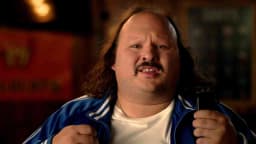
Director Francois Lallier helmed both 15-second spots for the "Has Football" campaign, and his tonal choice defines the work. The creative approach is what the campaign's own framing calls "matter-of-fact, brick-to-forehead" humour — comedy that derives its force not from wit or irony but from the exaggerated sincerity with which characters react to information the audience already considers obvious. The spots do not try to be clever. They try to be memorable through repetition and escalation, and they succeed on those terms.
In "Kids," a father endures the domestic chaos of children playing around him while he attempts to watch television. His partner enters the scene and asks whether he knew Topgolf has football. His reaction — repeating the phrase with rising excitement before sprinting down the street holding his child aloft — compresses the entire value proposition into a physical gesture of liberation. The joke is that the news is both trivial and life-changing, and the performance sells that gap completely.
"Cups" stages the same revelation in a dive bar setting. A man reading a newspaper announces that Topgolf has football. The group's response — glasses dropped, heads turned, a mass exodus from the bar — satirises the very venues Topgolf is competing against for the sports-viewing occasion. The bar empties not because it is bad but because Topgolf is apparently better, which is exactly the logic of the parent platform, "You're Better Off at Topgolf." Agency Anomaly, working from its New York base, structured both spots around a repeated verbal hook — the phrase "Topgolf has football" spoken multiple times per spot — that functions as both dialogue and advertising copy, collapsing the distance between story and message.
No independently verified post-campaign performance metrics for "Has Football" are publicly available at the time of this analysis. However, the campaign's stated business objectives, as reported by Marketing Brew, were to drive venue traffic and improve "fun scores" — a customer-satisfaction metric collected through post-visit surveys — during the 2025-26 American football season. These are measurable, operationally grounded goals that connect advertising directly to footfall and experience quality rather than to softer brand-awareness proxies.
Structurally, the campaign demonstrates several qualities that tend to correlate with effectiveness in the entertainment and sports fitness category. The message is singular and unambiguous, which reduces cognitive load in a high-clutter media environment. The 15-second format forces discipline and rewards the repeated verbal hook. The value-pricing layer — Sunday-through-Thursday promotions — gives audiences a transactional reason to act rather than simply appreciate the advertising. And the Field Goal Challenge provides an in-venue product that the campaign can legitimately point to, making the claim concrete rather than atmospheric.
The campaign also benefits from Topgolf's scale in the United States. With 98 company-owned venues across the country, according to ir.callawaygolf.com, any uplift in group-booking behaviour during football season is amplified across a national footprint. The campaign earned substantive strategy-focused editorial coverage from Marketing Brew, published September 30, 2025, which noted the intelligence of leaning into an existing customer passion rather than attempting to create one. No award recognition from Cannes Lions, the Effies, The One Show, D&AD, the Clios, or the Webby Awards has been verified for this campaign.
Topgolf's "Has Football" campaign launched on September 16, 2025, to tell American sports fans that Topgolf venues show live football games. Guests can watch football on bay screens, play the new Field Goal Challenge golf game, and access a gameday food and drinks menu, all under one roof across the United States.
Director Francois Lallier directed both 15-second spots for the campaign. Working with agency Anomaly, Lallier applied a deliberately over-the-top, matter-of-fact comic tone to both "Kids" and "Cups," using character reactions and repeated dialogue to make Topgolf's football offering feel like unmissable news.
Topgolf focused on football because its own customer data showed the majority of its guests already love the sport. According to Marketing Brew, Topgolf VP of Brand Marketing Katie Van confirmed that more than 80% of surveyed Topgolf customers identify as football fans, making the campaign an extension of existing audience passion rather than an attempt to build new interest.
Anomaly, the New York-based creative agency, developed the "Has Football" campaign for Topgolf. Anomaly has been Topgolf's lead creative partner since at least 2022, when the agency led the brand's largest-ever global integrated campaign, "Come Play Around," which launched in November of that year, according to Press Topgolf.
Topgolf operated 98 company-owned venues across the United States as of the third quarter of 2025, according to ir.callawaygolf.com. The football programming — including live game coverage on bay screens, the Field Goal Challenge game, and gameday menus — was available across that national footprint during the 2025-26 football season.
The Clapboard Score for "Has Football" is 63 out of 100. The score reflects the campaign's strong strategic clarity and consistent message architecture, balanced against a creative execution that prioritises blunt repetition and simplicity over tonal range or craft ambition, limiting its ceiling for broader creative recognition.
.webp)
Creative Collaboration Platform: The Backbone of Modern Creative WorkWhat is a creative collaboration platform?Clapboard defines a creative collaboration platform as the operational core for today’s distributed creative teams. This is not a collection of digital collaboration tools stitched together; Clapboard’s system


Understanding the Creative Production MarketplaceWhat is a Creative Production Marketplace?Clapboard defines a creative production marketplace as a structured ecosystem where brands, agencies, and production talent converge to execute video, advertising, and branded content at scale. Unlike the legacy agency or freelanREAD FULL ARTICLE

The Urgent Need for a Creative Production Operating SystemWhy Traditional Creative Production Models Break DownClapboard sees the creative production landscape shifting under pressure. Content velocity is no longer a buzzword—it’s a mandate. Modern advertising demands relentless output across dozens of channels, each wREAD FULL ARTICLE