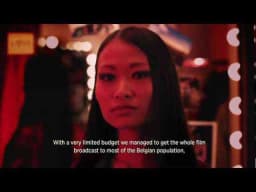
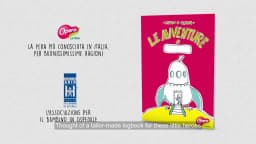
The campaign "This is the story of your food," created for Istituto Oikos by the agency Latte in 2012, positions the brand as an advocate for sustainable, small-scale family farming and ethical agri-food systems. Through a documentary-style social experiment format, it aims to raise awareness about the origins and production processes behind everyday food, encouraging consumers to reconsider their food choices and support more transparent, sustainable agricultural practices. The brand proposition centers on promoting informed consumption that aligns with environmental stewardship and the preservation of local farming communities, emphasizing a deeper connection between consumers and their food sources.
Strategically, the campaign leverages educational storytelling paired with engaging animation and illustrations to communicate complex agricultural issues in an accessible and emotionally resonant manner. By addressing the public interest market, it targets socially conscious audiences concerned with food sustainability and ethical production. The choice to present the message in English despite its Italian origin suggests an intent to reach a broader, possibly international audience invested in global food systems. The campaign integrates a call to action through directing viewers to a dedicated platform, fostering community engagement and advocacy beyond the film itself. This approach combines informative content with an emotional appeal to shift consumer behavior, aligning public awareness efforts with the brand’s mission to support sustainable agriculture.
FORMAT#3 SYMBOLIZE THE PROBLEM — Uses symbols or analogies to represent the problem instead of showing it literally.
The campaign "This is the story of your food," especially with its documentary/social experiment genre and animation/illustration production team, suggests a creative approach that explains systemic issues in the food chain through symbolic or metaphorical storytelling rather than real footage or direct product demonstration. The title, call to action supporting sustainable agrifood systems, and illustrative direction point to an abstract, analogical narrative—likely depicting the challenges of industrial versus family farming symbolically. There’s no narrative arc around a single protagonist (excluding Exemplary Story), no prescriptive benefit, personal testimonial, celebrity, parody, user imagery, or direct demonstration. Thus, the style most closely aligns with SYMBOLIZE THE PROBLEM, leveraging visual symbolism and analogy to engage viewers with the core public issue.
1. Slow Food – Market Positioning
Slow Food positions itself as a global grassroots movement championing biodiversity, sustainable agriculture, and traditional food cultures. It emphasizes educating consumers about the origins of their food and the importance of environmental stewardship, differentiating itself through a strong focus on community engagement and preserving culinary heritage.
2. Greenpeace Italy – Market Positioning
Greenpeace Italy leverages environmental activism to advocate for sustainable food systems and reduction of harmful farming practices. Their strategic angle is centered on raising awareness about ecological impact and lobbying for policy changes, emphasizing urgency and direct action to protect the environment and promote responsible consumption.
3. Fondazione Slow Food per la Biodiversità Onlus – Market Positioning
This foundation focuses on protecting food biodiversity and supporting small-scale producers. It differentiates itself by combining research, education, and social initiatives aimed at ensuring food sustainability, cultural diversity, and promoting ethical, transparent supply chains in the Italian food sector.
4. Altroconsumo – Market Positioning
Altroconsumo is Italy’s leading consumer rights organization emphasizing transparency, consumer education, and product safety. In the public interest food category, it positions itself as an independent watchdog that tests food products, promotes informed choices, and fights against misleading marketing to safeguard consumers.
5. Terra Nuova – Market Positioning
Terra Nuova focuses on sustainable agriculture and social development through educational campaigns and projects supporting fair trade and organic farming. Their approach centers on empowering local communities with knowledge and resources to create resilient food systems that prioritize environmental health and social equity.
Q: What is This is the story of your food about?
A: This is the story of your food is a 2012 public interest campaign created for Istituto Oikos by the Italian agency Latte. The campaign, produced in the film medium and directed by Erik Parys, uses animation and illustration to explore the origins and impact of everyday food choices. Targeting the public service sector, it advocates for small-scale family farming and sustainable agri-food systems. The campaign’s central creative idea is to raise consumer awareness about food production processes and encourage more responsible, informed consumption, aligning with Istituto Oikos’ mission to promote environmental stewardship and support local farming communities.
Q: What creative device does This is the story of your food use?
A: This is the story of your food employs the FORMAT#3 SYMBOLIZE THE PROBLEM creative device, as classified by Clapboard’s 12-format taxonomy. Rather than depicting agricultural issues through direct footage or testimonials, the campaign uses symbolic and metaphorical storytelling—primarily through animation and illustration—to represent the systemic challenges facing food systems. This approach allows complex topics like industrial versus family farming to be communicated in an accessible and emotionally resonant way, engaging viewers by inviting them to interpret visual analogies rather than presenting the problem literally.
Q: What is the campaign proposition for This is the story of your food?
A: The campaign proposition for This is the story of your food positions Istituto Oikos as an advocate for sustainable, small-scale family farming and ethical food systems. Strategically, the campaign speaks to socially conscious consumers who care about food sustainability and transparency, urging them to reconsider their food choices in light of environmental and social impacts. By leveraging educational storytelling and engaging visuals, the campaign aims to foster a deeper connection between consumers and the sources of their food, ultimately encouraging informed consumption that supports local farmers and promotes environmental stewardship within the public interest market.
Q: How does This is the story of your food rank in Clapboard's archive?
A: In Clapboard’s global ad archive, This is the story of your food holds a Clapboard Campaign Score of 66/100. This score reflects the campaign’s creative ambition, execution quality, and cultural relevance as assessed by Clapboard’s curatorial standards.
Q: Who are the competitors in Istituto Oikos's category?
A: In the public interest food and sustainability sector, Istituto Oikos competes with several key organizations. Slow Food is recognized for championing biodiversity and traditional food cultures through grassroots community engagement. Greenpeace Italy focuses on environmental activism and policy advocacy to promote sustainable food systems. Fondazione Slow Food per la Biodiversità Onlus supports small-scale producers and food biodiversity through research and social initiatives. Altroconsumo acts as a consumer watchdog, emphasizing transparency and product safety, while Terra Nuova drives sustainable agriculture and social development by empowering local communities with education and resources.



.webp)