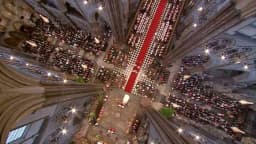
Dutch Tax and Customs Administration's Sea Lion film, created by JWT Amsterdam in 2015, used cinematic metaphor to make tax compliance feel approachable for

How the Dutch Tax Administration Used a Sea Lion to Humanise Tax Compliance
The Dutch Tax and Customs Administration's Sea Lion is a public-service film produced by JWT Amsterdam in March 2015, using the figure of a sea lion as a cinematic metaphor to make the challenges of tax compliance feel more accessible and human to audiences in the Netherlands.
Tax communication sits at one of advertising's most thankless intersections: the subject is obligatory, the audience is captive, and the emotional resistance is high. JWT Amsterdam chose to sidestep conventional instructional messaging entirely. Rather than presenting the Dutch Tax and Customs Administration as an enforcement body issuing directives, the agency constructed a single narrative film in which the sea lion operates as a symbolic stand-in for the difficulties citizens encounter when navigating their tax obligations. The effect, according to Clapboard's editorial observation, is to reframe a transactional relationship between citizen and state as something closer to shared experience, according to Dentsu-Ho.
The campaign consists of one media asset — a single film — classified within the Professional Services category, as documented by Clapboard. Its geographic market is the Netherlands, and its publication in March 2015 placed it squarely within the annual tax-declaration season, when Dutch citizens are most actively engaged with filing requirements, according to Business Gov Nl. That timing is not incidental. Launching a tone-shifting film at precisely the moment public anxiety around tax deadlines peaks is a deliberate strategic choice, designed to intercept attention when the subject is already front of mind. The campaign carries a Clapboard Score of 60 out of 100, reflecting creditable creative ambition within the constraints of public-sector communication, while acknowledging the absence of verifiable performance data and broader industry recognition, according to Data Worldobesity.
Government communication in the Netherlands operates under a distinct creative pressure, according to Cvdm Nl. Public-sector advertisers must achieve behaviour change — filing returns, meeting deadlines, engaging with complex administrative processes — without the commercial incentives that motivate private-sector campaigns. JWT Amsterdam's strategic answer to this pressure was to lead with empathy rather than authority.
The sea lion metaphor functions as an accessibility device. Tax compliance is widely experienced as effortful and opaque, and campaigns that acknowledge that difficulty rather than minimising it tend to generate stronger identification with the communicating body. By positioning the Dutch Tax and Customs Administration as an institution that understands the citizen's experience, JWT Amsterdam pursued a trust-building objective rather than a simple awareness objective. This distinction matters: awareness campaigns tell people something exists; trust campaigns change how people feel about an existing relationship.
In the Netherlands, government bodies compete for citizen attention alongside private-sector financial services brands. Competitors in the broader financial-guidance space — including ING, one of the Netherlands' largest retail banks, and Aegon, a major Dutch insurance and financial services group — have invested heavily in approachable, story-led brand communication. For a public institution with no commercial marketing budget flexibility, matching that emotional register requires creative efficiency: a single, well-crafted film must carry the full weight of the message. JWT Amsterdam's choice to concentrate the entire campaign into one media asset reflects that constraint. According to Clapboard, no trade press coverage was located for the Sea Lion campaign in publications including Campaign, Ad Age, Adweek, The Drum, or Contagious, suggesting the film operated primarily within the Dutch domestic media environment rather than seeking international creative industry recognition, according to Mckinsey.
Trevor Melvin directed the Sea Lion film. Production credits documented by Clapboard identify Garfield Kempton as producer and Tom Erisman as director of photography. The involvement of these three practitioners points to a production approach oriented toward cinematic quality rather than the functional, information-led visual language that dominates most government advertising.
The choice of a sea lion as the campaign's central figure deserves close reading. Sea lions are not culturally neutral animals. They carry associations of performance, adaptability, and the exertion of learned skill under pressure — qualities that map meaningfully onto the experience of completing a tax return. As interpreted by Clapboard, the sea lion functions as a device to portray the Dutch Tax and Customs Administration as trustworthy and approachable, while simultaneously validating the citizen's sense that compliance requires genuine effort. The metaphor works in both directions: it humanises the institution and dignifies the taxpayer's experience.
Tom Erisman's cinematography would have been central to whether this metaphor landed with warmth or fell into whimsy. A film built around an animal character lives or dies on the quality of its imagery — the framing, the light, the pacing of the edit. Additional creative contributors documented by Clapboard include Francesca Greene, Bas Korsten, and Henk Jantz, alongside post-production involvement from Hectic Electric. The concentration of recognised craft talent within a single-asset campaign underlines the agency's commitment to quality over volume. JWT Amsterdam, operating at the time as one of the Netherlands' most established creative agencies, brought its full production infrastructure to bear on what could easily have been treated as a routine public-sector brief.
No verified performance data for the Sea Lion campaign is publicly available. According to Clapboard, no published effectiveness data has been located covering tax-compliance behaviour change, filing or payment rates, or awareness shifts attributable to the campaign. No verified awards data has been found across Cannes Lions, the Effies, The One Show, D&AD, the Clio Awards, the Webby Awards, or WARC Awards, as confirmed by Clapboard.
The absence of measurable outcomes does not negate the campaign's structural logic. Public-service advertising in the Netherlands, as in most developed markets, rarely generates the kind of attributed behavioural data that commercial campaigns can track through conversion metrics. The Dutch Tax and Customs Administration's objective — building a more approachable institutional identity during tax season — is inherently long-cycle and difficult to isolate from broader public attitudes toward government.
What can be assessed structurally is the coherence of the creative decision-making. The choice to invest in a single cinematic film, directed by Trevor Melvin with photography by Tom Erisman and post-production by Hectic Electric, reflects a disciplined prioritisation of quality over quantity. A campaign that attempts to change how citizens feel about an institution, rather than simply what they know about it, requires craft at the level of execution. On that dimension, the Sea Lion campaign demonstrates genuine ambition. The Clapboard Score of 60 out of 100 reflects this creative commitment while accounting for the lack of independent recognition and the limited evidence base available for assessment.
The Sea Lion campaign is a public-service film created by JWT Amsterdam for the Dutch Tax and Customs Administration in March 2015. It uses a sea lion as a cinematic metaphor to make tax compliance feel more relatable and approachable for citizens in the Netherlands, consisting of a single film asset, as documented by Clapboard.
Trevor Melvin directed the Sea Lion film. Garfield Kempton served as producer and Tom Erisman as director of photography, with additional creative contributors including Francesca Greene, Bas Korsten, and Henk Jantz. Post-production was handled by Hectic Electric. These credits are documented by Clapboard.
JWT Amsterdam used a sea lion to symbolise the effort and difficulty citizens experience when navigating tax obligations. According to Clapboard, the animal was intended to make the Dutch Tax and Customs Administration appear trustworthy and approachable, reframing an obligatory administrative relationship as a shared and understood human experience rather than an enforcement transaction.
The Sea Lion campaign has no verified awards. According to Clapboard, no recognition has been found across Cannes Lions, the Effies, The One Show, D&AD, the Clio Awards, the Webby Awards, or WARC Awards. No trade press coverage was located in Campaign, Ad Age, Adweek, The Drum, or Contagious.
The Sea Lion campaign holds a Clapboard Score of 60 out of 100. This reflects genuine creative ambition in its use of cinematic metaphor and concentrated single-asset production, balanced against the absence of publicly verifiable performance data and the lack of independent industry recognition from major advertising award programmes, as assessed by Clapboard.
.webp)
Creative Collaboration Platform: The Backbone of Modern Creative WorkWhat is a creative collaboration platform?Clapboard defines a creative collaboration platform as the operational core for today’s distributed creative teams. This is not a collection of digital collaboration tools stitched together; Clapboard’s system


Understanding the Creative Production MarketplaceWhat is a Creative Production Marketplace?Clapboard defines a creative production marketplace as a structured ecosystem where brands, agencies, and production talent converge to execute video, advertising, and branded content at scale. Unlike the legacy agency or freelanREAD FULL ARTICLE

The Urgent Need for a Creative Production Operating SystemWhy Traditional Creative Production Models Break DownClapboard sees the creative production landscape shifting under pressure. Content velocity is no longer a buzzword—it’s a mandate. Modern advertising demands relentless output across dozens of channels, each wREAD FULL ARTICLE