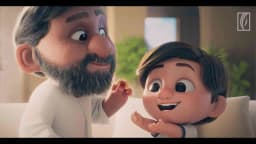
Hospital de Amor's 'The Fall' — a 2018 animated film by McCann Brazil — launched the cancer hospital's rebrand with a child's story of love, fear, and recovery.

Hospital de Amor Reframes Cancer Care Through Animated Storytelling
Hospital de Amor's 'The Fall' is a 2018 animated film created by WMcCann Brasil that served as the launch communication for the Brazilian cancer hospital's transformation from Hospital do Câncer de Barretos, reframing cancer care around love, compassion, and hope through a child's journey of diagnosis, treatment, and recovery.
The campaign arrived at a decisive institutional moment. In 2018, Hospital do Câncer de Barretos — one of Brazil's most recognised oncology centres — formally adopted the name Hospital de Amor, a change that demanded more than a visual identity update. As reported by Branding News, the renaming required a new emotional platform capable of articulating why a hospital synonymous with clinical rigour would choose a word as intimate as love to describe its work. 'The Fall' was the answer to that brief.
Published in Brazil in May 2018, the film runs approximately three minutes in a fully realised 3D animation format. Its narrative follows a child confronting a cancer diagnosis — the fear, the treatment, the moments of doubt — and the sustained presence of family, friends, and hospital staff throughout that journey. According to latinspots.com, the production was handled by Zombie Studio and Loud under the direction of Paulo Garcia, with a production timeline of ten months. The scale of that commitment reflects the ambition of the campaign: this was not a television spot adapted for social media, but a considered piece of storytelling deployed across film, social media, and public-relations activity simultaneously.
In the broader context of Brazilian healthcare communication, the campaign represented a structural shift. Where oncology institutions in Brazil had historically communicated through clinical authority and survival statistics, Hospital de Amor chose narrative and animation — a medium associated with childhood wonder — to depict a child's encounter with cancer. The creative decision to place a young patient at the centre of the story gave the rebrand an emotional coherence that the new name alone could not achieve. Clapboard Score: 71/100.
Hospital de Amor's strategic challenge in 2018 was specific. The institution needed to reposition an existing brand, not introduce a new one, which meant persuading audiences already familiar with Hospital do Câncer de Barretos to receive a fundamentally different emotional proposition. As noted by branding.news, the campaign introduced a brand platform anchored in love, family, and compassion — values that had always informed the hospital's culture but had never been foregrounded in its public communications.
The decision to use animation as the primary medium carried strategic weight beyond aesthetics. In a category where competing institutions, including other leading oncology centres in Brazil, had relied on documentary-style testimonials and clinical imagery, animation created immediate differentiation. The medium also granted the creative team control over emotional pacing in a way that live-action footage of paediatric cancer patients could not ethically or practically achieve. According to latinspots.com, the film's narrative structure — moving through diagnosis, fear, treatment, and recovery — mirrored the emotional arc that Hospital de Amor's clinical teams walk alongside patients every day, grounding the rebrand in operational truth rather than aspirational fiction.
The broader market context reinforced the timing. According to nyfhealth.com, global healthcare advertising across thirteen key markets reached a growing total in 2018, with internet-based healthcare advertising growing at a significant pace that year. In Brazil, where social media penetration was accelerating, deploying the film across digital and public-relations channels alongside its primary film placement gave the campaign reach proportionate to its ambition. The choice to lead with a child's story also addressed a specific audience dynamic: cancer diagnoses affect entire families, and a paediatric narrative invited parents, siblings, and caregivers into the brand's emotional world — expanding the campaign's resonance well beyond the patient alone.
Director Paulo Garcia led the creative execution of 'The Fall.' The film was produced by Zombie Studio and Loud, a collaboration that brought together animation craft and sound production under a single creative vision, according to latinspots.com. The ten-month production timeline — substantial by any standard in advertising — reflects the technical and narrative ambition of the project.
The choice of 3D animation as the film's visual language was not decorative. As reported by branding.news, the format allowed the filmmakers to construct a visual world that was simultaneously familiar and slightly heightened — a quality particularly appropriate for depicting a child's subjective experience of illness. Clinical environments that might feel cold or frightening in live action could be rendered with warmth; moments of fear could be externalised through metaphor; the presence of love and support from family and hospital staff could be visualised in ways that documentary footage would struggle to sustain across three minutes without ethical compromise.
The film's music received dedicated recognition at industry level — Clio Health awarded the campaign a Silver in Film Technique for Music in 2018, according to adlatina.com, indicating that the sonic dimension of the work was evaluated as independently strong rather than merely supportive of the visual narrative. The overall film earned a Gold in Film at Clio Health that same year, also per adlatina.com. The animation was executed with a character design sensibility that kept the child protagonist expressive and legible across a range of emotional states — a prerequisite for a film that asks its audience to follow an interior journey rather than a plot-driven story. The production's craft decisions, from character movement to colour temperature across different phases of the narrative, served the strategic objective of making love visible inside a hospital setting.
'The Fall' earned a documented awards record across major international creative competitions in 2018. At the Cannes Lions International Festival of Creativity, the campaign received a Silver Lion in the Health and Wellness Lions category, a Bronze Lion in Film Lions, and a Silver Lion in Entertainment Lions, as reported by adlatina.com. At Clio Health 2018, the campaign earned a Gold in Film and a Silver in Film Technique for Music, per adlatina.com.
These results place the campaign among a small group of Brazilian healthcare films to achieve multi-category recognition at both Cannes and Clio in the same year. The breadth of the recognition — spanning health-specialist juries, general film juries, and entertainment juries — indicates that the work was evaluated as creatively effective across different evaluative frameworks, not merely as a healthcare category entry. For a hospital rebranding campaign in Brazil, that cross-category performance was structurally significant: it validated the decision to invest in long-form animation as a vehicle for institutional communication rather than defaulting to the shorter, message-driven formats that dominate healthcare advertising.
No verified audience reach or engagement metrics for 'The Fall' are publicly available beyond the awards record. The structural effectiveness of the campaign, however, is legible in its design. A three-minute animated film about a child with cancer, released in Brazil at the precise moment of a major rebrand, creates sustained emotional exposure rather than momentary impression. The pairing of social media distribution with public-relations activity, as documented by latinspots.com, extended the film beyond paid media environments into editorial and word-of-mouth contexts — channels particularly suited to content that invites sharing on the basis of emotional resonance rather than entertainment spectacle alone.
'The Fall' is a three-minute 3D animated film created by WMcCann Brasil for Hospital de Amor. Released in Brazil in May 2018, it depicts a child's journey through cancer diagnosis, treatment, and recovery. The film served as the launch communication for the hospital's rebrand from Hospital do Câncer de Barretos, as reported by branding.news.
Hospital do Câncer de Barretos renamed itself Hospital de Amor in 2018 to reframe its identity around love and compassion. According to branding.news, 'The Fall' was the first major communication campaign after the name change, introducing a new emotional platform centred on family, hope, and the human experience of cancer care in Brazil.
Paulo Garcia directed 'The Fall.' Production was handled by Zombie Studio and Loud, according to latinspots.com. The campaign was created by WMcCann Brasil and took ten months to produce — an extended timeline that reflects the technical complexity and narrative ambition of the three-minute 3D animated film released in Brazil in 2018.
'The Fall' won three Cannes Lions in 2018: a Silver in Health and Wellness Lions, a Bronze in Film Lions, and a Silver in Entertainment Lions, as reported by adlatina.com. The campaign also earned a Gold in Film and a Silver in Film Technique for Music at Clio Health 2018, demonstrating cross-category creative recognition for the Brazilian healthcare campaign.
Animation gave the McCann creative team control over emotional storytelling without the ethical constraints of filming paediatric cancer patients. As noted by branding.news, the format allowed warmth, metaphor, and visual expressiveness across a child's full treatment arc — a narrative range that live-action documentary formats available to Brazilian healthcare advertisers in 2018 could not practically sustain.
Clapboard assigns 'The Fall' a score of 71 out of 100. The score reflects the campaign's multi-award recognition across Cannes Lions and Clio Health in 2018, its craft in 3D animation narrative, and its strategic effectiveness as a rebrand launch film for Hospital de Amor in the Brazilian healthcare market.
.webp)
Creative Collaboration Platform: The Backbone of Modern Creative WorkWhat is a creative collaboration platform?Clapboard defines a creative collaboration platform as the operational core for today’s distributed creative teams. This is not a collection of digital collaboration tools stitched together; Clapboard’s system


Understanding the Creative Production MarketplaceWhat is a Creative Production Marketplace?Clapboard defines a creative production marketplace as a structured ecosystem where brands, agencies, and production talent converge to execute video, advertising, and branded content at scale. Unlike the legacy agency or freelanREAD FULL ARTICLE

The Urgent Need for a Creative Production Operating SystemWhy Traditional Creative Production Models Break DownClapboard sees the creative production landscape shifting under pressure. Content velocity is no longer a buzzword—it’s a mandate. Modern advertising demands relentless output across dozens of channels, each wREAD FULL ARTICLE