 ARCHIVE
An album of your future - Willbum | Clapboard Ad Archive
An album of your future is a 2015 digital campaign from Willbum, conceived by Leo Burnett Tokyo...
Lennon Reframes Healing Around Maternal Love in A Mother's Touch
A Mother's Touch is a 2015 South African film campaign created by Owen Kessel Leo Burnett for pharmaceutical brand Lennon, arguing that a mother's presence and emotional care are more powerful in a child's recovery than any medicine she gives them.
Lennon launched A Mother's Touch in September 2015 across the South African market. The campaign operates on a deliberately simple strategic premise: medicine is the smallest part of making a sick child feel better. Rather than position its pharmaceutical products through efficacy claims or clinical credentials, Lennon chose to anchor its brand identity in the emotional landscape of caregiving — a territory that few pharmaceutical advertisers in South Africa had explored with this degree of creative commitment. The campaign's core message, distilled in its tagline, holds that children do not remember what medicine they were given when they were ill. They remember the love.
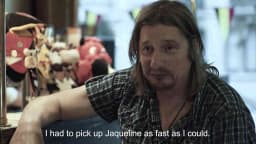
To deliver that message with maximum credibility, the production team made a defining creative decision: no actors. The film features real moms with their real children, allowing genuine moments of maternal affection to be captured rather than performed. The result is a one-minute narrative structure — documented and praised by Oresti Patricios in MarkLives in October 2015 — in which mothers describe how they treated their children's illness, children describe what they actually remember, and mothers watch their children's responses in real time. That structural device transforms the film into something closer to a live emotional experiment than a conventional pharmaceutical advertisement. In South Africa, where Lennon has roots dating to its founding in Port Elizabeth in 1850 and its subsequent acquisition by Aspen Pharmacare, according to aspenpharma.com, the brand carries generational equity that this campaign works to reinforce through the universal language of unconditional maternal love.
Lennon built A Mother's Touch on a consumer insight drawn from the lived reality of South African mothers: emotional memory, not medical intervention, defines a child's experience of illness.
In South Africa's pharmaceutical market, the competitive pressure on over-the-counter brands is substantial. According to Pmg Org Za, South Africa's pharmaceutical market was valued at approximately R45 billion in 2015, with the private sector accounting for around 84 percent of that figure. Within that environment, OTC products competed aggressively on functional grounds — ingredient profiles, dosage speed, and price positioning. Generics, according to unido.org, represented approximately 63 percent of the private pharmaceutical market in South Africa in 2013, intensifying commoditisation pressure on branded players such as Lennon. Against that backdrop, competing on efficacy alone risked rendering the brand indistinguishable from lower-cost alternatives.
Owen Kessel Leo Burnett's strategic answer was to move Lennon entirely out of the functional conversation and into an emotional one. Rather than contesting market share against competitors such as Panado or Nurofen for Children on ingredient grounds, the campaign repositioned Lennon as the brand that understands what caregiving actually means — placing the mother, not the medicine, at the emotional centre of the recovery story. This is a durable strategic move in healthcare advertising: when product parity is high, brand warmth becomes a differentiating asset. The campaign's decision to feature real moms rather than cast actors reinforced this positioning by grounding the brand's claim in observable human truth rather than constructed narrative. In the South African context, where maternal identity carries deep cultural significance, that alignment between brand values and lived experience gave A Mother's Touch a strategic coherence that generic efficacy advertising could not replicate.
Director Petar Spiljevic helmed A Mother's Touch for production company Bouffant, bringing a documentary sensibility to a pharmaceutical brief that demanded emotional truth over polished performance.
The creative team at Owen Kessel Leo Burnett, Johannesburg, was led by Executive Creative Director Donovan Bryan and Creative Director Steven Bosch, with Art Director Helene Burger and Copywriter Stephanie Larsen shaping the campaign's voice and visual language. Agency producer Sally Walland oversaw production logistics. The decision to work with real mothers and their own children — a casting choice articulated in the campaign description as "no acting required" — placed considerable responsibility on Spiljevic's direction to hold space for unscripted emotional moments without allowing the film to drift into sentimentality.
The one-minute structure identified by Oresti Patricios in MarkLives is the film's primary creative architecture. Mothers are first seen describing practical treatment choices — the medicines they reached for, the remedies they applied. Children are then asked what they remember. The gap between those two accounts, between clinical action and emotional memory, is where the film's meaning lives. Mothers watching their children answer that question experience something unscripted and unrehearsed, and the camera's willingness to stay in that moment gives the work its authority. Patricios described the execution in MarkLives as "really beautiful," "charming," and "deeply moving" — a critical response that reflects how effectively Spiljevic and the creative team converted a pharmaceutical insight into a piece of film with genuine emotional weight.
Produced in English for the South African market, A Mother's Touch maintained a clean visual aesthetic consistent with the restrained emotional register of the script. The absence of product close-ups or clinical imagery was a deliberate craft choice, allowing Lennon's brand to recede behind the human story and re-emerge more powerfully through association rather than assertion.
A Mother's Touch earned a Clapboard Score of 61 out of 100, reflecting a campaign with genuine creative merit that reached a limited verified audience in the South African market.
Archive engagement data recorded in Clapboard's platform shows the film accumulated 4,839 views, 20 likes, and no publicly recorded comments since its September 2015 release. No verified awards entry or recognition for A Mother's Touch has been found at Cannes Lions, the Effies, The One Show, D&AD, the Clios, the Webby Awards, or WARC Awards. The campaign's documented critical footprint consists primarily of a single substantive contemporary review — Oresti Patricios's strongly positive assessment published in MarkLives on 21 October 2015 — which praised the film's execution, structure, and emotional alignment with Lennon's brand values.
What the metrics do not capture, the campaign's structural design argues for independently. A Mother's Touch made a creative bet that emotional authenticity, delivered through real moms and unscripted childhood responses, would generate resonance that outlasts a single media cycle. In South Africa's pharmaceutical sector, where OTC brands typically compete on functional messaging, the campaign's willingness to remove the product from the emotional foreground represented a meaningful risk. The fact that Patricios singled out the campaign's alignment of Lennon with unconditional maternal love — rather than with medicinal efficacy — suggests that the strategic repositioning landed with at least the critical audience it reached. The Clapboard Score of 61 reflects a campaign that executed its emotional premise with craft and conviction, while remaining constrained by the limited distribution scale that prevented wider measurable impact across the South African market.
A Mother's Touch is a 2015 South African pharmaceutical film campaign created by Owen Kessel Leo Burnett for Lennon. It argues that children remember a mother's love and care when they are sick, not the medicine they receive. The film features real moms with their actual children, with no professional actors used.
Owen Kessel Leo Burnett, Johannesburg created A Mother's Touch for Lennon in 2015. The creative team included Executive Creative Director Donovan Bryan, Creative Director Steven Bosch, Art Director Helene Burger, and Copywriter Stephanie Larsen. Director Petar Spiljevic shot the film for production company Bouffant, with Sally Walland producing.
Lennon and Leo Burnett used real moms with their own children to ensure genuine, unscripted emotional moments on screen. The campaign's creative rationale, described by the agency as requiring no acting, was that authentic maternal responses would carry more emotional credibility than performed ones, strengthening the film's core message about love over medicine.
No verified awards for A Mother's Touch have been found at Cannes Lions, the Effies, D&AD, The One Show, the Clios, the Webby Awards, or WARC Awards. The campaign did receive a strongly positive critical review from Oresti Patricios in MarkLives in October 2015, who called it "really beautiful" and "deeply moving."
A Mother's Touch holds a Clapboard Score of 61 out of 100. The score reflects the campaign's genuine creative and emotional craft, balanced against its limited verified reach, which stands at just under 5,000 archived views, and the absence of documented award recognition across major international advertising festivals.
South Africa's pharmaceutical market was valued at approximately R45 billion in 2015, according to pmg.org.za, with intense OTC competition on functional claims. A Mother's Touch stood apart by removing product efficacy from the emotional centre entirely, positioning Lennon through maternal love rather than medicinal performance, a strategy that differentiated it from competitors operating on ingredient-led messaging.
.webp)
Creative Collaboration Platform: The Backbone of Modern Creative WorkWhat is a creative collaboration platform?Clapboard defines a creative collaboration platform as the operational core for today’s distributed creative teams. This is not a collection of digital collaboration tools stitched together; Clapboard’s system


Understanding the Creative Production MarketplaceWhat is a Creative Production Marketplace?Clapboard defines a creative production marketplace as a structured ecosystem where brands, agencies, and production talent converge to execute video, advertising, and branded content at scale. Unlike the legacy agency or freelanREAD FULL ARTICLE

The Urgent Need for a Creative Production Operating SystemWhy Traditional Creative Production Models Break DownClapboard sees the creative production landscape shifting under pressure. Content velocity is no longer a buzzword—it’s a mandate. Modern advertising demands relentless output across dozens of channels, each wREAD FULL ARTICLE