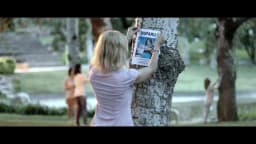
The "Desert, Beach, Escalator" campaign for Otrivin, developed by Saatchi & Saatchi Switzerland in 2013, positions the brand as a solution for sensitive nasal care. The core brand proposition emphasizes relief and comfort for individuals struggling with nasal congestion, highlighting Otrivin Sensitive’s ability to clear nasal passages without irritation. By addressing the nuanced discomfort experienced by users who require gentle yet effective relief, the campaign promises an optimized balance between performance and sensitivity.
Strategically, the campaign leverages a creative narrative built around contrasting environments—desert, beach, escalator—that metaphorically represent challenges to nasal comfort and breathing. This approach aligns with the healthcare market's demand for credible, relatable messaging grounded in consumer experience. The insight centers on the sensory conflict between mouth and nose breathing during congestion, presenting the product as a facilitator of natural, effortless nasal function. The choice of a film medium allows for visual storytelling that makes an abstract physiological sensation tangible and memorable.
Targeting individuals likely to experience nasal discomfort, the campaign appeals to a health-conscious audience seeking reliable pharmaceutical solutions that do not compromise sensitivity. The subtle, performance-driven messaging refrains from overt clinical jargon but prioritizes empathetic communication of discomfort relief, distinguishing Otrivin Sensitive in a competitive healthcare category. The integration of a globally recognized agency and production talents further underlines a strategic commitment to quality and credibility. Overall, the campaign’s creative angle successfully bridges functional efficacy with emotional resonance, positioning Otrivin Sensitive as both a practical and considerate choice for nasal care.
FORMAT#3 SYMBOLIZE THE PROBLEM — Uses symbols or analogies to represent the problem instead of showing it literally.
This campaign most likely uses symbolic analogies to illustrate the discomfort or challenges of nasal congestion. The titles 'Desert, Beach, Escalator' strongly imply the use of settings as metaphors—the dryness of a desert or the difficulty of breathing (possibly represented by an escalator, e.g., going uphill)—to stand in for the symptoms experienced when you can’t breathe freely through your nose. The genre “Performance” and the creative agency’s reputation suggest visually striking, metaphor-driven problem depiction rather than explicit demonstrations or direct testimonials. There’s no evidence of a story arc, celebrity, or competitive contrast, and the problem is likely made vivid via imaginative settings symbolizing nasal blockage or discomfort, with Otrivin as the solution.
ADVERTISING FORMATS EXPLAINED: https://www.clapboard.com/blog/branding-and-advertising/brand-strategy/12-advertising-creative-formats
1. Vicks – Market Positioning
Vicks is positioned as a trusted, family-oriented brand that offers reliable and fast-acting relief for cold and nasal congestion symptoms. It emphasizes soothing care and multi-symptom effectiveness, focusing on comfort and warmth, appealing to consumers seeking gentle yet effective relief.
2. NasoGel (Abbott) – Market Positioning
NasoGel differentiates itself through gentle, moisturizing nasal sprays designed to soothe dry and irritated nasal passages. It targets consumers with sensitive nasal mucosa, highlighting its non-medicated, preservative-free formula for daily nasal care and comfort.
3. Rhinocort (AstraZeneca) – Market Positioning
Rhinocort is positioned as a clinically proven corticosteroid nasal spray offering long-lasting relief from allergic rhinitis and nasal congestion. It appeals to consumers seeking effective allergy symptom management with a strong focus on scientific efficacy and prescription-grade quality.
4. Olynth (GlaxoSmithKline) – Market Positioning
Olynth offers rapid nasal decongestion with a focus on powerful and quick relief. It differentiates itself through its efficacy in reducing nasal swelling fast, targeting consumers who prioritize immediate alleviation of congestion symptoms.
5. Nasivin (GlaxoSmithKline) – Market Positioning
Nasivin is marketed as a highly effective nasal spray providing quick decongestion with a well-established reputation in Europe. It balances prescription-strength performance with availability over-the-counter, attracting consumers who want quick, reliable relief with trusted safety.
Q: What is Desert, Beach, Escalator about?
A: Desert, Beach, Escalator is a 2013 professional film campaign created for Otrivin by Saatchi & Saatchi Switzerland, targeting the pharmaceutical market. The campaign centers on Otrivin Sensitive, a nasal care product from Novartis, and uses three distinct film assets to highlight the contrast between nasal and oral breathing. Developed under the creative leadership of Leon Jacobs, Gustavo Figueiredo, and Massimo Caiati, and produced by Bent Image Lab in Portland, the campaign employs visually engaging metaphors to communicate the discomfort of nasal congestion and the relief offered by Otrivin Sensitive. Its accessible, consumer-focused storytelling helped reinforce Otrivin’s position in the healthcare category.
Q: What creative device does Desert, Beach, Escalator use?
A: Desert, Beach, Escalator employs the creative device classified by Clapboard’s 12-format taxonomy as FORMAT#3 SYMBOLIZE THE PROBLEM. Rather than depicting nasal congestion literally, the campaign uses symbolic analogies—such as the dryness of a desert, the openness of a beach, and the challenge of an escalator—to represent the discomfort and difficulty of impaired breathing. This metaphor-driven approach transforms abstract physiological sensations into memorable visual narratives, making the problem relatable and the solution tangible for viewers. The technique leverages performance and setting to evoke the experience of congestion, aligning with contemporary creative standards in healthcare advertising.
Q: What is the campaign proposition for Desert, Beach, Escalator?
A: The campaign proposition for Desert, Beach, Escalator positions Otrivin Sensitive as the optimal choice for individuals seeking gentle yet effective relief from nasal congestion. Strategically, the campaign addresses consumers who prioritize both efficacy and sensitivity in their nasal care, promising clear breathing without irritation. By using metaphorical environments to dramatize the discomfort of congestion, the campaign appeals to a health-conscious audience looking for trustworthy pharmaceutical solutions. This approach differentiates Otrivin Sensitive in a crowded market by emphasizing its balance of performance and comfort, reinforcing the brand’s credibility and relevance in the healthcare sector.
Q: How does Desert, Beach, Escalator rank in Clapboard's archive?
A: Desert, Beach, Escalator holds a Clapboard Campaign Score of 71/100 in Clapboard’s global ad archive. This score reflects the campaign’s creative ambition, execution quality, and cultural relevance within the pharmaceutical advertising landscape.
Q: Who are the competitors in Otrivin's category?
A: In Otrivin’s category, key competitors include Vicks, which is positioned as a trusted, family-oriented brand offering fast-acting relief and comfort for cold and nasal congestion; NasoGel from Abbott, which focuses on gentle, moisturizing care for sensitive nasal passages with a non-medicated formula; Rhinocort by AstraZeneca, which emphasizes clinically proven, long-lasting allergy relief with prescription-grade efficacy; Olynth from GlaxoSmithKline, which targets consumers seeking rapid and powerful decongestion; and Nasivin, also from GlaxoSmithKline, known for quick, reliable relief with a strong reputation across Europe and over-the-counter availability.


 ARCHIVE
.webp)