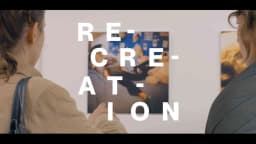
HOGAR SÍ's 'In 2030' campaign features Richard Gere and Alejandra Gere challenging Spain to end street homelessness by 2030 through surrealism and futurism.

How HOGAR SÍ and Richard Gere Are Reframing Homelessness Around 2030
"In 2030" is a public interest campaign from HOGAR SÍ, a Spanish foundation dedicated to ending street homelessness, starring Richard Gere and Alejandra Gere and calling on Spain to honour its commitment to eliminate homelessness by 2030 under the European Platform to Combat Homelessness framework.
HOGAR SÍ launched the campaign in Spain in June 2023, as reported by Cadena SER, with the hashtag #2030CuentaAtrás anchoring its public identity. The campaign's central argument is built on contrast: the surrealism of imagining life on other planets or owning personal holograms by 2030, set against the very immediate, very solvable reality that tens of thousands of people in Spain remain without a home. According to HOGAR SÍ, as of the campaign's launch, 37,000 people in Spain had no home and no option other than to live on the streets. The foundation's position is unambiguous: technological progress and human rights progress must advance together, and one without the other is not progress at all.
The campaign's primary asset is a 30-second film featuring Richard Gere and Alejandra Gere, broadcast across national television channels of the Atresmedia group and Movistar+, as documented by hogarsi.org. Distribution extended beyond broadcast: outdoor advertising placements in the Madrid Metro, digital channels, and radio slots ensured the campaign reached audiences across multiple touchpoints in Spain. Richard Gere's line — "the most surreal thing about 2030 would be if homelessness still existed" — functions as both creative anchor and public call to action, with his direct address, "We need you. Now," reported by Cadena SER as the campaign's sharpest emotional punctuation. The Clapboard Score for "In 2030" is 63 out of 100, reflecting a campaign with genuine strategic clarity and strong public interest credentials, moderated by limited measurable reach data in the public domain.
Maart agency grounds "In 2030" in a consumer insight that is both simple and structurally sound: people find it easier to imagine living on Mars than to imagine their neighbour sleeping rough. This cognitive asymmetry — the ease with which society accepts technological speculation against the discomfort it feels confronting social failure — forms the strategic backbone of the campaign. By placing futuristic imagery in direct collision with the persistence of street homelessness, Maart forces the audience to feel the absurdity of Spain's priorities rather than simply hear about them.
The strategic context in Spain is significant. According to Spain's official 2023–2030 homelessness strategy, as documented by the Spanish government's Delegación del Gobierno para la Agenda 2030, 28,552 people were experiencing homelessness at the time of measurement, including 7,277 sleeping rough, 11,498 in emergency shelters, and 9,778 in temporary accommodation. The OECD reports the same 28,552-person estimate, representing approximately 0.06 percent of Spain's total population. HOGAR SÍ's own campaign references a higher figure of 37,000 people without a home, a discrepancy that hogarsi.org attributes to differing definitions of homelessness and varying measurement methodologies. In the public interest space, organisations including Cáritas Española operate at significant scale in addressing homelessness and poverty across Spain, with Cáritas Española reporting total managed resources of €486.5 million across national and international programmes, according to caritas.es. Spain's commitment to end street homelessness by 2030 under the European Platform to Combat Homelessness gives HOGAR SÍ a concrete political deadline to campaign around — a strategic asset that organisations such as Médicos del Mundo, which focuses on health access rather than housing, do not have in the same form. Maart's decision to attach the campaign to this deadline transforms an ongoing social issue into a ticking public accountability clock.
Pablo Martí served as creative director on "In 2030" at Maart, leading a creative team that included Lucas Castro, Laura Sanchís, and Ángela Dobla, as documented by hogarsi.org. The production approach is deliberately cinematic in register while remaining economically efficient: the 30-second film format disciplines the creative team to make one argument, not several, and the casting of Richard Gere and Alejandra Gere supplies the cultural weight to make that single argument land with authority.
The creative execution leans into the visual language of technology advertising — the sleek, optimistic grammar that brands use when selling futures — and then subverts it. References to living on other planets and personal holograms borrow directly from the kind of futurist headlines that have circulated in Spanish and international media about what 2030 will look like. Placing those images alongside the persistence of street homelessness in Spain creates a deliberate tonal rupture. The audience is invited to hold two pictures of 2030 in their minds simultaneously: the aspirational one the culture has been sold, and the one HOGAR SÍ insists is still the most urgent unfinished project. Richard Gere's delivery of "the most surreal thing about 2030 would be if homelessness still existed" works as a rhetorical inversion, using the genre of wonder to expose a failure of political will rather than celebrate a triumph of innovation.
The campaign also incorporated testimonies from people who had personally experienced homelessness, recorded alongside the main campaign message, as noted by hogarsi.org. This testimonial layer adds documentary credibility and prevents the campaign from becoming solely a celebrity vehicle. The media strategy — national broadcast via Atresmedia and Movistar+, outdoor advertising in the Madrid Metro, digital, and radio — reflects a considered effort to make the campaign unavoidable across Spain's major public spaces and media environments in 2023.
LatinSpots published positive editorial coverage of "In 2030" on June 6, 2023, specifically highlighting Maart's creative contrast between futuristic imagination and the persistence of homelessness in Spain. Cadena SER reported on the campaign's public launch on June 1, 2023, extending reach into mainstream Spanish broadcast media. elcorreogallego.es also covered the campaign at launch, contributing to regional press distribution across Spain. No verified performance data in the form of audience reach figures, donation uplift, or petition signatures for "In 2030" is publicly available in the sources reviewed.
Structurally, however, the campaign is well-positioned to generate measurable behavioural response. The combination of Atresmedia's national broadcast network and Movistar+ ensures exposure to a broad adult audience in Spain. The Madrid Metro outdoor placements concentrate the message in one of Europe's highest-footfall urban transit systems. The hashtag #2030CuentaAtrás provides a trackable digital signal. Where "In 2030" earns its Clapboard Score of 63 out of 100 is in strategic coherence: the brief is clear, the creative idea is disciplined, the media mix is appropriate, and the casting of Richard Gere and Alejandra Gere introduces genuine public interest value. The score reflects a modest shortfall in documented campaign reach and the absence of independently verified impact metrics at the time of publication. No coverage of "In 2030" was identified in international advertising trade publications including Campaign, Ad Age, Adweek, The Drum, or Contagious.
"In 2030" is a public interest campaign calling on Spain to end street homelessness by 2030. Created by Maart agency and featuring Richard Gere and Alejandra Gere, the campaign contrasts futuristic visions of 2030 — including life on other planets and personal holograms — with the persistent reality of homelessness across Spain, framing inaction as the true surrealism.
Richard Gere has a documented long-term commitment to the cause of homelessness that extends beyond this single campaign. His direct line — "We need you. Now," reported by Cadena SER — supplies moral urgency, while Alejandra Gere's presence alongside him gives the message a personal dimension that pure celebrity endorsement alone does not carry.
Maart agency created "In 2030" for HOGAR SÍ, with Pablo Martí serving as creative director, as documented by hogarsi.org. Maart also created HOGAR SÍ's earlier 2021 campaign, "La Otra Casa de Papel," establishing a sustained creative relationship between the agency and the foundation across multiple public interest campaigns in Spain.
HOGAR SÍ states that 37,000 people in Spain have no home and must live on the streets, as cited by hogarsi.org. Spain's official 2023–2030 homelessness strategy records 28,552 people experiencing homelessness, according to the Delegación del Gobierno para la Agenda 2030, with the gap reflecting differing definitions of homelessness and measurement methods.
"In 2030" aired on national television channels of the Atresmedia group and on Movistar+, according to hogarsi.org. The campaign also ran on outdoor advertising platforms in the Madrid Metro, across digital channels, and in radio slots, giving the campaign multi-platform presence across Spain's major media environments in June 2023.
Spain committed to ending street homelessness by 2030 under the European Platform to Combat Homelessness framework. HOGAR SÍ's campaign is designed to hold Spain publicly accountable to that deadline. The hashtag #2030CuentaAtrás — meaning "2030 countdown" — translates this political commitment into a measurable public pressure campaign with a fixed end date.
.webp)
Creative Collaboration Platform: The Backbone of Modern Creative WorkWhat is a creative collaboration platform?Clapboard defines a creative collaboration platform as the operational core for today’s distributed creative teams. This is not a collection of digital collaboration tools stitched together; Clapboard’s system


Understanding the Creative Production MarketplaceWhat is a Creative Production Marketplace?Clapboard defines a creative production marketplace as a structured ecosystem where brands, agencies, and production talent converge to execute video, advertising, and branded content at scale. Unlike the legacy agency or freelanREAD FULL ARTICLE

The Urgent Need for a Creative Production Operating SystemWhy Traditional Creative Production Models Break DownClapboard sees the creative production landscape shifting under pressure. Content velocity is no longer a buzzword—it’s a mandate. Modern advertising demands relentless output across dozens of channels, each wREAD FULL ARTICLE