Government of Paraná State Puts Racial Bias on Trial in Brazil
"The Image Test" is a 2017 documentary-style film campaign created by Master for the Government of Paraná State in Brazil, in which two groups of HR professionals unknowingly evaluate identical candidates of different racial backgrounds, exposing systemic racial bias in hiring.
Published in March 2017 in Brazil, the campaign arrived in the cultural context of Black Consciousness Day, a nationally observed commemoration that falls each November in Brazil. Brazilian press coverage documented an earlier launch window around November 17, 2016, suggesting the campaign entered public circulation before its formal archival submission date, according to Esporte Pr Gov Br. The Government of Paraná State, working through Curitiba-based agency Master, designed the initiative not as a traditional government advertisement but as a social experiment that would generate its own documentary evidence of the inequality it sought to address, according to LinkedIn.
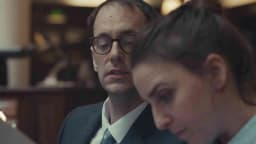
The mechanics of the campaign are precise. Two groups of four HR professionals participated in what they understood to be a standard evaluation exercise. Unknown to them, the candidates they assessed were matched in every professional credential — differing only in race. A hidden camera recorded the sessions. The resulting film, directed by Bernardo Tomsons and produced by Trunkshot, presented that footage as its central argument. The creative team did not need to assert that racial bias exists in Brazil; the footage made the case directly, according to Adsoftheworld. Felippe Motta served as creative director, with Jorge Uesu as head of art, Bruno Trindade as copywriter, and Pesly Krieger as art director, according to campaign documentation cited on clapboard.com. Clapboard rates the campaign 79 out of 100, reflecting its strategic clarity and the structural intelligence of its social-experiment format.
In Brazil, the campaign entered a public conversation that was — and remains — deeply contested. Paraná is one of Brazil's southern states, with Curitiba as its capital, and the Government of Paraná State's decision to commission and broadcast this work represented an institutional commitment to racial equality discourse at a moment when such commitments carried real political weight.
Master grounded "The Image Test" in a strategic insight that distinguishes it from most Cnseg Org Br.clapboard.com/archive/socialdemokratiet-testing-trust-government">government diversity campaigns. Assertion, however well-intentioned, does not move audiences who do not already accept the premise being asserted. Evidence does.
In Brazil, racial inequality in the labour market is extensively documented. According to the Brazilian Institute of Geography and Statistics (IBGE), Black Brazilians consistently face higher unemployment rates and lower average income than white Brazilians — a structural disparity that persists across education levels. In the state of Paraná, as across the wider Brazilian south, demographic and income data reported by IBGE show that Afro-Brazilian workers are underrepresented in formal employment relative to their share of the population. The Paraná State Government's decision to commission a campaign that surfaced this gap through real participant behaviour, rather than statistics, reflected a sophisticated reading of how persuasion works in polarised public environments.
The competitive landscape for institutional social-impact filmmaking in Brazil in 2017 included campaigns from organisations such as the United Nations Brazil office and the Secretaria de Políticas de Promoção da Igualdade Racial, both of which typically deployed testimonial or informational formats. Master departed from that convention by adopting the hidden-camera social experiment format — a mechanism familiar from journalistic investigation but rarely deployed in government advertising. This gave the Paraná State Government a creative posture closer to documentary journalism than to civic messaging, lending the film a credibility that produced or scripted content could not replicate, according to Scribd.
Marcelo Romaniewicz served as VP planner on the campaign, according to clapboard.com, and the strategic fingerprints of that planning are visible in every structural choice: the controlled conditions, the matched candidates, the unscripted HR professional responses, and the editorial decision to let the footage carry the argument without voiceover interpretation.
Bernardo Tomsons directed "The Image Test" for production company Trunkshot, and the discipline of the execution is what separates the film from lesser social-experiment formats. Hidden-camera documentary work fails when its conditions are not genuinely controlled — when participants sense observation, when the scenario is too constructed, or when the edit imposes a conclusion the footage does not independently support.
Tomsons and the Master creative team designed the experiment with the rigour of a controlled study. The HR professionals who participated were recruited under a credible professional pretext. The candidates presented to each group were matched on every variable that a recruiter might legitimately weigh — qualifications, experience level, manner of presentation — so that race remained the only operative variable. Audio production was handled by Jamute, according to documentation on clapboard.com, and the sound design choices in the final edit preserved the naturalism of the recorded sessions rather than heightening them for emotional effect.
The creative team at Master brought complementary craft to the project. Felippe Motta as creative director held the strategic line between documentary objectivity and advocacy purpose. Jorge Uesu's role as head of art shaped the visual grammar of the piece — spare, observational, resistant to the aesthetic polish that would have undermined the film's claim to be a record of real events. Bruno Trindade's copywriting contribution manifests not in narration but in the framing materials that contextualise the footage for a Brazilian audience already sensitised to Black Consciousness Day discourse. Pesly Krieger's art direction reinforced the deliberate restraint throughout.
The campaign was submitted as a single film asset. That singularity was itself a creative decision: the argument required one continuous, unbroken experience, not a dispersed multi-asset campaign that would dilute the evidentiary weight of the footage. In Brazil, where social media amplification of documentary-style content was already well-established by 2017, the single-film structure was also a distribution calculation.
"The Image Test" accumulated a documented record of industry recognition that substantiates its effectiveness as both communication and creative craft. The campaign was shortlisted at Cannes Lions 2017 in both the Mobile and Cyber categories, according to clapboard.com — a dual shortlisting that reflects the film's capacity to function across digital distribution contexts and not merely as a broadcast piece.
At the 50th Prêmio Colunistas Brasil 2018, the campaign won Gold in both the Digital category and the Public Relations category, according to clapboard.com. These two Gold awards are significant in combination: the Digital recognition confirms performance in the Brazilian digital media environment, while the Public Relations Gold acknowledges the campaign's success in generating earned media and genuine public discourse — outcomes that a government social-experiment film needs to achieve if it is to move beyond the advertising community and reach the general public it addresses.
No independently verified viewership figures, reach metrics, or conversion data for "The Image Test" are publicly available. The structural case for effectiveness, however, is strong. A government campaign that earns Cannes Lions recognition alongside domestic Gold-level industry awards has demonstrably cleared the credibility thresholds of two independent evaluative systems — international creative juries and Brazilian industry peers — simultaneously. For the Government of Paraná State, an institution without the media budget of a major commercial advertiser, that level of earned recognition represents a significant amplification of investment. The campaign also won Gold at the 11th FePI — Festival de la Publicidad Independiente — according to clapboard.com, adding a third independent validation of creative and strategic quality. Clapboard scores the campaign 79 out of 100.
"The Image Test" is a 2017 hidden-camera film by agency Master for the Government of Paraná State in Brazil. It placed racially matched candidates before HR professionals to expose unconscious hiring bias. The campaign was published in March 2017 and was connected to Brazil's Black Consciousness Day observance.
Bernardo Tomsons directed The Image Test for production company Trunkshot. The creative team at Master included Felippe Motta as creative director, Jorge Uesu as head of art, Bruno Trindade as copywriter, and Pesly Krieger as art director, according to documentation on clapboard.com.
The Image Test received two shortlistings at Cannes Lions 2017, in the Mobile and Cyber categories, according to clapboard.com. It did not win a Lion but went on to earn Gold awards at the 50th Prêmio Colunistas Brasil 2018 in Digital and Public Relations, and Gold at the 11th FePI festival.
The Government of Paraná State chose the social experiment format to generate real, unscripted evidence of racial hiring bias rather than relying on assertion or statistics. Agency Master designed the film so that HR professionals unknowingly demonstrated the bias themselves, giving the campaign the credibility of documentary journalism.
The Image Test holds a Clapboard Score of 79 out of 100, according to Clapboard's editorial assessment. The score reflects the campaign's strategic clarity, its innovative social-experiment structure, and its record of recognition across multiple award bodies including Cannes Lions and the Prêmio Colunistas Brasil.
.webp)
Creative Collaboration Platform: The Backbone of Modern Creative WorkWhat is a creative collaboration platform?Clapboard defines a creative collaboration platform as the operational core for today’s distributed creative teams. This is not a collection of digital collaboration tools stitched together; Clapboard’s system


Understanding the Creative Production MarketplaceWhat is a Creative Production Marketplace?Clapboard defines a creative production marketplace as a structured ecosystem where brands, agencies, and production talent converge to execute video, advertising, and branded content at scale. Unlike the legacy agency or freelanREAD FULL ARTICLE

The Urgent Need for a Creative Production Operating SystemWhy Traditional Creative Production Models Break DownClapboard sees the creative production landscape shifting under pressure. Content velocity is no longer a buzzword—it’s a mandate. Modern advertising demands relentless output across dozens of channels, each wREAD FULL ARTICLE