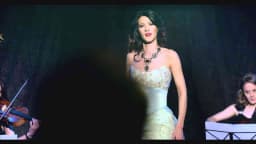
The "Tree Concert" campaign by Friends of the Earth, executed by BBDO Germany in 2012, leverages an ambient, documentary-style approach to advocate for the preservation of Berlin’s urban trees. The brand proposition centers on promoting environmental stewardship by illustrating the intrinsic value and voice of nature within a metropolitan setting. By personifying a chestnut tree as a concert performer, the campaign implicitly promises that urban trees are not just background elements but vital, living contributors to city life deserving protection.
The market strategy is grounded in a social experiment genre that humanizes environmental issues, aiming to foster an emotional connection between city dwellers and their natural surroundings. The creative angle utilizes a sensory and unexpected medium—a tree "playing" music—to capture attention and provoke empathy, thereby disrupting typical urban apathy toward tree conservation. Targeting residents of Berlin and environmentally conscious individuals, the campaign employs localized messaging that highlights the immediate relevance of nature preservation in everyday urban experience. This approach capitalizes on the insight that emotional engagement, driven by innovative storytelling and subtle activism, can motivate public interest and action in sustainability efforts within the public service sector.
FORMAT#3 SYMBOLIZE THE PROBLEM — Uses symbols or analogies to represent the problem instead of showing it literally.
This campaign fits FORMAT#3 because instead of literally showing endangered Berlin city trees or directly illustrating deforestation, it uses a chestnut tree "playing a concert" as a creative, symbolic act. The tree's concert is an analogy: by anthropomorphizing the tree and making it the performer, the campaign makes the threat to city trees emotionally salient and memorable without overtly depicting the environmental issue. The ambient nature of the campaign, along with its social experiment/documentary genre, further supports that symbolism is the primary device—not narration, testimonials, or traditional problem-solution structure—making this the clearest example of SYMBOLIZE THE PROBLEM.
1. Greenpeace – Market Positioning
Greenpeace positions itself as a bold, direct-action environmental NGO that drives global campaigns against climate change, deforestation, and pollution. It leverages high-visibility stunts and scientific research to engage the public and policymakers, emphasizing urgent environmental protection and social justice.
2. WWF (World Wide Fund for Nature) – Market Positioning
WWF focuses on combining science-based conservation efforts with large-scale public engagement to protect biodiversity and promote sustainable development. It differentiates through partnerships with governments, corporations, and communities to implement measurable environmental impact initiatives worldwide.
3. German Nature and Biodiversity Conservation Union (NABU) – Market Positioning
NABU positions itself as Germany’s leading nature conservation organization, emphasizing grassroots mobilization, habitat preservation, and policy advocacy at local and national levels. NABU combines scientific research with citizen participation to protect native species and natural environments, particularly in urban settings like Berlin.
4. Friends of the Earth Europe – Market Positioning
As a regional branch of Friends of the Earth, it takes an approach focused on participatory environmental democracy and social equity across Europe. It leverages coalition-building to amplify grassroots activism, pushing for systemic change in environmental policies and sustainable economic models.
5. Bund für Umwelt und Naturschutz Deutschland (BUND) – Market Positioning
BUND differentiates through its integrated approach toward environmental protection and social progress in Germany. It focuses heavily on eco-friendly policy reform, climate justice, and public education campaigns, aiming to influence both local communities and national legislation for sustainable futures.
Q: What is Tree Concert about?
A: Tree Concert is a 2012 ambient campaign created by BBDO Germany for Friends of the Earth, targeting the public service sector in Berlin. The campaign centers on a chestnut tree that performs a concert, symbolizing the essential role of urban trees in city life and environmental well-being. By anthropomorphizing the tree as a musician, the campaign draws attention to the need for preserving Berlin’s city trees, using a creative and emotionally resonant approach to highlight their value. This initiative leverages experiential media to engage city residents and advocates for greater environmental stewardship within urban communities.
Q: What creative device does Tree Concert use?
A: Tree Concert employs FORMAT#3 SYMBOLIZE THE PROBLEM from Clapboard’s 12-format taxonomy. Rather than depicting endangered trees or direct environmental threats, the campaign uses the symbolic act of a chestnut tree playing a concert to represent the issue. By transforming the tree into a performer, it creates a memorable analogy that makes the environmental cause emotionally accessible and visually distinctive. This approach relies on symbolism as the primary device, engaging audiences through metaphor rather than literal representation, and aligns with Clapboard’s classification of campaigns that use analogies to spotlight societal challenges.
Q: What is the campaign proposition for Tree Concert?
A: The campaign proposition for Tree Concert positions Friends of the Earth as a champion of urban environmental stewardship, emphasizing that city trees are vital, living contributors to metropolitan life. Targeting Berlin residents and environmentally conscious individuals, the campaign seeks to foster an emotional connection between people and their natural surroundings by personifying a chestnut tree as a concert performer. This strategy underscores the immediate relevance of tree preservation in urban environments, aiming to motivate public interest and action through innovative storytelling and a sensory, unexpected creative execution within the public service category.
Q: How does Tree Concert rank in Clapboard's archive?
A: Tree Concert holds a Clapboard Campaign Score of 74/100 in Clapboard’s global ad archive. This score reflects the campaign’s creative ambition, execution quality, and cultural relevance within the context of public interest advertising.
Q: Who are the competitors in Friends of the Earth's category?
A: In the public service and environmental advocacy sector, Friends of the Earth competes with organizations such as Greenpeace, which is known for its bold direct-action campaigns and global environmental activism, and WWF, which leverages science-based conservation and broad public engagement to protect biodiversity. NABU stands out in Germany for grassroots mobilization and habitat preservation, while Friends of the Earth Europe focuses on participatory environmental democracy and coalition-building for systemic change. BUND differentiates itself with an integrated approach to environmental protection and policy reform, emphasizing eco-friendly legislation and public education within Germany.


 ARCHIVE
.webp)