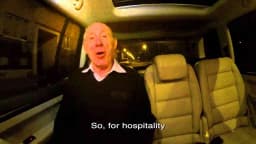
The Caritas Foodsharing campaign, developed by BBDO Germany in 2012, leverages a documentary/social experiment format to raise public awareness about food waste and hunger, central issues within the public interest sector. The brand proposition centers on Caritas’s commitment to social responsibility and community support by highlighting the tangible impact of foodsharing initiatives in alleviating hunger. The campaign implicitly promises to engage viewers with a realistic and emotionally resonant portrayal of food redistribution, positioning Caritas as an active facilitator of social change.
Strategically, the campaign taps into the growing public consciousness around sustainability and ethical consumption prevalent in Germany at the time. By adopting a documentary style, it employs authenticity as a key creative angle, fostering trust and empathy among viewers. The choice of digital media allows for targeted dissemination to socially conscious audiences who seek meaningful content related to social causes. Additionally, the timing of the campaign in December, a period associated with giving and reflection, aligns with heightened receptivity to charitable messages. The relatively modest online engagement metrics suggest a niche but focused outreach aimed at catalyzing awareness rather than broad commercial appeal. Overall, the campaign’s insight rests on connecting hunger and food waste as interlinked social problems, encouraging viewers to reconsider their consumption habits and support Caritas’s foodsharing efforts.
FORMAT#1 DEMONSTRATION — Directly shows how a product works and highlights its benefits.
The 'Caritas Foodsharing' campaign is documented as a digital/social experiment in the Public Service market, related to fundraising and hunger help, and categorized under the documentary genre. These cues indicate an approach that closely follows real people or communities as they participate in foodsharing, effectively capturing the product/service (Caritas' foodsharing initiative) in action. The genre "documentary/social experiment" strongly suggests the campaign visually demonstrates how their platform works, likely focusing on the practical process and direct benefits rather than telling a dramatized story, using symbols, or relying on testimonial, celebrity, or parody. The emphasis is on showing reality, which aligns most precisely with the DEMONSTRATION creative format, where the audience witnesses the offering solving a real-world issue first-hand.
1. Deutsches Rotes Kreuz (German Red Cross) – Positioned as a nationwide humanitarian organization, DRK focuses on emergency relief, health services, and social welfare with a strong emphasis on volunteerism and rapid disaster response, providing trusted and broad-spectrum aid throughout Germany.
2. Diakonie Deutschland – As the social welfare arm of the Protestant Church, Diakonie integrates faith-based values with extensive social services, including poverty relief and support for marginalized groups, leveraging its religious community network to foster social cohesion and care.
3. Arbeiterwohlfahrt (AWO) – AWO positions itself as a progressive social welfare organization dedicated to promoting social justice, inclusion, and human dignity, offering diverse programs in elder care, child welfare, and poverty reduction with a grassroots and policy advocacy approach.
4. Berliner Tafel – Specialized in food redistribution, Berliner Tafel operates as a grassroots food bank focused on reducing food waste and feeding the hungry, differentiating itself through logistical efficiency and community partnerships within urban areas to support vulnerable populations.
5. Tafeln Deutschland – The umbrella organization for German food banks, Tafeln Deutschland emphasizes fighting hunger and food waste nationwide through local chapters, combining grassroots volunteerism with advocacy to raise public awareness and foster sustainable food redistribution networks.
Q: What is Caritas Foodsharing about?
A: Caritas Foodsharing is a professional digital campaign launched in Germany in 2012 by BBDO for the Caritas brand, targeting the public interest sector. The campaign addresses the urgent issues of food waste and world hunger by showcasing Caritas’s foodsharing initiative, which encourages community involvement in redistributing surplus food to those in need. Using a documentary and social experiment approach, the campaign leverages digital storytelling to engage audiences, raise awareness, and drive participation in hunger relief efforts. Its central creative idea is to demonstrate the tangible impact of collective action on alleviating food insecurity and promoting social responsibility.
Q: What creative device does Caritas Foodsharing use?
A: Caritas Foodsharing employs the DEMONSTRATION format, as classified by Clapboard’s 12-format taxonomy. This creative device directly shows how the Caritas foodsharing initiative works, focusing on real people and communities as they participate in food redistribution. By adopting a documentary and social experiment style, the campaign visually documents the practical process and immediate benefits of foodsharing, allowing viewers to witness the solution in action. This approach emphasizes authenticity and transparency, inviting the audience to engage with the issue of hunger through firsthand observation rather than dramatization or testimonial.
Q: What is the campaign proposition for Caritas Foodsharing?
A: The campaign proposition for Caritas Foodsharing centers on Caritas’s role as a socially responsible organization committed to combating hunger and food waste. Strategically positioned within the public interest market, the campaign speaks to socially conscious audiences by highlighting the real-world impact of foodsharing initiatives. By leveraging a documentary format and launching during a season associated with giving, Caritas aims to foster empathy, encourage sustainable consumption habits, and mobilize viewers to support hunger relief efforts. The campaign’s message underscores the importance of community action and positions Caritas as an active facilitator of positive social change.
Q: How does Caritas Foodsharing rank in Clapboard's archive?
A: Caritas Foodsharing holds a Clapboard Campaign Score of 59/100 in Clapboard’s global ad archive. This score reflects the campaign’s creative ambition, execution quality, and cultural relevance within the context of digital public interest advertising.
Q: Who are the competitors in Caritas's category?
A: In the public service and hunger relief sector, Caritas competes with several key organizations. Deutsches Rotes Kreuz is recognized for its nationwide humanitarian aid and rapid disaster response, while Diakonie Deutschland integrates faith-based values with extensive social services to foster social cohesion. Arbeiterwohlfahrt positions itself as a progressive advocate for social justice and inclusion, and Berliner Tafel specializes in urban food redistribution through efficient grassroots partnerships. Tafeln Deutschland serves as the umbrella for German food banks, combining volunteerism with advocacy to fight hunger and food waste across the country.


 ARCHIVE
.webp)