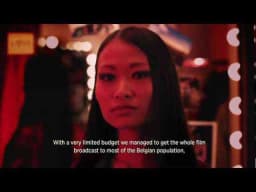
The campaign "The first zero in Komen Eten" by the Belgian Institute for Road Safety leverages a culturally familiar television format, the Flemish version of "Come Dine With Me," to convey its core message of road safety. The brand proposition centers on promoting responsible behavior by highlighting consequences through a relatable and engaging narrative. By focusing on the concept of contestants awarding points in the back of the car ride home, the campaign uses the tension and anticipation associated with these ratings to metaphorically underscore the importance of vigilance and accountability on the road. The promise implicit in the campaign is a safer driving culture motivated by awareness and social judgment.
Strategically, the campaign taps into a widely recognized social ritual within the show's fanbase, creating a seamless integration between entertainment and public service messaging. The insight that people naturally evaluate peers in everyday social interactions is cleverly extended to driving behavior, making the abstract notion of road safety personally relevant and immediate. By releasing the video on the official YouTube channel of the broadcasting network, Vier, the campaign covertly reached an engaged and unsuspecting audience, maximizing impact through surprise and authenticity. The choice to use digital platforms, combined with organic amplification via social media channels—including Twitter activity from the federal police—demonstrates a targeted approach to maximizing visibility and credibility. Overall, the campaign’s creative angle balances narrative engagement with a socially resonant call to action, rooted in cultural context and delivered through appropriate digital touchpoints.
FORMAT#12 PARODY OR BORROWED FORMAT — Uses or parodies pop culture formats like films, shows, or genres.
This campaign fits FORMAT#12 because it cleverly borrows and subverts the structure of “Komen Eten,” a well-known Flemish version of “Come Dine With Me.” The ad places its road safety message inside the context of the program’s signature car ride scoring moment, giving “the first zero” not for a meal, but for dangerous behavior (likely related to road safety). By leveraging a popular show’s recognizable narrative device to create surprise and relevance, the campaign uses the borrowed format as its primary creative driver rather than a straightforward exemplary story or symbolism. There’s no classic product benefit–driven arc, testimonial, or direct demonstration—instead, the communication’s impact relies on viewers recognizing, then being jolted by the twist within the familiar “Komen Eten” setting, perfectly embodying the parody or borrowed format technique.
1. Vias Institute – Market Positioning
Vias Institute positions itself as Belgium’s leading road safety research and expertise center. It differentiates through evidence-based insights and data-driven strategies targeting policymakers, companies, and the public, emphasizing innovation and scientific rigor to improve mobility safety nationwide.
2. Federal Public Service Mobility and Transport – Market Positioning
This governmental body focuses on regulatory enforcement and policy development for transportation safety. It leverages its authority to implement and promote legal frameworks and nationwide campaigns aimed at reducing traffic accidents through infrastructural and legislative measures.
3. Belgian Road Safety Council – Market Positioning
As a coordinating body, the Belgian Road Safety Council aligns regional initiatives into cohesive national campaigns, stressing collaboration among stakeholders and fostering public awareness with tailored messaging that addresses local traffic behaviors and challenges.
4. Flemish Road Safety Institute – Market Positioning
Concentrating on the Flemish community, this institute emphasizes educational programs and community engagement. Its strategic angle is localized interventions focusing on young drivers and vulnerable road users, promoting safe driving habits through interactive and culturally relevant initiatives.
5. Traffic Injury Research Foundation (TIRF) – European Branch – Market Positioning
TIRF applies a research-driven approach to road safety, concentrating on injury prevention and policy impact assessment. It differentiates through global best practices adaptation and cross-border collaboration, providing technical assistance and tools to support evidence-based road safety improvements in Belgium.
Q: What is The first zero in Komen Eten about?
A: The first zero in Komen Eten is a 2013 digital campaign created by BBDO for the Belgian Institute for Road Safety, targeting the Belgian market. The campaign ingeniously integrates its road safety message into the familiar format of Komen Eten, the Flemish adaptation of Come Dine With Me. By leveraging the show’s signature moment—contestants rating each other in the backseat of a car—the campaign delivers a surprising twist: awarding the first-ever zero score to highlight the consequences of unsafe behavior. Released on the official YouTube channel of Vier, the network broadcasting the show, the campaign quickly gained viral traction across national media and social platforms.
Q: What creative device does The first zero in Komen Eten use?
A: The first zero in Komen Eten employs FORMAT#12 PARODY OR BORROWED FORMAT, as defined by Clapboard’s creative format taxonomy. This approach borrows the recognizable structure of a popular television program and subverts audience expectations by embedding a public safety message within the show’s familiar rating ritual. Rather than using a direct testimonial or product demonstration, the campaign relies on viewers’ recognition of Komen Eten’s narrative device and the shock of an unprecedented zero score, making the borrowed format itself the primary creative driver and amplifying the campaign’s cultural relevance.
Q: What is the campaign proposition for The first zero in Komen Eten?
A: The campaign proposition for The first zero in Komen Eten centers on promoting responsible driving by using a culturally resonant narrative to highlight the consequences of unsafe behavior. The Belgian Institute for Road Safety targets viewers familiar with Komen Eten, leveraging the anticipation and social judgment inherent in the show’s rating system to make road safety personally relevant. By integrating its message into a widely recognized entertainment format and distributing it through the broadcaster’s digital channels, the campaign aims to foster a safer driving culture motivated by awareness and peer accountability within the public service sector.
Q: How does The first zero in Komen Eten rank in Clapboard's archive?
A: The first zero in Komen Eten holds a Clapboard Campaign Score of 71/100 in Clapboard's global ad archive. This score reflects the campaign’s creative ambition, execution quality, and cultural relevance as assessed by Clapboard’s curatorial standards.
Q: Who are the competitors in Belgian Institute for Road Safety's category?
A: In the public service road safety sector, Belgian Institute for Road Safety competes with several key organizations. Vias Institute leads with a focus on evidence-based research and data-driven strategies to improve national mobility safety. The Federal Public Service Mobility and Transport leverages regulatory authority to drive policy and nationwide safety campaigns. The Belgian Road Safety Council coordinates regional efforts into unified national messaging, while the Flemish Road Safety Institute emphasizes local educational programs and community engagement, particularly among young drivers. Additionally, the Traffic Injury Research Foundation’s European branch brings a research-intensive, cross-border approach to injury prevention and policy assessment within Belgium.



.webp)