European Parliament Dares Belgium to Act React Impact
Act. React. Impact. is a European Parliament public interest campaign created by Ogilvy Brussels, published in Belgium in September 2013, designed to explain the Parliament's expanded powers and mobilise citizen participation ahead of the 22–25 May 2014 European elections.
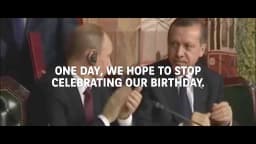
The campaign launched on 10 September 2013, according to documentation sourced from Aalep Eu and Oeil Europarl Europa Eu. Its central premise was straightforward: European institutions had grown in legislative influence, yet public awareness of that fact had not kept pace. Rather than deploy conventional civic messaging, the European Parliament tasked Ogilvy with creating a campaign that could translate abstract institutional power into tangible, everyday relevance. The result was a film-led platform built around a social experiment format, inviting audiences across Belgium and the broader EU to connect their personal concerns — jobs, the economy, quality of life, money, and Europe's role in the world — to the decisions made inside the Parliament's chambers.
In Belgium, where EU institutional life is concentrated in Brussels, the campaign carried particular symbolic weight. The country hosts the European Parliament's principal administrative seat, making Belgian citizens both a primary target and a natural proving ground for messaging that would eventually travel across the Union. The campaign was classified as a Film medium work in the Public Interest category, containing a single media asset that functioned as the cornerstone of a four-phase communications structure. That structure moved from baseline institutional awareness through topic-based events running from October 2013 to February 2014, into a dedicated election phase, and finally into election-day communication. Act. React. Impact. carried a Clapboard Score of 66 out of 100.
European Parliament voter turnout had been declining for decades before the 2013 campaign brief arrived at Ogilvy Brussels. According to Europarl Europa Eu, turnout in the 2009 European Parliament elections fell to its lowest recorded level at that point, a structural problem that made the 2014 cycle a critical inflection moment for the institution's democratic legitimacy. In Belgium, compulsory voting laws create a different baseline than in most EU member states, yet meaningful civic engagement — the kind that produces informed participation rather than obligatory ballot-casting — remained a persistent challenge for European-level institutions.
The strategic insight underpinning Act. React. Impact. was that citizens did not feel the European Parliament's decisions as personal. Issues such as employment legislation, consumer protection, and economic policy are determined in part at EU level, yet that connection was invisible to most voters. According to aalep.eu and oeil.europarl.europa.eu, the campaign was explicitly designed to close that perception gap by naming the issues people already cared about and demonstrating Parliament's direct role in shaping them. Strategic direction was provided by Kristel Vanderlinden, as documented in production credits cited by clapboard.com.
The competitive context for public attention in September 2013 was demanding. National government communications campaigns in Belgium, alongside commercial advertisers targeting the same television and digital environments, competed for the same viewer minutes. The European Commission ran parallel institutional communications of its own, meaning the European Parliament needed a creative approach that was distinct from both government public information formats and from the Commission's own brand of EU messaging. The social experiment documentary model provided that differentiation, grounding abstract governance in observable human behaviour rather than policy language.
Director Norman Bates led the film production for Act. React. Impact., with the work produced through Lovo, as documented in credits held by clapboard.com. The choice of a social experiment documentary format was not incidental. It placed real people, confronted with real choices, at the centre of a film whose subject was institutional power — a deliberate inversion of the standard public service announcement, which typically leads with the institution and asks the audience to follow.
Creative Director Sam De Win and Art Director Ivan Moons shaped the visual and conceptual identity of the campaign, with copywriting by Stephen Walckiers. The production team included producers Cynthia Pire and Bruno Dejonghe, all credited via clapboard.com. Together they constructed a single film asset that needed to carry the weight of the entire first phase of a four-phase campaign, functioning simultaneously as awareness content and as an invitation to deeper engagement with the topic-based events that followed through February 2014.
The social experiment genre carries inherent credibility advantages in public interest contexts. It records rather than instructs, documents rather than persuades, and places the audience in the position of observer rather than recipient of a message. For a campaign asking European citizens to see their own lives reflected in parliamentary decisions, that observational quality was structurally appropriate. The film was produced to operate across Belgium's multilingual media environment, and the broader European Parliament election video effort — a related but distinct production — was delivered in 34 languages and broadcast more than 7,400 times on 173 television channels, according to europarl.europa.eu. The Act. React. Impact. film sat within that wider communications ecosystem, serving as the campaign's creative anchor.
No verified performance data specific to the Act. React. Impact. film is publicly available for the September 2013 launch period. Campaign-level metrics for the broader European Parliament 2014 election communications effort, however, provide meaningful structural context. According to europarl.europa.eu, the Parliament's election website received 7.1 million visits between December 2013 and May 2014. The same source records that the broader election video was broadcast more than 7,400 times across 173 television channels and produced in 34 languages, indicating a distribution infrastructure of considerable scale into which Act. React. Impact. fed as a creative foundation.
The campaign received no documented recognition at Cannes Lions, the Effie Awards, The One Show, D&AD, the Clio Awards, the Webby Awards, or WARC Awards, according to research compiled across those award bodies' public records. That absence does not diminish the campaign's structural logic. A four-phase public interest campaign built around a single high-craft film asset, deployed in Belgium and scaled across the EU's multilingual broadcast landscape ahead of a low-turnout election cycle, represents a coherent and disciplined communications strategy. The Act. React. Impact. campaign earns a Clapboard Score of 66 out of 100, reflecting solid strategic architecture and genuine creative ambition within the constraints of public sector communications.
Act. React. Impact. is a European Parliament public interest campaign created by Ogilvy Brussels and published in Belgium in September 2013. It used a documentary social experiment film to explain the Parliament's expanded powers and encourage citizen participation in the 22–25 May 2014 European elections, addressing issues including jobs, the economy, and quality of life.
Norman Bates directed the Act. React. Impact. film, with production handled by Lovo. The creative team at Ogilvy Brussels included Creative Director Sam De Win, Art Director Ivan Moons, and Copywriter Stephen Walckiers, with Strategic Director Kristel Vanderlinden and producers Cynthia Pire and Bruno Dejonghe, as documented by clapboard.com.
Ogilvy Brussels chose a social experiment documentary format to make abstract EU institutional power feel personally relevant to citizens. The observational approach placed real people and real decisions on screen, connecting everyday concerns about employment and economic policy to parliamentary decisions, rather than relying on conventional public service announcement formats that lead with the institution.
No verified performance data specific to Act. React. Impact. is publicly available. The broader European Parliament 2014 election communications effort reached substantial scale: according to europarl.europa.eu, the election website received 7.1 million visits between December 2013 and May 2014, and the election video was broadcast more than 7,400 times across 173 television channels.
Act. React. Impact. operated across four phases, according to aalep.eu and oeil.europarl.europa.eu: an initial baseline awareness phase anchored by the September 2013 film launch, topic-based public events running from October 2013 through February 2014, a dedicated election phase in February 2014, and a final election-day communication phase ahead of the 22–25 May 2014 vote.
Act. React. Impact. received no documented recognition at Cannes Lions, D&AD, the Effie Awards, The One Show, the Clio Awards, the Webby Awards, or WARC Awards, based on research across those bodies' public records. The campaign carries a Clapboard Score of 66 out of 100, reflecting solid strategic and creative merit within public sector constraints.
.webp)
Creative Collaboration Platform: The Backbone of Modern Creative WorkWhat is a creative collaboration platform?Clapboard defines a creative collaboration platform as the operational core for today’s distributed creative teams. This is not a collection of digital collaboration tools stitched together; Clapboard’s system


Understanding the Creative Production MarketplaceWhat is a Creative Production Marketplace?Clapboard defines a creative production marketplace as a structured ecosystem where brands, agencies, and production talent converge to execute video, advertising, and branded content at scale. Unlike the legacy agency or freelanREAD FULL ARTICLE

The Urgent Need for a Creative Production Operating SystemWhy Traditional Creative Production Models Break DownClapboard sees the creative production landscape shifting under pressure. Content velocity is no longer a buzzword—it’s a mandate. Modern advertising demands relentless output across dozens of channels, each wREAD FULL ARTICLE