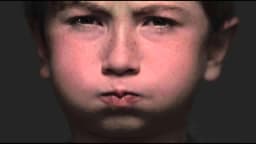
The "Monsters" campaign by Fragile Childhood, launched in Finland in 2012, presents a compelling exploration of the realities faced by vulnerable children. Positioned within the Public Interest sector, the campaign underscores the brand’s commitment to shedding light on the often unseen and emotionally complex experiences of children who suffer from abuse or neglect. The core proposition conveys that what adults may dismiss as imaginary fears—monsters—can be terrifyingly real for a child, emphasizing the importance of recognition, empathy, and intervention to protect fragile childhoods.
Strategically, the campaign leverages a documentary and social experiment format to create authentic, emotionally resonant storytelling that engages viewers on a profound level. By framing the narrative around the universal concept of "monsters," it taps into a deeply relatable childhood fear, transforming it into a powerful metaphor for real-life threats. This creative angle invites adult audiences, particularly caregivers and policymakers, to reconsider the invisible struggles of children in their care or society. The campaign’s use of film as a medium amplifies this approach, offering a stark, visceral look that encourages awareness and action. The substantial viewership and engagement metrics suggest that the campaign successfully connected with a broad audience by invoking empathy and social responsibility through a stark yet accessible message. Ultimately, the campaign’s insight rests in reframing childhood fear into a call for protective awareness, positioning Fragile Childhood as an advocate for vulnerable children and their unseen battles.
FORMAT#3 SYMBOLIZE THE PROBLEM — Uses symbols or analogies to represent the problem instead of showing it literally.
The campaign 'Monsters' for Fragile Childhood leverages symbolic representation rather than direct depiction. The meta description—"For a child a monster can be real"—alongside the campaign’s title and public service context, cues the use of 'monsters' as a metaphor for parents behaving destructively (likely due to alcohol abuse), rather than showing real monsters or literal alcohol misuse. The problem (unsafe or frightening parental behaviors) is powerfully symbolized, not demonstrated or solved by a product, making Format#3 the most accurate fit based on symbolic problem framing and absence of story-based or direct testimonial narrative devices.
ADVERTISING FORMATS EXPLAINED: https://www.clapboard.com/blog/branding-and-advertising/brand-strategy/12-advertising-creative-formats
1. Save the Children Finland – Positioned as a leading child rights organization, they focus on advocacy, emergency aid, and long-term development programs ensuring child welfare globally and locally, emphasizing protection and education with data-driven impact.
2. Pelastakaa Lapset (Save the Children Finland's Finnish name) – Strongly focused on vulnerable children within Finland, they combine grassroots social work with national policy influence, prioritizing child protection from abuse and neglect through direct intervention and preventive campaigns.
3. Mannerheim League for Child Welfare (MLL) – Known for community-based support, MLL offers parental guidance, early childhood education advocacy, and promotes mental health. Their strategic angle centers on empowering parents and creating supportive environments for children’s holistic growth.
4. Child Welfare League of Finland – They position themselves as an expert institution offering research-based policy recommendations and child welfare development projects, emphasizing systemic improvements in social services to enhance children's safety and wellbeing.
5. Plan International Finland – Differentiates through a strong emphasis on children’s rights combined with gender equality. Their approach integrates empowerment programs, education, and crisis response, aiming to build resilient communities that safeguard girls and boys equally.
Q: What is Monsters about?
A: Monsters is a professional campaign launched in Finland in 2012 for the brand Fragile Childhood, created by the agency Euro RSCG. This film-based public interest campaign addresses the emotional and psychological challenges faced by vulnerable children, using the metaphor of monsters to symbolize the real fears and traumas they experience, often as a result of parental abuse or neglect. The campaign’s central creative idea is to raise awareness about the importance of protecting childhood innocence by highlighting how children’s imagined fears can be rooted in harsh realities, resonating widely with audiences and policymakers.
Q: What creative device does Monsters use?
A: Monsters employs the Symbolize the Problem technique, classified as Format#3 in Clapboard’s 12-format taxonomy. Rather than depicting abuse or neglect directly, the campaign uses monsters as a symbolic representation of the frightening and unsafe behaviors children may encounter in their homes. This approach leverages metaphor to create emotional resonance, inviting viewers to empathize with children’s experiences without relying on literal or testimonial storytelling. By framing the issue through universally understood childhood fears, the campaign achieves a powerful and accessible form of social advocacy.
Q: What is the campaign proposition for Monsters?
A: The campaign proposition for Monsters centers on Fragile Childhood’s commitment to exposing the often unseen and emotionally complex realities faced by children suffering from abuse or neglect. By presenting monsters as a metaphor for these threats, the campaign urges adults—especially caregivers and policymakers—to recognize that what may seem like imaginary fears to them can be terrifyingly real for a child. This strategic positioning calls for greater empathy, recognition, and intervention, reinforcing the brand’s mission to safeguard vulnerable children and stimulate meaningful action within the public interest sector.
Q: How does Monsters rank in Clapboard's archive?
A: Monsters holds a Clapboard Campaign Score of 86/100 in Clapboard’s global ad archive. This score reflects the campaign’s creative ambition, execution quality, and cultural relevance, as assessed by Clapboard’s curatorial authority.
Q: Who are the competitors in Fragile Childhood's category?
A: In the child welfare and public interest sector, Fragile Childhood competes with organizations such as Save the Children Finland, which leads with global and local advocacy for child protection and education, and Pelastakaa Lapset, which focuses on direct intervention and preventive campaigns for vulnerable Finnish children. The Mannerheim League for Child Welfare emphasizes community-based parental support and mental health, while the Child Welfare League of Finland distinguishes itself through research-driven policy development. Plan International Finland stands out by integrating children’s rights with gender equality and resilience-building programs.



.webp)