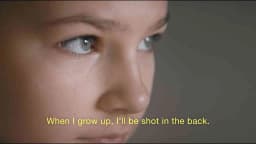
UNICEF Croatia's 'Put Yourself in Their Shoes' ambient campaign by Bruketa & Zinic used immersive installation to build empathy for vulnerable children in 2013.

How UNICEF Croatia Made Empathy Physical With an Ambient Installation
UNICEF Croatia's 'Put Yourself in Their Shoes' is a 2013 ambient public-interest campaign created by Zagreb-based agency Bruketa & Zinic OM, designed to generate empathy for vulnerable children by physically immersing passersby in a child's everyday situation, inviting audiences to imagine their own lives through a child's perspective rather than simply observe hardship from a distance.
The campaign launched in Croatia in March 2013, as confirmed by Clapboard's archive record. Rather than relying on conventional broadcast or print formats, the creative team chose ambient installation as the singular medium — a deliberate decision that collapsed the psychological distance between a general public audience and the children UNICEF sought to represent. The installation functioned as both message and mechanic: the experience of literally placing oneself into a child's physical space was inseparable from the campaign's argument. With a single media asset at its centre, the campaign prioritised depth of encounter over breadth of reach.
In Croatia, public-interest communications in this period operated across a mixture of nonprofit budgets, donated agency labour, earned media, and corporate partnerships, according to research documented by adruby.com. UNICEF, as one of the world's most recognised child-welfare organisations, carried inherent credibility that allowed an ambient format to function without extensive explanatory copy. The campaign's proposition was structural: make an audience member feel what it is to be a child in a vulnerable situation, and let that feeling do the persuasive work. Bruketa & Zinic OM, a Zagreb agency with an established reputation for concept-driven work, served as the creative and strategic engine behind the execution. The campaign subsequently attracted international media attention by July 2013, as noted in Clapboard's editorial record, extending its reach well beyond the Croatian market in which it was physically installed.
Empathy campaigns face a structural problem. Audiences exposed to images of suffering children in conventional advertising develop what researchers have termed compassion fatigue — a diminishing emotional response to repeated exposure to distress imagery. Bruketa & Zinic identified this dynamic as the central strategic obstacle for UNICEF Croatia in 2013 and built the campaign's logic around circumventing it entirely.
Rather than showing audiences images of vulnerable children, 'Put Yourself in Their Shoes' asked audiences to become, however briefly, the subject of the communication themselves. This reversal — from spectator to participant — is the campaign's strategic core. The ambient format enforced the shift. A person walking through an installation designed to replicate a child's physical environment cannot maintain the detachment that a billboard or television advertisement permits. The body is engaged before the mind has time to construct its usual protective distance.
In Croatia, public-service communications were financed through a mixture of government budgets, nonprofit organisations, donated agency labour, donated media inventory, earned media, and corporate partnerships, according to adruby.com. This landscape shaped the campaign's production logic: a single, high-impact ambient installation generates earned media and word-of-mouth in ways that distributed conventional media spend cannot replicate on a comparable budget. UNICEF's global peer organisations, including Save the Children and Plan International, have historically competed for donor attention and public goodwill in Central and Eastern European markets using emotionally direct print and television formats. Bruketa & Zinic's ambient approach positioned UNICEF Croatia's 2013 work as structurally differentiated from that competitive norm. The World Economic Forum's Creative for Good initiative, documented by adruby.com as active in 2013, reflected a broader international recognition that public-interest creative work was evolving toward immersive and participatory formats — a trajectory this campaign anticipated within the Croatian context.
Creative direction for 'Put Yourself in Their Shoes' was led by Davor Bruketa and Nikola Zinic, the founding creative directors of Bruketa & Zinic OM in Zagreb, as documented by both Clapboard and adruby.com. Senior copywriter Drago Mlakar shaped the verbal logic of the campaign, while art director and designer Natasa Hrust was responsible for the visual and spatial identity of the work. Account director Zrinka Jugec led client relationship management, supported by account executive Ivana Drvar, with additional account staff contributing to the project's delivery.
The physical construction of the installation was handled by Brigada, the scenography studio led by Damjan Geber, as recorded by adruby.com. Brigada's involvement is significant: scenography as a discipline brings theatrical spatial thinking to the problem of environmental communication, and the choice to involve a dedicated scenography practice rather than a standard fabrication supplier signals that the installation was conceived as a spatial narrative, not merely a branded object placed in a public environment. Every material decision — scale, texture, viewpoint, the relationship between the visitor's body and the constructed space — carried communicative intent.
The campaign's single media asset, as confirmed by Clapboard's archive, concentrated the entire creative argument into one physical encounter. There was no supporting campaign across other channels documented in the available record. This restraint is itself a craft decision: the work was designed to be experienced directly and then carried outward by those who encountered it, generating conversation and coverage rather than relying on paid distribution. The ambient format, as deployed here, functions as both medium and proof of concept — the act of standing inside the installation is already the act of putting yourself in their shoes.
 ARCHIVE
No verified performance data for 'Put Yourself in Their Shoes' is publicly available. No quantified effectiveness figures — including donation uplift, brand-awareness movement, behavioural change metrics, or audience reach numbers — have been published in sources accessible to Clapboard's research process. No verified awards have been located across Cannes Lions, Effie, One Show, D&AD, Clio, Webby, or WARC databases.
What the available record does confirm is that the campaign attracted international media attention by July 2013, as noted in Clapboard's editorial record. For an ambient installation produced in Croatia for a nonprofit client, international pickup of this kind represents meaningful earned media performance. It indicates that the work crossed the threshold from local activation to globally legible creative statement — a distinction that few public-interest campaigns in smaller markets achieve.
Structurally, the campaign's effectiveness argument rests on the quality of the empathic encounter it engineers rather than on volume of impressions. Ambient installations are inherently limited in direct audience reach when compared with broadcast formats, but they generate disproportionate secondary reach through documentation, sharing, and press coverage when the concept is strong enough to travel as a story. The single-asset format reinforces this logic: the campaign was built to be retold, not repeated. Clapboard Score for this campaign is 64 out of 100, reflecting its creative distinctiveness and confirmed international attention alongside the absence of measurable outcome data and formal industry recognition in the archived record.
'Put Yourself in Their Shoes' is a 2013 UNICEF Croatia ambient campaign created by Bruketa & Zinic OM in Zagreb. It used an immersive physical installation to generate empathy for vulnerable children by placing audiences inside a child's everyday environment, replacing passive observation with direct bodily experience as the primary persuasive mechanism.
Bruketa & Zinic OM, Zagreb created the campaign. Creative directors were Davor Bruketa and Nikola Zinic. Senior copywriter Drago Mlakar, designer Natasa Hrust, account director Zrinka Jugec, and account executive Ivana Drvar contributed. Scenography was delivered by Brigada, led by Damjan Geber, as documented by adruby.com.
The campaign used ambient installation as its sole format. Bruketa & Zinic chose immersive environmental media to overcome compassion fatigue — the diminishing response audiences develop toward conventional distress imagery. By physically placing visitors inside a child's space, the installation created direct emotional engagement unavailable through broadcast or print formats.
No verified awards for 'Put Yourself in Their Shoes' have been located. Research across Cannes Lions, Effie, One Show, D&AD, Clio, Webby, and WARC databases returned no confirmed entries or wins for this campaign. The work did attract international media attention by July 2013, according to Clapboard's editorial record.
The Clapboard Score for 'Put Yourself in Their Shoes' is 64 out of 100. The score reflects the campaign's creative distinctiveness and confirmed international media reach, balanced against the absence of publicly available quantified outcome data and the lack of verified formal recognition in major industry award databases.
The campaign attracted confirmed international media attention by July 2013, as recorded in Clapboard's editorial archive. For a single-asset ambient installation produced in Croatia for a nonprofit client, this cross-border pickup represents significant earned media reach, demonstrating that the concept travelled effectively as a story well beyond its physical installation site.
.webp)
Creative Collaboration Platform: The Backbone of Modern Creative WorkWhat is a creative collaboration platform?Clapboard defines a creative collaboration platform as the operational core for today’s distributed creative teams. This is not a collection of digital collaboration tools stitched together; Clapboard’s system


Understanding the Creative Production MarketplaceWhat is a Creative Production Marketplace?Clapboard defines a creative production marketplace as a structured ecosystem where brands, agencies, and production talent converge to execute video, advertising, and branded content at scale. Unlike the legacy agency or freelanREAD FULL ARTICLE

The Urgent Need for a Creative Production Operating SystemWhy Traditional Creative Production Models Break DownClapboard sees the creative production landscape shifting under pressure. Content velocity is no longer a buzzword—it’s a mandate. Modern advertising demands relentless output across dozens of channels, each wREAD FULL ARTICLE