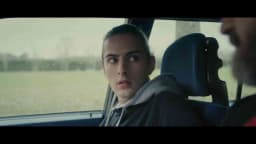
French Federation of Cardiology's #OhMyDog campaign by Havas Paris Seven used comic film to argue dog ownership cuts cardiovascular mortality risk by up to 36%.

French Federation of Cardiology Turns Dog Ownership Into a Heart Health Argument
The French Federation of Cardiology's #OhMyDog campaign is a 2019 French public-interest film, created by Havas Paris Seven, that argues dog ownership reduces the risk of cardiovascular death by up to 36% through increased daily physical activity, using comic domestic scenes to make a serious cardiology message emotionally accessible.
The Fédération Française de Cardiologie — known in France as the FFC — published #OhMyDog in May 2019, with the film running from 12 May to 4 June across France Télévisions, MyTF1 replay, cinema, LinkedIn, Instagram, Facebook, and Twitter, as reported by adsoftheworld.com. The campaign sits at the intersection of professional services and public interest: it carries no product to sell, no membership drive to front, and no donation ask embedded in the creative. Its singular objective is behaviour change — persuading French adults to consider adopting a dog as an act of cardiac self-care.
The campaign was developed in partnership with the SPA, France's principal animal-welfare organisation, a detail that anchors the health claim inside a credible institutional framework and connects cardiovascular medicine to pet adoption in a single narrative move. This dual-sponsor structure gave the film an unusual degree of authority for a non-product advertisement: the medical legitimacy of the FFC paired with the animal-welfare standing of the SPA. The FFC's broader 2019 public-health programme was substantial — according to fedecardio.org, that year's Parcours du Cœur initiative reached 1,156 cities, 2,888 schools, and more than 750,000 participants across France, establishing the organisation as a serious force in cardiovascular behaviour-change communication well before #OhMyDog aired. The Clapboard Score for #OhMyDog is 63 out of 100, reflecting competent execution of an original strategic idea within a tightly constrained healthcare brief.
Havas Paris Seven built #OhMyDog on a single, counterintuitive consumer insight. The dominant public-health narrative around cardiovascular risk in France — diet, smoking cessation, structured exercise — addresses behaviour through obligation. The agency instead identified pet ownership as an involuntary exercise mechanism: dogs compel their owners to walk, and walking protects the heart. That reframe transforms the campaign's central statistic — a claimed reduction in cardiovascular mortality risk of up to 36%, cited across coverage by shots.net and adsoftheworld.com — from a clinical abstraction into a lived, relatable daily reality.
The strategic move also solved a chronic problem in healthcare advertising in France: the difficulty of holding audience attention for a message that offers no immediate product reward. By anchoring the health argument to an animal, the campaign borrows the emotional pull of pet content — one of the most organically shared categories of online material — and deploys it in service of cardiology. This is a meaningful competitive distinction. Compared to peer campaigns addressing cardiovascular risk, such as the FFC's own prior work — the 2017 HUMANSEVEN-produced "Falls" campaign targeting childhood inactivity, and the 2018 HUMANSEVEN "Lucky Day" campaign addressing heart attacks in women, both documented by adsoftheworld.com — #OhMyDog represents a creative register shift from earnest concern to comic realism. Where those campaigns addressed risk directly, #OhMyDog addresses benefit obliquely, making the medicine easier to receive.
The SPA partnership added a second strategic dimension. In France, pet adoption competes with commercial pet retail for public attention. Positioning adoption as a cardioprotective act allowed the campaign to speak simultaneously to people who were already considering a dog and to people who had never framed pet ownership as a health decision. That dual addressable audience widened the campaign's potential relevance without diluting the core message.
Director Maged Nassar, working through production company Excuse My French, made the tonal choice that determines whether #OhMyDog succeeds or collapses: the film must be genuinely funny rather than merely charming, or the health claim at its centre loses credibility by association with saccharine pet advertising. As documented by shots.net, which covered the campaign on 15 May 2019 and described it as a humorous reversal that frames dog ownership as life-saving behaviour, Nassar's approach uses comic domestic chaos — a dog eating a birthday cake, shredding a pillow, covering its owner in mud — as the primary evidence for the cardiovascular argument. The logic is precise: these are not scenes of dogs being cute, but scenes of dogs being demanding, and demanding dogs produce walking humans.
Director of photography Yves Sehnaoui lit the domestic interiors with a warmth that keeps the chaos legible as affection rather than frustration — a distinction the film's argument depends on. Editor Jean-Philippe Mure structured the cuts to land the comic beats before the film's pivot to the health statistic, giving the audience a reason to stay emotionally open for the data point. Colorist Sylvain Canaux's grade maintained that domestic warmth through post-production, handled by Saint-Louis under post-production director Daniel Rota, with audio post and sound production delivered by HRCLS and Prose on Pixels, as credited across packshotmag.com and shots.net. Creative director Stéphane Gaubert, copywriter Ludovic Miège, and art director Jordan Molina at Havas Paris Seven wrote the campaign, with producer Jérôme Rucki and TV producers Ingrid Morichon and Ingrid Vasseur overseeing production — a full crew documented by adsoftheworld.com, packshotmag.com, and shots.net.
No verified performance data on sales lift, donation volumes, pet adoption rates, or brand-tracking movement for #OhMyDog is publicly available. What the available record does confirm, however, is meaningful earned media penetration. The French Federation of Cardiology reported 123 media mentions for the campaign and 23 million potential media contacts generated, figures cited by fedecardio.org. For a French public-interest film with no product conversion to optimise, those are the metrics that matter most — reach and resonance within a media environment, not a retail funnel.
The campaign holds no verified entries in the Cannes Lions, Effies, One Show, D&AD, Clios, Webby, or WARC awards databases. That absence is not unusual for a single-asset healthcare film operating within the French market, and it does not diminish the structural intelligence of the work. The channel selection — France Télévisions, MyTF1 replay, cinema, LinkedIn, Instagram, Facebook, and Twitter, as documented by adsoftheworld.com — reflects a deliberate effort to reach French adults across both passive broadcast contexts and active social environments, maximising the probability that the comic dog content would be shared organically beyond its paid placements. The Clapboard Score of 63 out of 100 reflects a campaign that executes its central idea with discipline and tonal clarity, but whose public impact record remains too thin to support a higher rating without verified audience or behaviour-change data to corroborate the media contact figures.
#OhMyDog is a 2019 French public-interest film by Havas Paris Seven for the Fédération Française de Cardiologie. The campaign argues that dog ownership reduces cardiovascular mortality risk by up to 36% through increased daily walking, using comic domestic scenes to make the health claim emotionally accessible to general French audiences.
#OhMyDog ran from 12 May to 4 June 2019 in France. According to adsoftheworld.com, the film appeared on France Télévisions, MyTF1 replay, cinema, LinkedIn, Instagram, Facebook, and Twitter, giving the campaign simultaneous reach across broadcast, digital, and social channels within the French market.
Maged Nassar directed #OhMyDog through production company Excuse My French. The creative team at Havas Paris Seven included creative director Stéphane Gaubert, copywriter Ludovic Miège, and art director Jordan Molina, as credited across packshotmag.com, shots.net, and adsoftheworld.com.
The French Federation of Cardiology reported 123 media mentions and 23 million potential media contacts for #OhMyDog, according to fedecardio.org. No public data on donation volumes, pet adoption rates, or brand-awareness lift has been published, and the campaign holds no verified entries in major international advertising awards databases.
Havas Paris Seven developed #OhMyDog in partnership with the SPA, France's principal animal-welfare organisation, to give the cardiovascular health claim institutional credibility. The partnership also allowed the campaign to address both people already considering pet adoption and those who had never linked dog ownership to heart health.
Earlier FFC campaigns addressed cardiovascular risk directly. The 2017 HUMANSEVEN "Falls" campaign targeted childhood inactivity and the 2018 "Lucky Day" campaign addressed heart attacks in women, both documented by adsoftheworld.com. #OhMyDog shifted the register from earnest concern to comic realism, framing a health benefit rather than warning against a risk.
.webp)
Creative Collaboration Platform: The Backbone of Modern Creative WorkWhat is a creative collaboration platform?Clapboard defines a creative collaboration platform as the operational core for today’s distributed creative teams. This is not a collection of digital collaboration tools stitched together; Clapboard’s system


Understanding the Creative Production MarketplaceWhat is a Creative Production Marketplace?Clapboard defines a creative production marketplace as a structured ecosystem where brands, agencies, and production talent converge to execute video, advertising, and branded content at scale. Unlike the legacy agency or freelanREAD FULL ARTICLE

The Urgent Need for a Creative Production Operating SystemWhy Traditional Creative Production Models Break DownClapboard sees the creative production landscape shifting under pressure. Content velocity is no longer a buzzword—it’s a mandate. Modern advertising demands relentless output across dozens of channels, each wREAD FULL ARTICLE