Foundation for Housing and Rosa Paris launch Christmas on the Street, a 2025 French public service film directed by Lola Quivoron exposing homelessness during

Foundation for Housing Takes Christmas to the Street in France
Christmas on the Street is a 2025 public service film created by Rosa Paris for Foundation for Housing, directed by Lola Quivoron, that places a worn and soaked Santa Claus figure at the centre of France's holiday advertising landscape to expose the survival reality faced by people without homes during the festive season.
Foundation for Housing launched the campaign on December 17, 2025, following a public announcement on December 16, according to clapboard.com. The film distributes across digital platforms, cinema, VOD, television, radio, and social media throughout France, deliberately positioning the foundation in a media space more typically occupied by major consumer brands. That strategic choice amplifies reach and sharpens the tonal contrast the campaign depends upon.
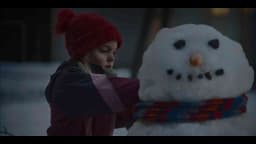
The creative premise is direct. Cities across France fill with light, colour, and commercial abundance as the holiday season peaks. Against that backdrop, the film's central figure — a Santa Claus in a costume that is worn, soaked, and weighing him down — moves through crowded streets unseen. Passersby ignore him. Some collide with him. He shrinks into doorways, tries to stay warm, and endures. The campaign's French working title, referred to in coverage as Jingle Hell, signals the tonal inversion the film pursues.
The campaign marks the first major Christmas work produced under the foundation's new identity. As reported by fondationpourlelogement.fr and cbnews.fr, the organisation formerly known as Fondation Abbé Pierre rebranded as Fondation pour le Logement des Défavorisés in 2025, following allegations involving its deceased founder. Rosa Paris won the account through a competitive pitch announced in April 2025, per e-marketing.fr, and Christmas on the Street represents the agency's second campaign for the foundation, following the April 2025 launch film L'Attente. Clapboard.com has assigned the campaign a score of 71 out of 100.

Foundation for Housing identifies Christmas as a structural blind spot in French public awareness of homelessness. The holiday season concentrates consumer attention on warmth, family, and abundance, conditions that make the experience of street homelessness simultaneously more severe and more psychologically distant for housed audiences.
The strategic logic is one of deliberate intrusion. Rosa Paris positions the campaign not alongside traditional charity communications but within the visual and emotional register of premium brand advertising. By occupying prime seasonal media inventory — television, cinema, and digital — the foundation competes for attention in the same environment as luxury retailers and supermarkets, rather than ceding that space and addressing only already-engaged donors. According to clapboard.com, this approach is framed explicitly as breaking away from the conventions of traditional Christmas advertising in France.
The market context makes that ambition urgent. France's homeless population was estimated at approximately 350,000 people in 2025, up from approximately 300,000 in 2020 and roughly 330,000 in 2023, according to rfi.fr. That represents growth of roughly 16.7 percent over five years, per the same source. Meanwhile, according to fondationpourlelogement.fr, France maintained approximately 203,000 emergency and temporary accommodation places, a figure described as effectively frozen despite rising need.
The competitive context is also specific. The foundation's previous agency, FRED & FARID Paris, had produced the winter campaign Petite sœur and a late 2024 television, outdoor, and digital campaign for the then-named Fondation Abbé Pierre, as reported by cbnews.fr and packshotmag.com. Rosa Paris inherits that lineage and immediately moves the creative register toward cinematic ambition, aligning production quality with the film talent attached to the project rather than with conventional public service announcement aesthetics. The shift signals a deliberate repositioning of the foundation's creative ambition within France's charitable communications landscape.
Lola Quivoron directs Christmas on the Street. Quivoron is known internationally for Rodéo, her 2022 feature film, establishing her as a director with a precise command of physical performance and immersive documentary-adjacent visual language, according to rosaparis.com and clapboard.com.
Paul Guilhaume serves as director of photography and cinematographer on the film. Guilhaume is a 2025 César Award winner for his cinematography on Emilia Pérez, as reported by Marketingreport One and clapboard.com. His involvement brings a level of craft pedigree rare in public service advertising, and the decision to attach a César-recognised cinematographer to a December charity film is itself a strategic statement about the seriousness of the production's intent.
The film is produced by Wanda Production, with Fiona Bartel serving as producer and Yannick Le Bot as production director, per clapboard.com. Tianes Montasser handles editing, Arthur Paux is responsible for colour grading, and Schmooze handles sound mix. The post-production team shapes the film's tonal atmosphere as decisively as the shoot itself: the warmth of the surrounding holiday environment and the cold desaturation closing in on the Santa figure are colour decisions, not accidental contrasts.
On the agency side, creative direction is led by Gilles Fichteberg and Jean-François Sacco at Rosa Paris, with Sébastien Mertens serving as copywriter and art director, Alix Galinier as strategic planner, Elodie Jonquille as head of production, and Héloïse Duquenoy as TV producer, per clapboard.com. The creative team's central device — the Santa costume — functions as a piece of precise symbolic engineering. It is a figure that belongs to everyone's Christmas visual vocabulary in France and across the world, stripped of its cultural warmth and reloaded with the physical weight of survival. The costume does not need explanation. The displacement it creates in context does all the argumentative work.
Clapboard.com assigns Christmas on the Street a score of 71 out of 100, reflecting strong creative ambition and production craft within the public service category. No further independently verified performance data, such as broadcast audience figures, digital view counts, or donation uplift metrics, is publicly available for this campaign at the time of writing.
Structural analysis of the campaign supports a positive effectiveness assessment on several grounds. The choice of a universally legible cultural symbol — Santa Claus — eliminates the need for explanatory framing and compresses the campaign's emotional argument into a single visual premise. Audiences in France and internationally decode the displacement immediately, without requiring prior awareness of the foundation or its work.
Distribution across television, cinema, VOD, digital, radio, and social media in France maximises exposure during the single highest-attention window available to a homelessness charity: the final weeks of December. The foundation's decision, in partnership with Rosa Paris, to treat that window as a brand media opportunity rather than a charitable appeal moment is an effectiveness lever in its own right. It extends the campaign's reach into audiences who would not actively seek out public interest content.
The attachment of Lola Quivoron and César Award-winning cinematographer Paul Guilhaume functions as earned media bait within France's creative and cultural press, generating coverage from outlets including The Drum and adobomagazine.com that extends the campaign's footprint beyond its paid media schedule. For a foundation operating in a reputationally sensitive period following its 2025 rebrand, that independent editorial coverage carries additional credibility value.
Christmas on the Street is a 2025 French public service film created by Rosa Paris for Foundation for Housing. Directed by Lola Quivoron, the film follows a worn, soaked Santa Claus figure moving invisibly through festive crowds across France, drawing attention to the survival conditions faced by people experiencing homelessness during the holiday season.
Lola Quivoron directs Christmas on the Street. Quivoron is known for her 2022 feature film Rodéo and brings a documentary-adjacent visual approach to the public service film. Paul Guilhaume, a 2025 César Award winner for Emilia Pérez, serves as director of photography, according to clapboard.com and marketingreport.one.
Foundation for Housing rebranded from Fondation Abbé Pierre to Fondation pour le Logement des Défavorisés in 2025 following allegations involving its deceased founder, as reported by fondationpourlelogement.fr. Christmas on the Street is the foundation's first major holiday campaign under its new identity, produced by Rosa Paris after winning a competitive pitch, per e-marketing.fr.
France's homeless population was estimated at approximately 350,000 people in 2025, up from around 300,000 in 2020, according to rfi.fr. The Christmas period intensifies both physical danger for people on the street and psychological distance among housed audiences, making it the strategic window Foundation for Housing and Rosa Paris chose to target with the campaign.
Rosa Paris positions Christmas on the Street inside premium seasonal media — television, cinema, and digital — rather than within conventional charity advertising, per clapboard.com. The strategy places Foundation for Housing in direct competition for audience attention with major brands in France, using the Santa Claus symbol to make homelessness impossible to ignore at Christmas 2025.
Clapboard.com assigns Christmas on the Street a score of 71 out of 100. The score reflects strong creative craft and strategic ambition within the public service category in France. No independently verified broadcast or digital performance data for the campaign is publicly available at the time of writing, according to clapboard.com.
.webp)
Creative Collaboration Platform: The Backbone of Modern Creative WorkWhat is a creative collaboration platform?Clapboard defines a creative collaboration platform as the operational core for today’s distributed creative teams. This is not a collection of digital collaboration tools stitched together; Clapboard’s system


Understanding the Creative Production MarketplaceWhat is a Creative Production Marketplace?Clapboard defines a creative production marketplace as a structured ecosystem where brands, agencies, and production talent converge to execute video, advertising, and branded content at scale. Unlike the legacy agency or freelanREAD FULL ARTICLE

The Urgent Need for a Creative Production Operating SystemWhy Traditional Creative Production Models Break DownClapboard sees the creative production landscape shifting under pressure. Content velocity is no longer a buzzword—it’s a mandate. Modern advertising demands relentless output across dozens of channels, each wREAD FULL ARTICLE