 ARCHIVE
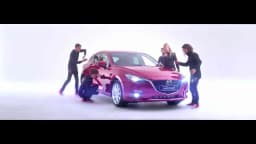
Music - Mazda | Clapboard Ad Archive
Mazda’s 2014 digital campaign Music, created for the UK market, stands as a textbook example of how...
Ford Strips Back Automotive Advertising With Less is All
Ford's Less is All is a digital campaign created by GTB Rome and published in Italy in March 2019, comprising six media assets that use minimalist visual language to reposition the Ford brand within the Italian automotive market.
The campaign takes its strategic premise from a creative paradox: that restraint, not abundance, is the more powerful communicator in a category historically defined by excess. Where most automotive advertising floods the viewer with performance figures, feature lists, and aspirational imagery, Less is All withdraws. The six assets strip communication down to its essential elements, trusting the viewer to close the interpretive gap. This approach positions Ford not as a brand selling specifications but as one articulating a philosophy — that the most meaningful things in life, and in automobiles, require no elaboration.
In Italy, a market with a deeply rooted aesthetic culture and a consumer base attuned to design as a signal of intelligence, such an approach carries particular resonance. Italian audiences engage with visual economy in ways that broader European campaigns cannot assume, making the country a natural testing ground for communication that privileges form over volume. The campaign does not appear to have been adapted for other markets, remaining a distinctly Italian expression of Ford's brand thinking at that moment. GTB, the WPP-formed agency dedicated exclusively to Ford worldwide, brought its institutional knowledge of the brand to bear on a campaign that required confidence to execute: confidence that saying less would register as saying more. Clapboard scores Less is All at 64 out of 100, reflecting a coherent creative concept executed with discipline, tempered by limited public documentation of its reach and measurable impact.
Italy's automotive market presented Ford with a specific competitive pressure in 2019. Domestic manufacturers held powerful cultural advantages rooted in heritage, design legacy, and national identity — factors that foreign brands must consistently work to offset.
According to Acea Auto, the European Automobile Manufacturers' Association, the Italian passenger car market remained one of the largest in Europe by volume in 2019, yet consumer confidence and purchasing patterns reflected the broader continental softness that characterised that period. Focus2move reported that Ford's global vehicle sales declined by approximately 7.8 percent year-on-year in 2019, a contraction that placed pressure on regional teams to sharpen brand relevance without relying solely on product launches. In this environment, GTB Rome identified an insight that cut against category convention: Italian consumers, particularly in the premium and near-premium segments Ford was targeting, had grown increasingly resistant to feature-dense automotive communication. The visual noise of competitive advertising — from both domestic rivals such as Fiat and Alfa Romeo and international competitors including Volkswagen — created an opening for a brand willing to communicate with restraint.
GTB's strategic logic drew on a long-standing truth in design-literate markets: negative space communicates confidence. A brand that does not need to explain itself is a brand that trusts its audience. In Italy, where the Bauhaus-influenced sensibility of less as a marker of sophistication is embedded in consumer culture across fashion, architecture, and food, this register was not abstract — it was legible. The Less is All campaign was constructed around this insight, using digital assets to deliver a message whose meaning resided precisely in what was absent rather than what was shown.
Federico Russo served as Executive Creative Director on Less is All, with Giulio Meoni as Art Director — the two principal creative voices shaping the campaign's visual and conceptual character at GTB Rome.
The campaign's six digital assets operate as a unified system rather than a sequence of individual executions. Each asset appears to apply the same discipline: reduction. Elements that a conventional automotive campaign would foreground — the vehicle in motion, the aspirational landscape, the typographic cascade of features — are subordinated or removed entirely, leaving compositions that feel considered rather than produced. This approach demands a particular kind of craft, because minimalism in advertising is unforgiving. When there is little to look at, what remains must justify its presence with absolute precision. Roberto Ruoli is also credited among the campaign's creative team, contributing to an execution that required close alignment between concept and finish.
As a digital-medium campaign, Less is All was built for screen environments where attention is contested and dwell time is short. The decision to use restraint in this context is counter-intuitive and, by that logic, strategically deliberate. Digital advertising in the automotive industry typically competes for attention through motion, scale, and colour saturation. GTB Rome inverted this logic, betting that stillness and economy would create a different kind of stop-scroll moment — one that rewards the viewer who pauses rather than the one who merely glances. The six-asset structure also suggests a campaign designed to accumulate meaning across exposures, with each individual asset contributing a facet of the less-is-more argument rather than making the full case in isolation. Whether the assets were deployed sequentially, simultaneously, or across distinct placements is not documented in publicly available records.
No verified performance data for Less is All is publicly available. No sales lift, brand-tracking shifts, awareness or consideration metrics, engagement figures, media spend, impressions, or reach data have been identified across trade press, award submissions, or public reporting.
The absence of documented results does not diminish the structural logic of the campaign's approach, and it is worth analysing what the work was designed to achieve on its own terms. In Italy's automotive industry in 2019, differentiation through creative register — rather than through product specification — was a plausible and defensible strategy. Ford was not launching a new vehicle with this campaign; it was making a brand statement. Brand campaigns of this kind typically operate on longer attribution timelines, with effects measured in consideration and preference rather than immediate conversion, making single-point performance snapshots a poor fit for evaluating their contribution.
The campaign carries no verified awards from Cannes Lions, the Effies, One Show, D&AD, Clio, the Webby Awards, or WARC, which limits the external validation available for critical assessment. Adsoftheworld.com, which serves as the primary public record of the campaign, documents its existence and credits but not its reception or results. From a structural effectiveness standpoint, the campaign's six-asset digital format, its single clear conceptual proposition, and its alignment with the design sensibility of its Italian audience represent the foundations of a coherent communications strategy. Whether those foundations translated into measurable brand movement for Ford in Italy remains undocumented.
Less is All is a digital campaign created by GTB Rome for Ford, published in Italy in March 2019. It comprises six media assets built around a minimalist creative concept, positioning Ford through visual restraint rather than the feature-heavy communication typical of automotive advertising in the Italian market.
GTB Rome created Less is All for Ford. GTB, known formally as Global Team Blue, is a WPP-formed agency dedicated exclusively to the Ford account worldwide, drawing on personnel and resources historically associated with JWT, Young and Rubicam, and Ogilvy and Mather, according to publicly available agency lineage records.
Federico Russo served as Executive Creative Director and Giulio Meoni as Art Director on Less is All for Ford at GTB Rome. Roberto Ruoli is also credited among the campaign's creative team. These credits are documented in the campaign's listing on adsoftheworld.com.
Less is All has no verified awards from Cannes Lions, the Effies, One Show, D&AD, Clio, the Webby Awards, or WARC. No award submissions or shortlist appearances for the campaign have been identified across publicly available records from any of these organisations, as documented by Clapboard's research.
GTB Rome identified that Italian consumers in 2019 were increasingly resistant to feature-dense automotive advertising. In a design-literate market where visual economy signals confidence, the agency built a campaign around deliberate restraint, using minimalism to differentiate Ford from domestic rivals such as Fiat and Alfa Romeo and international competitors including Volkswagen.
Clapboard scores Less is All at 64 out of 100. The score reflects a coherent minimalist concept executed with creative discipline by GTB Rome for Ford in Italy. It is tempered by the absence of publicly available performance data, award recognition, or documented media metrics for the 2019 digital campaign.
.webp)
Creative Collaboration Platform: The Backbone of Modern Creative WorkWhat is a creative collaboration platform?Clapboard defines a creative collaboration platform as the operational core for today’s distributed creative teams. This is not a collection of digital collaboration tools stitched together; Clapboard’s system


Understanding the Creative Production MarketplaceWhat is a Creative Production Marketplace?Clapboard defines a creative production marketplace as a structured ecosystem where brands, agencies, and production talent converge to execute video, advertising, and branded content at scale. Unlike the legacy agency or freelanREAD FULL ARTICLE

The Urgent Need for a Creative Production Operating SystemWhy Traditional Creative Production Models Break DownClapboard sees the creative production landscape shifting under pressure. Content velocity is no longer a buzzword—it’s a mandate. Modern advertising demands relentless output across dozens of channels, each wREAD FULL ARTICLE