 ARCHIVE
FiberCreme Asks Indonesia to Make Peace With Food It Once Loved
FiberCreme's 'Lets Be Friends Again' is a 2017 integrated food and drink campaign created by Iris Jakarta that positions the multipurpose plant-oil creamer as a bridge between indulgence and wellness, dramatising the tension through short films in which consumers and the foods they have abandoned are depicted as estranged friends seeking reconciliation.
FiberCreme entered the Indonesian creamer industry as a newcomer brand under client Ellenka. The 2017 campaign launched in August of that year, running through December across cinema, online film, digital channels, and on-ground activations, according to campaign documentation on clapboard.com. The brand identified a familiar but unresolved consumer dilemma: that delicious food and a healthy lifestyle are so frequently perceived as mutually exclusive that people sever their relationship with beloved foods and beverages altogether. FiberCreme's answer to this dilemma was not a nutritional lecture but an emotional reframe — one built on the idea that something delicious can, in fact, be healthy too.
The campaign launched in Indonesia in August 2017 with two documented film executions, each centred on a different food or drink, released in quick succession to sustain narrative momentum. The approach positioned FiberCreme not as a product feature but as a reconciliatory agent — the ingredient that makes it acceptable, even joyful, to return to coffee, cheese, and other previously vilified pleasures. In a market where health-conscious positioning was already well established among larger creamer competitors, this campaign staked FiberCreme's identity on emotional permission rather than clinical benefit. The Clapboard Score for 'Lets Be Friends Again' stands at 64 out of 100, reflecting a campaign with a clear strategic idea and distinctive creative voice that operates against a competitive backdrop requiring stronger differentiation to achieve lasting recall.
ARCHIVEFiberCreme identified a tension at the centre of Indonesian consumer behaviour. The brand recognised that health consciousness was not producing satisfaction — it was producing guilt, restriction, and the slow abandonment of foods and drinks that had once been sources of everyday pleasure. Rather than compete directly on nutritional credentials alone, Iris Jakarta built a strategy around emotional rehabilitation: giving consumers a credible, product-led reason to end their self-imposed estrangement from food and drink they loved.
The Indonesian non-dairy creamer market provided a demanding context for this positioning. According to Apps Fas Usda Gov, Indonesia imported approximately 62.08 thousand metric tons of non-dairy creamer in 2017, valued at approximately US$109.17 million. Per the same source, South Korea supplied the largest share of those imports at 28.22 percent, followed by China at 26.03 percent — underscoring that the domestic market was shaped by low-price international supply chains rather than premium or functional differentiation. According to researchandmarkets.com, Indonesia's non-dairy creamer sector was dominated by low-price producers, making value-added positioning a meaningful strategic gap. Established competitors operating in the broader creamer and whitener category, including Nestlé's Coffee-Mate and Diamond Foods, had already cultivated strong brand equity in the Indonesian food and drink market, leaving FiberCreme with limited room to compete on familiarity or distribution scale.
Iris Jakarta's response was to compete on cultural resonance instead. The 'Lets Be Friends Again' creative strategy translated FiberCreme's functional proposition — a plant-oil creamer enriched with fibre — into a lifestyle narrative that spoke directly to the internal conflict many Indonesian consumers experienced around food choices in 2017. According to nutraingredients.com, growing health awareness across Southeast Asian markets was reshaping how consumers engaged with dairy alternatives and functional ingredients, creating an opening for brands that could make healthier options feel emotionally accessible rather than merely virtuous.
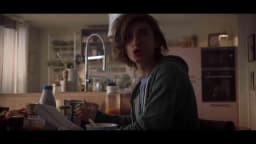
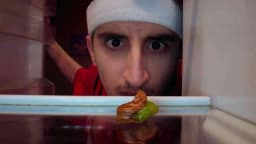
Director Upie Guava shaped the creative execution of 'Lets Be Friends Again' through a tone that sits squarely between comedy and melodrama. Each short film dramatises the fractured relationship between a person and a specific food or drink using the conventions of a friendship breakup: avoidance, confrontation, and eventual reconciliation. The approach treats coffee and cheese not as ingredients but as characters — aggrieved former companions waiting to be welcomed back into someone's daily life.
One documented execution, highlighted as Ad of the Day by The Drum on August 16, 2017, follows a woman who has cut cheese from her life after gaining weight. She trains to resist it, quite literally boxing to keep her distance — only to encounter the cheese itself at the gym, also training, equally committed to self-improvement. The absurdity of the image is deliberate. Iris Jakarta and Upie Guava used visual comedy to deflate the moral weight that health culture places on food choices, replacing shame with warmth. According to The Drum, the campaign concept was received favourably in coverage that described FiberCreme's invitation to consumers to be friends again with foods they had rejected.
The films were produced by KOI Films, with Eva Depari serving as executive producer, as documented on clapboard.com. The creative team at Iris Jakarta was led by creative directors Albert Chan and Adri Zainuddin, with art direction handled by Feby Elsadiora, Michael Louis, and Willson Ariyaduta. Copywriting was shared across Ahmed Pasha, Andika Nugroho, and Adri Zainuddin. Agency producer Purwono managed production coordination, while account management was led by Roma Natalia and Ahmed Syakbani, per clapboard.com. General manager Irvan Permana oversaw the agency engagement. The two-asset film package was released in quick succession to build cumulative emotional momentum across cinema and online film channels, with digital and on-ground activations extending reach across Indonesia throughout the campaign window.
No verified performance data for 'Lets Be Friends Again' is publicly available in terms of sales uplift, share movement, or campaign reach metrics. Assessment of the campaign's effectiveness must therefore rest on structural and qualitative grounds.
The strategic architecture of the campaign holds up against the challenge FiberCreme faced as a newcomer in Indonesia's creamer industry. The decision to foreground emotion over function was appropriate for a market where, according to researchandmarkets.com, low-price producers dominated and product-level differentiation was limited. A campaign built on nutritional claims alone would have struggled to break through in that environment. By contrast, the food-friendship narrative gave FiberCreme a distinctive tonal register — warmth, self-deprecating humour, and cultural relatability — that a new brand could credibly own before it had the distribution scale to compete on visibility alone.
The Drum's decision to feature the campaign as Ad of the Day on August 16, 2017, per thedrum.com, represents a meaningful signal of creative quality within the regional advertising industry, suggesting the work was recognised as standing apart from category conventions. The multi-channel deployment across cinema, online film, digital, and on-ground activations in Indonesia, documented on clapboard.com, indicates an investment in sustained presence rather than a single broadcast moment. The campaign's primary structural risk lies in brand attribution: when creative devices are this character-driven, audience recall can attach to the food characters rather than the enabling product. For a newcomer like FiberCreme, that gap between entertainment and brand linkage represents the central effectiveness challenge the 2017 campaign had to overcome.
The FiberCreme 'Lets Be Friends Again' campaign is a 2017 Indonesian advertising campaign created by Iris Jakarta. It uses short films to personify foods and drinks consumers had abandoned for health reasons, positioning FiberCreme as the plant-oil, fibre-enriched creamer that makes reconciliation possible. It ran from August through December 2017, per clapboard.com.
Upie Guava directed the FiberCreme 'Lets Be Friends Again' films. Working with production company KOI Films and executive producer Eva Depari, Guava shaped a tone blending comedy and melodrama, depicting estranged friendships between people and foods. The Drum featured the campaign as Ad of the Day on August 16, 2017, per thedrum.com.
Iris Jakarta created the 'Lets Be Friends Again' campaign for FiberCreme's client Ellenka. The agency team was led by general manager Irvan Permana and creative directors Albert Chan and Adri Zainuddin, according to clapboard.com. The campaign ran across cinema, online film, digital, and on-ground activations throughout Indonesia.
FiberCreme's campaign personified rejected foods and drinks as estranged friends. One execution shows a woman and cheese as former companions who reconcile after both commit to health improvement. Iris Jakarta used this device to argue that delicious food can also be healthy, with FiberCreme enabling that reconciliation, as documented on clapboard.com.
Indonesia imported approximately 62.08 thousand metric tons of non-dairy creamer in 2017, valued at around US$109.17 million, according to apps.fas.usda.gov. With low-price producers dominating, per researchandmarkets.com, FiberCreme entered as a newcomer pursuing emotional differentiation rather than price competition, positioning its fibre-enriched plant-oil creamer through lifestyle relevance rather than product specification.
The Clapboard Score for FiberCreme's 'Lets Be Friends Again' is 64 out of 100. The score reflects a campaign with a clear strategic idea and distinctive emotional tone that entered Indonesia's competitive creamer category as a newcomer, while facing the inherent challenge of building brand linkage alongside strong character-driven creative storytelling.
.webp)
Creative Collaboration Platform: The Backbone of Modern Creative WorkWhat is a creative collaboration platform?Clapboard defines a creative collaboration platform as the operational core for today’s distributed creative teams. This is not a collection of digital collaboration tools stitched together; Clapboard’s system


Understanding the Creative Production MarketplaceWhat is a Creative Production Marketplace?Clapboard defines a creative production marketplace as a structured ecosystem where brands, agencies, and production talent converge to execute video, advertising, and branded content at scale. Unlike the legacy agency or freelanREAD FULL ARTICLE

The Urgent Need for a Creative Production Operating SystemWhy Traditional Creative Production Models Break DownClapboard sees the creative production landscape shifting under pressure. Content velocity is no longer a buzzword—it’s a mandate. Modern advertising demands relentless output across dozens of channels, each wREAD FULL ARTICLE