McDonald's Saver Menu Finds Value in Everyday British Moments
McDonald's Saver Menu campaign, created by Leo Burnett and launched in the United Kingdom in January 2014, is a television-led initiative positioning affordable menu items as savvy everyday choices by dramatising recognisable moments of human behaviour in which spending wisely feels quietly triumphant.
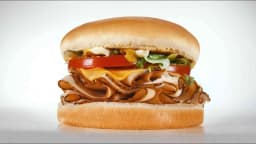
The campaign launched with two television advertisements in January 2014, a period deliberately chosen to coincide with the post-Christmas stretch when British consumers were feeling financially pressured. The creative territory centred on the proposition of getting your money's worth without any sense of deprivation, a framing that separated the work from blunter discount advertising. Two specific executions anchored the launch: one built around an airport check-in scenario and another featuring a man making use of his wife's Christmas present, each scenario chosen to reflect the texture of ordinary British life. Featured menu items were the Sweet Chilli Mayo Chicken at £1.09 and the Chicken BLC at £1.49, according to The Drum, prices that made the value argument concrete rather than abstract.
Media buying for the campaign across the United Kingdom was handled by OMD UK, with television and outdoor advertising forming the primary channel mix, as reported by The Drum. The campaign was planned to extend throughout 2014, with two additional television films and further outdoor activity scheduled beyond the January launch. In the United Kingdom, the work arrived at a moment when McDonald's was navigating a fast-food market that had grown substantially over the preceding years, and the Saver Menu platform gave the brand a consistent, emotionally grounded way to compete on value without reducing the conversation to price alone. The Clapboard Score for this campaign is 54 out of 100.
The January 2014 launch date was a deliberate strategic choice. Post-Christmas Britain reliably produces a period of heightened financial self-consciousness, and Leo Burnett built the entire strategic premise of the Saver Menu campaign around that cultural moment, as documented by The Drum. Rather than celebrating low prices in isolation, the campaign reframed the act of choosing a McDonald's Saver Menu item as an expression of quiet intelligence: the kind of small, satisfying decision that offsets the excesses of the festive season.
This approach placed McDonald's in direct competition with other quick-service restaurant brands offering value-oriented propositions in the United Kingdom, including Burger King and KFC, both of which maintained active value menus in the UK market during 2014. Where rivals often defaulted to promotional mechanics or limited-time pricing, Leo Burnett's creative proposition for McDonald's anchored value in behaviour and feeling rather than arithmetic, a distinction that gave the campaign a warmer, more durable tone. According to Millward Brown's 2014 brand ranking, McDonald's held the leading position among global fast-food brands by brand value at US$85.7 billion, giving the Saver Menu work a powerful brand platform to build from. The global fast-food market was valued at approximately US$239.7 billion in 2014, according to Studocu, contextualising the scale of the competitive environment in which this United Kingdom campaign operated. The strategic proposition of value without deprivation, as reported by The Drum, was particularly well-suited to British consumer psychology in the period immediately following Christmas spending, when guilt and financial caution exist simultaneously.
Leo Burnett executed the Saver Menu campaign through a creative language built entirely from recognisable, low-stakes British situations. The two launch films each placed a relatable protagonist in a moment of small domestic or social negotiation: one navigating an airport check-in, another making use of a spouse's Christmas gift, as documented by The Drum. Neither scenario required extraordinary production scale; the power came from precision of observation rather than spectacle.
This approach was consistent with Leo Burnett's broader creative philosophy for McDonald's UK, which Creative Salon has described as an everyday human behaviour style, a method that treats the audience's own experience as the primary dramatic material. The result was advertising that felt found rather than constructed, as though the camera had simply noticed something true about British life and connected it to the act of choosing a reasonably priced menu item. The films relied on performance and comic timing to carry the value message, avoiding the hyperactive energy common in fast-food advertising of the period. Production credits for the Saver Menu Carpark campaign are not publicly documented beyond the agency attribution to Leo Burnett and media attribution to OMD UK. The outdoor component of the campaign, planned to run alongside television throughout 2014, extended the same behavioural logic into static formats, translating situational humour into single-image or short-copy executions suited to the United Kingdom's outdoor advertising environment. The overall creative approach reflected a considered restraint: in a category prone to loud price announcements, McDonald's chose to whisper the number and shout the feeling.
No verified performance data for the McDonald's Saver Menu Carpark campaign is publicly available. The absence of published figures is common for January value-platform work of this era, where campaign effectiveness was typically measured through proprietary brand tracking rather than disclosed commercial results. What the structural evidence does permit is an assessment of creative and strategic coherence.
The campaign's core strengths lie in its timing, its tonal precision, and its category differentiation. Launching in January 2014 in the United Kingdom, directly after peak consumer spending, aligned the message with a genuine audience need rather than an invented one. The decision to anchor value in human behaviour rather than price comparison gave the work a shelf life that purely promotional advertising rarely achieves. According to creative.salon, the Saver Menu platform extended a long-running value proposition for McDonald's UK, suggesting the creative approach had sufficient internal confidence to sustain planned activity across the full year. The two featured price points, the Sweet Chilli Mayo Chicken at £1.09 and the Chicken BLC at £1.49, as reported by The Drum, were concrete enough to function as genuine value signals without making the films feel like price-list recitations. Where the campaign earns its Clapboard Score of 54 out of 100 is in its competent execution of a well-defined brief rather than in creative risk or originality. The work is reliable, culturally grounded, and strategically sound, but it does not substantially advance the creative language of the value category.
McDonald's Saver Menu Carpark is a UK television campaign created by Leo Burnett in January 2014. It promoted affordable menu items including the Sweet Chilli Mayo Chicken and Chicken BLC by dramatising relatable British everyday situations, positioning value spending as a quiet, satisfying personal win during the post-Christmas financial squeeze.
Leo Burnett created the McDonald's Saver Menu campaign, launched in January 2014 in the United Kingdom. Media buying was handled by OMD UK. The campaign used television and outdoor advertising, with two films at launch and two additional films planned for later in 2014, according to The Drum.
The campaign featured two menu items: the Sweet Chilli Mayo Chicken at £1.09 and the Chicken BLC at £1.49, as reported by The Drum. Both prices were presented not as discount offers but as expressions of genuine everyday value, consistent with Leo Burnett's strategic proposition of getting your money's worth.
McDonald's launched the campaign in January 2014 to coincide with the post-Christmas period, when British consumers typically feel financially stretched, according to The Drum. Leo Burnett built the strategy around this cultural moment, framing Saver Menu choices as intelligent, guilt-free decisions rather than compromises driven purely by tight budgets.
The McDonald's Saver Menu Carpark campaign received a Clapboard Score of 54 out of 100. The score reflects competent, culturally grounded execution of a well-defined value brief. The campaign demonstrates strategic coherence and tonal precision but does not significantly advance the creative conventions of fast-food value advertising in the United Kingdom.
.webp)
Creative Collaboration Platform: The Backbone of Modern Creative WorkWhat is a creative collaboration platform?Clapboard defines a creative collaboration platform as the operational core for today’s distributed creative teams. This is not a collection of digital collaboration tools stitched together; Clapboard’s system


Understanding the Creative Production MarketplaceWhat is a Creative Production Marketplace?Clapboard defines a creative production marketplace as a structured ecosystem where brands, agencies, and production talent converge to execute video, advertising, and branded content at scale. Unlike the legacy agency or freelanREAD FULL ARTICLE

The Urgent Need for a Creative Production Operating SystemWhy Traditional Creative Production Models Break DownClapboard sees the creative production landscape shifting under pressure. Content velocity is no longer a buzzword—it’s a mandate. Modern advertising demands relentless output across dozens of channels, each wREAD FULL ARTICLE