


 ARCHIVE
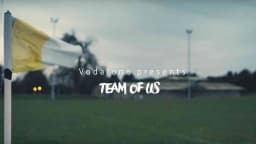
Vodafone Everyone In Brings All of Ireland Into the Team Of Us
How Vodafone's Everyone In Campaign Turned Irish Rugby Into a National Invitation Vodafone's...
How Etisalat Used a Russian Bear to Sell the World Cup in the UAE
Etisalat's 'The Russian Bear' is a June 2018 film campaign created by IMPACT BBDO in the United Arab Emirates that uses the image of a Russian bear as a metaphor for the approaching FIFA World Cup, directing audiences to Etisalat's eLife Sports television service and its dedicated World Cup package webpage, according to Gdnonline.
The campaign arrived at a precise cultural inflection point. The 2018 FIFA World Cup, hosted in Russia, generated intense anticipation across the Gulf region, and Etisalat moved to translate that excitement into a concrete commercial opportunity, according to Argaamplus S3 Amazonaws. Rather than defaulting to highlight reels or straightforward product demonstrations, IMPACT BBDO built the film around a single, resonant symbol: the bear, an internationally recognised emblem of Russia, arriving as a harbinger of the tournament. The creative device gave the campaign immediate narrative clarity and cultural legibility across the diverse, expatriate-heavy population of the United Arab Emirates, according to Prodnew Etisalat Ae.
The objective was straightforward and commercially grounded. Etisalat needed to position its eLife Sports offering as the essential destination for World Cup viewing in the UAE, converting the organic excitement surrounding the tournament into subscriber engagement and web traffic. The call to action directed viewers to Etisalat's World Cup webpage, creating a measurable path from awareness to consideration. In the United Arab Emirates, where telecom competition between Etisalat and du shapes virtually every consumer connectivity decision, the ability to own a major sporting moment carries significant strategic weight. The campaign sits within the broader 'Together Matters' strategic direction Etisalat launched in 2018, which positioned connectivity as a means of bringing people together — a framing that a globally shared event like the World Cup made tangible.
Etisalat operates in one of the world's most saturated telecom environments, according to Studocu. The UAE telecom market recorded approximately 19.2 million active mobile subscriptions in August 2018, according to the Oxford Business Group, representing a penetration rate of around 216.9 subscriptions per 100 inhabitants — a figure the Oxford Business Group identifies as among the highest globally. In such a market, subscriber growth through traditional acquisition is structurally constrained, which means value-added services like eLife Sports become primary battlegrounds for revenue and loyalty.
Etisalat reported UAE revenue of AED 31.4 billion in 2018, up one percent year over year, according to Etisalat's own published financial results. Its principal domestic competitor, du, reported 2018 revenue of AED 13.41 billion, up 3.2 percent from AED 13.0 billion the prior year, according to du's published financial disclosures. The competitive dynamic between these two operators means that a high-profile entertainment event like the FIFA World Cup represents a rare window in which either operator can meaningfully shift perception and preference among an already-connected subscriber base.
The strategic insight underpinning 'The Russian Bear' is that emotional anticipation, not product specification, drives sports package decisions. UAE residents — a population with a substantial and diverse expatriate community representing dozens of footballing nations — do not need to be told what the World Cup is. They need to be reminded that the experience of watching it matters, and that Etisalat is the platform through which that experience is best delivered. By anchoring the narrative to a culturally loaded symbol of the host nation rather than to broadband speeds or channel counts, IMPACT BBDO chose emotional resonance over rational persuasion — a deliberate and appropriate strategic call for a high-interest, time-limited category event.
IMPACT BBDO built 'The Russian Bear' around a single illustrative metaphor rather than a conventional telecom film structure. The bear, as a symbol, does the strategic work that a product demonstration cannot: it arrives with cultural weight already attached, requiring the audience only to complete the connection between the symbol and the event. This economy of narrative is a mark of disciplined creative thinking, and it places the film in a tradition of sports advertising that treats the tournament itself as the hero rather than foregrounding the brand.
Executive Creative Director César Jachan led the creative team at IMPACT BBDO in the United Arab Emirates. Creative Director Akram Dohjoka shaped the campaign's overall conceptual direction, with Art Director Hanna Semaan responsible for the visual language and Copywriter Foram Divraniya handling the verbal dimension of the narrative, according to Eand. Illustrator Jayan Subramanian contributed to the campaign's visual craft, a credit that suggests the film incorporates illustrated or stylised visual elements alongside live-action or animated production. Magic Beans Productions, based in Cairo, served as the production house, bringing a regional production sensibility to the execution.
The choice of illustration as a component of the creative approach is notable. In a media environment saturated with high-gloss sports footage and CGI-heavy telecom advertising, a more graphic or illustrative aesthetic can register as distinctive. For a campaign built on the power of a single symbol, that visual register reinforces the conceptual clarity of the idea rather than diluting it with spectacle. The film medium — one asset, per the Clapboard archive — demands that the idea carry its full weight in a compressed runtime, and the bear metaphor is structurally suited to that constraint. IMPACT BBDO's long-standing relationship with Etisalat, which began formally in January 2013 following a consolidated agency review, provided the creative team with the brand fluency needed to make a bold, symbol-led choice with confidence.
No verified performance data for 'The Russian Bear' campaign is publicly available. Etisalat has not published campaign-specific metrics relating to eLife Sports subscriber uplift, web traffic to the World Cup landing page, or video view counts attributable to this film, and no independent third-party measurement has been documented in the public record. Similarly, no verified awards recognition for this campaign at Cannes Lions, the Effies, The One Show, D&AD, the Clios, the Webby Awards, or WARC Awards has been recorded.
Structural analysis offers a more grounded basis for assessment. The campaign's core strength lies in its conceptual economy: one symbol, one moment, one clear call to action. That alignment between creative device and commercial objective is genuinely effective creative architecture, and it is the quality most likely to have produced efficient results within a time-limited campaign window. The World Cup's compressed timeline — the tournament ran across June and July 2018 — means that conversion speed matters more than sustained brand-building, and a single-symbol film is well-suited to rapid comprehension and action.
The campaign's principal structural limitation is its reliance on a single asset, which constrains reach and frequency across a multi-platform media environment. In the United Arab Emirates in 2018, where digital and social video consumption was already substantial alongside traditional broadcast, a one-asset campaign faces distribution challenges that a broader creative system would address more effectively. Clapboard rates 'The Russian Bear' at 63 out of 100, reflecting a campaign that executes a clear idea with craft and strategic coherence but whose ambition and documented impact remain bounded by its single-asset scope.
'The Russian Bear' is a June 2018 film by Etisalat and IMPACT BBDO in the United Arab Emirates. It uses a bear as a metaphor for the approaching FIFA World Cup hosted in Russia, directing UAE audiences to Etisalat's eLife Sports television service and its dedicated World Cup package webpage.
IMPACT BBDO, operating in the United Arab Emirates, created the campaign. IMPACT BBDO became Etisalat's consolidated creative agency in January 2013. Executive Creative Director César Jachan led the team, with Creative Director Akram Dohjoka, Art Director Hanna Semaan, and Copywriter Foram Divraniya as core creative contributors.
Etisalat promoted its eLife Sports television service and its 2018 FIFA World Cup viewing package. The campaign's call to action directed audiences to Etisalat's World Cup webpage, making subscriber conversion and web traffic the primary commercial objectives of the June 2018 film.
Magic Beans Productions, based in Cairo, served as the production house for 'The Russian Bear.' Illustrator Jayan Subramanian contributed to the visual craft at IMPACT BBDO. Specific director credits for the film are not publicly documented beyond the production company and agency creative team listed in the Clapboard archive.
Etisalat operates in a deeply saturated market. The UAE recorded approximately 19.2 million active mobile subscriptions in August 2018, according to the Oxford Business Group. With penetration among the world's highest, value-added services like eLife Sports — not basic connectivity — are where Etisalat and competitor du compete for meaningful differentiation.
Clapboard rates 'The Russian Bear' at 63 out of 100. The score reflects a campaign with clear conceptual economy and strategic coherence — a single symbol aligned to a single commercial moment — but one whose documented ambition is constrained by its single-asset scope and the absence of publicly verified performance or awards data.
.webp)
Creative Collaboration Platform: The Backbone of Modern Creative WorkWhat is a creative collaboration platform?Clapboard defines a creative collaboration platform as the operational core for today’s distributed creative teams. This is not a collection of digital collaboration tools stitched together; Clapboard’s system


Understanding the Creative Production MarketplaceWhat is a Creative Production Marketplace?Clapboard defines a creative production marketplace as a structured ecosystem where brands, agencies, and production talent converge to execute video, advertising, and branded content at scale. Unlike the legacy agency or freelanREAD FULL ARTICLE

The Urgent Need for a Creative Production Operating SystemWhy Traditional Creative Production Models Break DownClapboard sees the creative production landscape shifting under pressure. Content velocity is no longer a buzzword—it’s a mandate. Modern advertising demands relentless output across dozens of channels, each wREAD FULL ARTICLE




