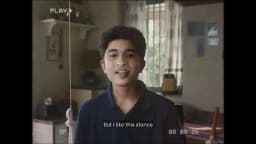
Dutch Bangla Bank Scholarship's 2019 docudrama, created by Mattra, dramatises the real journeys of two scholarship recipients to highlight financial aid for

Dutch Bangla Bank Scholarship Docudrama Brings Real Stories to Bangladesh
The Dutch Bangla Bank Scholarship Docudrama is a 2019 film campaign, created by Dhaka-based agency Mattra, that dramatises the true journeys of two scholarship recipients to illustrate how Dutch-Bangla Bank's financial aid programme unlocks educational opportunity for underprivileged students across Bangladesh.
Published in February 2019 in Bangladesh, the campaign centres on two individuals whose lives were materially shaped by the Dutch-Bangla Bank scholarship programme. Imran Hassan, an underprivileged boy from Patuakhali, and Salina Akhter, a blind girl from Dhaka, serve as the human anchors of the film. Their stories are not reconstructed from imagination but drawn from documented experience, lending the work the credibility and emotional weight that distinguishes a docudrama from conventional brand advertising. The campaign's single media asset is a film, and the creative premise is precise: show what access to education actually looks like when financial circumstance would otherwise foreclose it.
Dutch-Bangla Bank's scholarship programme, which began in 2005 according to app.dutchbanglabank.com, operates across HSC, undergraduate, and postgraduate levels, with eligibility determined by academic merit, financial circumstances, and physical disability status. In Bangladesh, the programme has historically directed approximately ninety percent of its scholarships toward rural students, and approximately fifty percent toward female students, according to App Dutchbanglabank. The docudrama translates these structural commitments into individual human terms, making the programme's social purpose legible to a general audience. By grounding a banking and finance institution's corporate social responsibility in the specific, named lives of scholarship recipients, the campaign positions Dutch-Bangla Bank not as a financial product provider but as a sustained partner in national educational progress.
Dutch-Bangla Bank's scholarship programme addresses a structural gap in educational access across Bangladesh. In a market where financial barriers routinely interrupt academic trajectories, particularly for students from rural districts and for women, the bank's decision to lead with documentary storytelling rather than product messaging reflects a considered reading of its audience. The docudrama format allows the institution to demonstrate impact rather than assert it, a distinction that carries meaningful weight in the finance category, where institutional trust is earned slowly.
Bangladesh's total advertising market was estimated at approximately Tk 1,500 to 1,600 crore annually around 2017 and 2018, according to Scribd. Within that environment, digital advertising expenditure stood at approximately Tk 110 crore in 2017, with roughly half directed to Facebook and the remainder primarily to Google and other platforms, also according to Scribd. This context matters: a film campaign released in February 2019 was operating in a market where digital distribution was growing but not yet dominant, making the craft and emotional architecture of the film itself — rather than paid amplification alone — central to its reach potential.
In the competitive landscape of Bangladeshi banking, institutions such as BRAC Bank and Islami Bank Bangladesh have each developed CSR and brand communications programmes of their own. Dutch-Bangla Bank differentiates its approach by anchoring communication in a scholarship programme with a documented, multi-decade track record. According to app.dutchbanglabank.com, the bank reported 36,162 cumulative HSC-level scholarships awarded and 2,038 new scholarships in 2019 alone. Mattra's creative strategy converts this scale of institutional activity into two individual portraits, using the particular to represent the universal and allowing viewers in Bangladesh and beyond to locate themselves — or someone they know — within the narrative.
Mattra, a Dhaka-based creative agency, produced the Dutch Bangla Bank Scholarship Docudrama as a single-film execution in February 2019. The docudrama format is the campaign's defining creative choice. Rather than employing actors in fictional scenarios, the film constructs dramatised sequences around the verified experiences of Imran Hassan from Patuakhali and Salina Akhter from Dhaka, a blind student whose persistence in the face of physical disadvantage gives the film its most arresting narrative thread.
The choice of two protagonists rather than one is strategically sound. Imran's story speaks to geographic and economic exclusion — the rural student for whom urban educational infrastructure is genuinely distant. Salina's story introduces a dimension of physical disability, broadening the campaign's representation of who the Dutch-Bangla Bank scholarship programme serves and reinforcing that the programme's eligibility criteria, which include physical disability status according to app.dutchbanglabank.com, are not incidental but central to its character. Together, the two stories create a portrait of the programme's reach that no single individual could provide.
Production credits for the Dutch Bangla Bank Scholarship Docudrama are not publicly documented beyond the agency attribution to Mattra. What is evident from the work itself is a deliberate restraint in visual and narrative approach: the docudrama mode demands that the camera serve the subject rather than aestheticise it. In Bangladesh's finance and banking advertising landscape, where institutional communications often default to aspiration-led imagery, a film that prioritises witness over spectacle represents a meaningful creative departure. The campaign's submission to Ads of the World, where it is catalogued as part of the finance industry's global archive, indicates a level of creative confidence from both agency and client in the work's standing beyond the domestic Bangladesh market.
No verified performance data for the Dutch Bangla Bank Scholarship Docudrama is publicly available. The campaign was submitted to Ads of the World, where it is archived as a finance industry film from Bangladesh, but no figures for view counts, earned media reach, or scholarship application uplift have been disclosed by the client or by Mattra in any publicly accessible source.
Structural analysis, however, offers meaningful assessment. The campaign operates in a category — banking and finance CSR communication in Bangladesh — where measurable emotional engagement is difficult to generate and easy to squander. The docudrama format sidesteps the most common failure mode of institutional CSR film: generic beneficiary imagery without narrative specificity. By naming its subjects and grounding their stories in documented programme eligibility criteria, the work creates conditions for genuine audience identification rather than passive sympathy.
The programme's scale provides implicit credibility. According to app.dutchbanglabank.com, 2,038 new scholarships were awarded in 2019, and the cumulative HSC-level total stood at 36,162. A film made in this context is not inventing a social mission — it is translating a pre-existing one into a form that a general audience can absorb and share. That alignment between institutional reality and creative claim is one of the more reliable structural markers of durable brand communication in the finance sector. The Clapboard Score for this campaign is 63 out of 100, reflecting competent execution and a well-grounded creative premise that is constrained by limited publicly available evidence of measurable impact and a single-asset output.
The Dutch Bangla Bank Scholarship Docudrama is a 2019 film campaign created by Mattra in Bangladesh. It dramatises the real experiences of two scholarship recipients — Imran Hassan from Patuakhali and Salina Akhter, a blind student from Dhaka — to illustrate the human impact of Dutch-Bangla Bank's education scholarship programme.
Mattra, a Dhaka-based creative agency, produced the Dutch Bangla Bank Scholarship Docudrama. The campaign was published in February 2019 in Bangladesh and submitted to Ads of the World, where it is archived under the finance industry category as a representative example of purpose-led brand film from Bangladesh.
The film features Imran Hassan, an underprivileged boy from Patuakhali, and Salina Akhter, a blind girl from Dhaka. Both are documented Dutch-Bangla Bank scholarship recipients. Their distinct circumstances — geographic exclusion and physical disability — reflect the programme's eligibility criteria, which include academic merit, financial need, and disability status, according to app.dutchbanglabank.com.
Dutch-Bangla Bank's scholarship programme began in 2005, according to app.dutchbanglabank.com. By 2019, the programme had awarded 36,162 cumulative HSC-level scholarships and added 2,038 new scholarships that year, also per app.dutchbanglabank.com. Approximately ninety percent of recipients have historically been rural students, and approximately fifty percent have been female.
The Dutch Bangla Bank Scholarship Docudrama receives a Clapboard Score of 63 out of 100. The score reflects a grounded creative premise and competent docudrama execution, tempered by a single-asset output and the absence of publicly available performance metrics to verify the campaign's measurable impact in the Bangladesh market.
The docudrama format allows Dutch-Bangla Bank to demonstrate programme impact through named, verified individual stories rather than generic institutional messaging. In Bangladesh's finance advertising landscape, this approach distinguishes the campaign from aspiration-led competitor communications, grounding the brand's social mission in documented human experience rather than constructed narrative.
.webp)
Creative Collaboration Platform: The Backbone of Modern Creative WorkWhat is a creative collaboration platform?Clapboard defines a creative collaboration platform as the operational core for today’s distributed creative teams. This is not a collection of digital collaboration tools stitched together; Clapboard’s system


Understanding the Creative Production MarketplaceWhat is a Creative Production Marketplace?Clapboard defines a creative production marketplace as a structured ecosystem where brands, agencies, and production talent converge to execute video, advertising, and branded content at scale. Unlike the legacy agency or freelanREAD FULL ARTICLE

The Urgent Need for a Creative Production Operating SystemWhy Traditional Creative Production Models Break DownClapboard sees the creative production landscape shifting under pressure. Content velocity is no longer a buzzword—it’s a mandate. Modern advertising demands relentless output across dozens of channels, each wREAD FULL ARTICLE