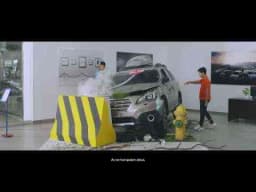
The "Crash Test" campaign, launched by Renault in 2007, centers on reinforcing the brand’s commitment to safety and reliability within the automotive market. By highlighting the results of rigorous security crash tests, the campaign positions Renault as a car manufacturer prioritizing occupant protection, aiming to build trust through transparency and technical validation. This tangible demonstration of safety serves as a clear brand proposition: Renault offers vehicles designed with advanced safety features that meet stringent industry standards, assuring consumers of their well-being on the road.
The campaign leverages a strategic insight into consumer concerns around vehicle safety, a critical factor influencing automobile purchase decisions. By focusing on crash test performance, the creative approach taps into the audience’s desire for credible, factual proof rather than abstract claims. The use of film as a medium further enhances this by visually showcasing the robustness of Renault’s engineering, making the safety message more immediate and impactful. Targeting consumers who prioritize security—such as families and safety-conscious drivers—the campaign effectively combines emotional reassurance with technical evidence. This blend of authenticity and expert validation aims to differentiate Renault in a competitive market where safety is a key differentiator, solidifying the brand’s reputation as a reliable choice for cautious drivers.
FORMAT#1 DEMONSTRATION — Directly shows how a product works and highlights its benefits.
This campaign, titled "Crash test," is anchored in the automotive category, specifically focused on Renault and security crash testing. The description "Commercial Spot from Renault Germany about Security Crash Test" and the use of "Crash Test" in both title and metadata indicate the creative device is a direct visual demonstration of Renault’s safety features in action. There is no explicit problem-solution structure, no overt symbolism, story-driven arc, comparison to competition, celebrity presence, or use of parody. The intent is to showcase the safety performance of the vehicle through realistic crash test scenarios, allowing viewers to witness the product's capabilities firsthand—a textbook example of the DEMONSTRATION format. ADVERTISING FORMATS EXPLAINED: https://www.clapboard.com/blog/branding-and-advertising/brand-strategy/12-advertising-creative-formats
Since the brand name is not provided, I will assume the campaign "Crash test" belongs to a major automotive brand active in 2007. Based on the Automotive industry context in 2007, the top competitors usually include global leaders known for differing strategic approaches. Here are the top 5 key competitors and their market positioning relevant to that time:
1. Toyota – Market Positioning
Toyota emphasizes reliability, fuel efficiency, and value for money. Their Lean manufacturing and continuous improvement (Kaizen) philosophy gives them a competitive edge in quality and affordability, appealing to a broad, practical consumer base.
2. Ford – Market Positioning
Ford positions itself with a focus on durability and American heritage, combining innovation with affordability. In 2007, Ford targeted broad market segments with vehicles known for robustness and a growing emphasis on technology and fuel efficiency.
3. Volkswagen – Market Positioning
Volkswagen leverages German engineering precision and a blend of performance with practical design. Their "Das Auto" philosophy appeals to consumers valuing quality craftsmanship, driving experience, and a balance between luxury and accessibility.
4. Honda – Market Positioning
Honda differentiates through sporty, reliable, and efficient vehicles that emphasize fun-to-drive performance and cutting-edge technology. Their reputation for innovation, particularly in engine design and fuel economy, attracts younger and environmentally conscious drivers.
5. General Motors (Chevrolet) – Market Positioning
GM, through Chevrolet, projects a diverse portfolio with mass-market appeal, focusing on innovation, safety, and value. Their strong presence in trucks and SUVs complements a strategy of catering to practical needs with American-style ruggedness.
Q: What is Crash test about?
A: Crash test is a professional campaign launched by Renault Germany in 2007, targeting the automotive market with a focus on vehicle safety. The campaign consists of a film medium advertisement that vividly demonstrates Renault’s commitment to occupant protection through a realistic security crash test. By visually showcasing the brand’s rigorous testing processes, the campaign aims to educate and reassure consumers about Renault’s dedication to safety innovation and reliability. This commercial spot, presented in English, has achieved significant engagement, reflecting its resonance with audiences concerned about road safety and automotive standards.
Q: What creative device does Crash test use?
A: Crash test employs the DEMONSTRATION format, as classified by Clapboard’s 12-format taxonomy. This approach directly shows how Renault’s vehicles perform in a crash test scenario, highlighting the brand’s safety features and engineering prowess. Rather than relying on narrative storytelling, symbolism, or celebrity endorsement, the campaign leverages a straightforward, factual depiction of product performance. This creative device builds credibility by allowing viewers to witness the safety capabilities firsthand, aligning with Clapboard’s FORMAT#1 DEMONSTRATION, which is designed to make product benefits immediately clear and tangible to the audience.
Q: What is the campaign proposition for Crash test?
A: The campaign proposition for Crash test centers on Renault’s strategic positioning as a manufacturer prioritizing safety and reliability in the automotive sector. By transparently highlighting the results of rigorous security crash tests, Renault communicates its dedication to occupant protection and technical validation. This message is targeted at consumers who value credible, factual proof of safety—particularly families and safety-conscious drivers—addressing a critical factor in automobile purchase decisions. The campaign’s focus on demonstrable safety performance differentiates Renault in a competitive market, reinforcing the brand’s reputation as a trustworthy and innovative choice for those seeking assurance on the road.
Q: How does Crash test rank in Clapboard's archive?
A: Crash test holds a Clapboard Campaign Score of 63/100 in Clapboard’s global ad archive. This score reflects the campaign’s creative ambition, execution quality, and cultural relevance within the context of automotive advertising.
Q: Who are the competitors in Renault's category?
A: In the automotive category, Renault faces competition from several major global brands. Toyota is known for its emphasis on reliability, fuel efficiency, and value, appealing to practical consumers. Ford leverages a heritage of durability and innovation, targeting broad market segments with robust vehicles. Volkswagen stands out for German engineering precision and a balance of performance with accessible design. Honda attracts drivers seeking sporty, reliable, and technologically advanced vehicles, particularly those who are younger or environmentally conscious. General Motors, through Chevrolet, offers a diverse portfolio focused on innovation, safety, and value, with a strong presence in trucks and SUVs.


 ARCHIVE
.webp)