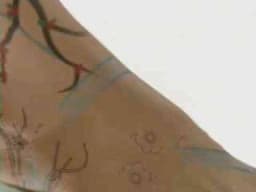
Corpo do Poema's 'Tattoo and Poetry' campaign, created by FCB São Paulo in November 2016, merges tattoo imagery with poetic narrative to explore

Corpo do Poema Fuses Tattoo Art and Poetry in a 2016 Brazilian Content Campaign
Corpo do Poema's 'Tattoo and Poetry' is a content campaign created by FCB São Paulo and published in Brazil in November 2016, designed to explore the intersection of tattoo artistry and poetic self-expression as a unified creative language within the media and entertainment landscape, according to Academia Edu.
The campaign operates at a precise cultural intersection. In Brazil, tattoo culture has grown from subcultural marker to mainstream mode of personal storytelling, while poetry — both spoken and written — retains a deep presence in Brazilian artistic life. Corpo do Poema, whose name translates literally as 'Body of the Poem', channels both currents into a single content work, treating the tattooed body as a living canvas for poetic narrative. The campaign contains one media asset, a decision that concentrates rather than dilutes its creative statement.
FCB São Paulo assembled a focused creative team for the project. Art director Romulo Caballero led the visual conception, with copywriters André Oviedo and Paulo Carmona shaping the written dimension of the work, according to Trycrush. Photographer Fernando Cardamone handled the still imagery, director Carol Gonzalez oversaw the moving image component, and assistant director Anna Carolina Gouveia supported production, according to Adlibrary. Sound production was handled by Carbono Sound Lab, with Zé Godoy and Pedro Jaguaribe contributing to the sonic environment of the piece.
Classified within the media industry as a content campaign, 'Tattoo and Poetry' is not structured around a conventional product proposition. Its objective is expressive and cultural — to position Corpo do Poema as a brand that understands identity, embodied experience, and the narrative power of art. The campaign earns its place in the Brazilian media conversation of 2016 precisely because it refuses the transactional register that dominated advertising investment in that market during the same period.
FCB São Paulo identified a specific creative gap in Brazil's 2016 advertising environment. Brazil's total advertising investment reached approximately R$130 billion in 2016, though the market had declined 1.5% from 2014, according to data cited by Baptistaluz Com Br. Free-to-air television commanded 55.51% of that investment, with pay television accounting for 12.6% and newspapers holding 11.7%, according to the same source. Within this television-dominant, volume-driven market, content campaigns built around cultural identity occupied a minority but increasingly visible strategic position.
Internet advertising represented 7.6% of measured advertising revenue in Brazil at this time, according to the Reuters Institute for the Study of Journalism at the University of Oxford. That relatively modest share nonetheless pointed toward a growing appetite for content that circulated through digital channels on its own merit rather than through paid broadcast placement — the precise environment for which a single-asset content campaign like 'Tattoo and Poetry' is best suited.
The strategic rationale for Corpo do Poema's approach becomes clearer against the competitive backdrop of Brazilian media and entertainment brands in 2016. Larger platforms such as Globo and its digital properties commanded dominant reach and advertising spend, leaving smaller culturally oriented brands with limited capacity to compete on volume. FCB São Paulo's answer was differentiation through depth: a campaign that did not attempt to reach everyone but instead spoke precisely and memorably to an audience for whom tattoo and poetry already carried personal meaning. This is a classic challenger strategy — concentrating creative intensity rather than distributing media weight — and it reflects a sound reading of where Corpo do Poema could plausibly win attention in a crowded Brazilian media market.
Art director Romulo Caballero anchored the visual identity of 'Tattoo and Poetry' in the materiality of both art forms it references. Tattoo work is permanent, bodily, and irreversible; poetry is rhythmic, layered, and resistant to simple paraphrase. The creative challenge was to find a visual and narrative register that honoured the weight of both without reducing either to the other's metaphor.
Photographer Fernando Cardamone's contribution to the campaign gives the still dimension of the work its textural authority. Photography in campaigns of this kind carries the burden of making abstract themes — identity, inscription, voice — legible through image alone. Cardamone's work, as documented in the campaign record held by Clapboard, provides the visual grounding from which the poetic dimension of the campaign extends.
Director Carol Gonzalez's role in the moving image component brings temporal structure to what might otherwise remain a static meditation. The inclusion of sound production from Carbono Sound Lab, with Zé Godoy and Pedro Jaguaribe, signals that the campaign was conceived as an immersive content experience rather than a conventional advertisement. Sound design in content campaigns of this category functions not as underscore but as atmosphere — it shapes the emotional register within which the viewer receives the visual and textual material.
Copywriters André Oviedo and Paulo Carmona faced the particular discipline of writing for a campaign where the subject is poetry itself. The risk in such work is self-consciousness — writing about poetry in a way that performs poeticism rather than embodying it. The creative team's decision to work within a single media asset rather than a series suggests confidence in concentration: one piece of work asked to carry the full weight of the brand's creative argument. In the Brazilian content production landscape of 2016, that restraint is itself a craft choice.
No verified performance data for 'Tattoo and Poetry' is publicly available. The campaign does not appear in the records of major international award shows including Cannes Lions, the One Show, D&AD, the Clio Awards, the Effies, the Webby Awards, or WARC's effectiveness databases, according to X. No substantive trade press reviews from Campaign, Ad Age, or comparable publications have been identified for this work. These absences are noted, not as a negative judgment on the campaign's quality, but as a factual account of its documented reach within the professional advertising record.
Structurally, 'Tattoo and Poetry' presents several characteristics associated with effective niche content campaigns. Its single-asset format imposes creative discipline and focuses audience attention rather than diffusing it. Its subject matter — the overlap between tattoo culture and poetic identity — is specific enough to generate genuine resonance among the audience for whom it is relevant, while remaining visually communicable to a broader viewer. In Brazil's 2016 media environment, where the overwhelming majority of advertising investment flowed toward broadcast television, a content campaign operating in cultural territory carried an inherent distinctiveness premium.
The Clapboard Score for 'Tattoo and Poetry' is 64 out of 100. That score reflects a campaign with a clear and coherent creative premise, a credentialed production team, and a culturally grounded subject, offset by limited documented reach and the absence of verified award recognition or published effectiveness metrics. It is a campaign that executed its stated creative intention with apparent craft, within the resource and market constraints typical of a culturally oriented Brazilian media brand in 2016.
'Tattoo and Poetry' is a content campaign created by FCB São Paulo for Corpo do Poema, published in Brazil in November 2016. It combines tattoo imagery with poetic narrative to explore self-expression, classified within the media industry and built around a single media asset, as documented by Clapboard.
Art director Romulo Caballero led the visual concept. Copywriters André Oviedo and Paulo Carmona shaped the written dimension. Photographer Fernando Cardamone and director Carol Gonzalez handled image and moving content. Sound production came from Carbono Sound Lab, with Zé Godoy and Pedro Jaguaribe, as documented by Clapboard.
Brazil's advertising market was contracting in 2016, with total investment declining from 2014 levels, according to baptistaluz.com.br. Free-to-air television dominated with over 55% of spend. Content campaigns like Corpo do Poema's occupied a smaller but culturally distinct space within that broadcast-heavy environment.
No verified award recognition for 'Tattoo and Poetry' appears in the records of Cannes Lions, D&AD, the One Show, the Clio Awards, the Effies, or the Webby Awards. The campaign does not feature in WARC's effectiveness databases. Its Clapboard Score stands at 64 out of 100.
FCB São Paulo concentrated the campaign into one media asset, a creative decision that prioritises depth over distribution. For a culturally oriented brand like Corpo do Poema operating in Brazil's television-dominant advertising market, a single high-craft content piece offers distinctiveness that volume-based approaches cannot replicate for smaller media brands.
Corpo do Poema positions itself at the intersection of tattoo artistry and poetic identity, treating the body as a surface for literary self-expression. In Brazil's 2016 media environment, this placed the brand in cultural territory distinct from dominant broadcast platforms, addressing an audience for whom art and personal narrative carry specific meaning.
.webp)
Creative Collaboration Platform: The Backbone of Modern Creative WorkWhat is a creative collaboration platform?Clapboard defines a creative collaboration platform as the operational core for today’s distributed creative teams. This is not a collection of digital collaboration tools stitched together; Clapboard’s system


Understanding the Creative Production MarketplaceWhat is a Creative Production Marketplace?Clapboard defines a creative production marketplace as a structured ecosystem where brands, agencies, and production talent converge to execute video, advertising, and branded content at scale. Unlike the legacy agency or freelanREAD FULL ARTICLE

The Urgent Need for a Creative Production Operating SystemWhy Traditional Creative Production Models Break DownClapboard sees the creative production landscape shifting under pressure. Content velocity is no longer a buzzword—it’s a mandate. Modern advertising demands relentless output across dozens of channels, each wREAD FULL ARTICLE