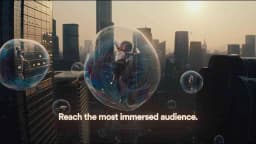
Getty Images launched Watermarks for Water with FCB Chicago on World Water Day 2018, transforming its signature copyright watermark into a clean-water

Getty Images Turned Its Own Watermark Into a Global Water Crisis Fundraiser
Watermarks for Water is a 2018 cause-led campaign created by FCB Chicago for Getty Images in the United States that reframed the brand's own copyright watermark as a symbol of the global clean-water crisis, inviting audiences to license images and direct proceeds toward access to safe drinking water.
The campaign launched on March 22, 2018, coinciding with World Water Day, according to Campaigns of the World. Getty Images assembled a collection of more than 300 photographs documenting the realities of the global clean-water crisis, and pledged ten percent of all licensing proceeds from that collection to charity: water, as reported by Campaigns of the World and charitywater.org. The creative premise was structurally elegant: the watermark, an asset that normally signals restriction and intellectual-property protection, was inverted into an instrument of humanitarian purpose. Users who viewed or shared unwatermarked images would, in the campaign's framing, be unlocking both access to photography and access to clean water for communities in need.
In the United States, the campaign extended beyond digital distribution. According to Campaigns of the World, a physical exhibition of twenty-five images from the collection was staged at 45 Lispenard Street in New York on March 21, 2018, the eve of World Water Day, giving the initiative a tangible cultural presence in the US market. Getty Images also executed what was described, per reporting by LBBonline, as the company's first-ever homepage takeover in support of the campaign. The initiative brought together Getty Images, FCB Chicago, and charity: water as a unified creative and philanthropic partnership, with a Clapboard Score of 71 out of 100. The campaign occupies the Media and Entertainment and Professional Services categories and is represented by a single film asset.
Liz Taylor, then Chief Creative Officer of FCB Chicago, identified the campaign's central insight. As reported by LBBonline, Taylor recognised that more people die from drinking impure water than from war — a statistic that reframed the clean-water crisis not as a distant humanitarian abstraction but as an urgent, measurable human toll. That insight gave the creative team a mandate to match the scale of the problem with the scale of Getty Images' reach.
The strategic architecture of Watermarks for Water rested on a behavioural and perceptual inversion. Getty Images' watermark is one of the most widely recognised signals of proprietary content on the internet, appearing across editorial, commercial, and consumer media in the United States and globally. FCB Chicago's strategy was to transform that recognition from a friction point into a fundraising prompt. By tethering the act of licensing — an existing commercial behaviour — to a direct charitable outcome, the campaign lowered the barrier to participation and gave existing Getty customers a reason to engage with the collection that extended beyond their ordinary content needs.
In the United States, the campaign entered a stock-media market that, as noted by market analysts at 6sense, included principal competitors such as Shutterstock, Adobe Stock, iStock, and Alamy, as well as emerging free-image platforms that were structurally pressuring the premium licensing segment. Against that competitive landscape, Watermarks for Water served a dual strategic purpose: it differentiated Getty Images on values rather than price or volume, and it reasserted the cultural and emotional power of professional photography at a moment when the category faced commoditisation pressure. Craig Peters, Chief Operating Officer at Getty Images at the time of the campaign, publicly championed the launch on World Water Day, according to The Drum, lending executive authority to the initiative and signalling institutional commitment rather than peripheral brand activity.
FCB Chicago built the campaign's creative execution around a single, rhetorically precise film. The campaign film posed a direct voiceover question — as documented by Campaigns of the World — asking: "If you could unleash the power of photography, what would you have it do?" That line anchored the entire campaign's emotional logic, positioning photography not as a commercial commodity but as a latent instrument of social change waiting to be activated.
The film's construction reflected a documentary-adjacent aesthetic consistent with Getty Images' editorial identity, allowing the brand's own visual heritage to carry narrative authority rather than manufactured sentiment. The collection of more than 300 photographs, assembled specifically for the campaign according to charitywater.org and Campaigns of the World, functioned as both the campaign's creative substrate and its commercial product. Each image documented conditions connected to the global clean-water crisis, making the act of browsing the collection an act of bearing witness as much as an act of commerce.
The physical exhibition at 45 Lispenard Street in New York, staged on March 21, 2018, the night before World Water Day, extended the campaign's creative register into an experiential format, according to Campaigns of the World. Twenty-five images from the collection were shown in that setting, translating a digital fundraising mechanism into a curated gallery moment in the United States. Fred Levron served as Worldwide Chief Creative Officer at FCB during this period, providing the broader creative leadership context within which Liz Taylor and the FCB Chicago team developed the concept, as noted by Adweek. The homepage takeover — Getty Images' first of its kind, per LBBonline — demonstrated a willingness to subordinate commercial real estate to campaign purpose, a creative decision that reinforced the campaign's central argument about what photography can do when its power is redirected.
 ARCHIVE
Watermarks for Water earned verifiable industry recognition across multiple award bodies. The campaign was shortlisted by Cannes Lions in the Direct category in 2018, according to Clapboard's editorial records. The Clio Awards granted the campaign a Bronze in the Public Relations: Cause Related category, and additionally shortlisted it in the Direct and Social Media category, also per Clapboard's records. These outcomes place the campaign within the recognised tier of cause-led creative work from the 2018 United States advertising cycle, and reflect the industry's acknowledgement of the campaign's structural originality — the inversion of a proprietary copyright mechanism into a humanitarian fundraising device.
No independently verified data on total licensing revenue generated, volume of images licensed from the campaign collection, or funds delivered to charity: water through the ten percent pledge is publicly available at the time of publication. The absence of disclosed performance figures is not atypical for cause-led brand initiatives of this period, where campaign reporting frequently prioritised awareness metrics over transactional outcomes. What the awards record does confirm is that the creative community recognised the campaign's strategic logic as sound and its execution as distinctive. The Clapboard Score for Watermarks for Water is 71 out of 100, reflecting a campaign with a clearly differentiated concept, credible institutional partnerships, and award-validated creative craft, offset by limited public performance transparency. In the United States market, the campaign's legacy rests most durably on its demonstration that a brand's most functional asset — in this case, a watermark — can be reimagined as a vehicle for purpose without abandoning commercial coherence.
Watermarks for Water is a 2018 campaign created by FCB Chicago for Getty Images in the United States. Launched on World Water Day, March 22, 2018, it transformed Getty's copyright watermark into a fundraising symbol, with ten percent of licensing proceeds from a collection of more than 300 photographs directed to charity: water.
FCB Chicago created the campaign for Getty Images. Liz Taylor, then Chief Creative Officer at FCB Chicago, developed the core insight that more people die from impure water than from war. Fred Levron served as Worldwide Chief Creative Officer at FCB, providing broader creative leadership context for the initiative during 2018.
Watermarks for Water was shortlisted at Cannes Lions 2018 in the Direct category. At the Clio Awards, the campaign received a Bronze in Public Relations: Cause Related and was additionally shortlisted in the Direct and Social Media category, according to Clapboard's editorial records.
Getty Images pledged ten percent of licensing proceeds from its dedicated collection to charity: water, according to charitywater.org and Campaigns of the World. The collection contained more than 300 photographs documenting the global clean-water crisis, meaning each standard commercial licensing transaction became a direct contribution to the cause.
A physical exhibition of twenty-five images from the campaign collection was staged at 45 Lispenard Street in New York on March 21, 2018, the eve of World Water Day, according to Campaigns of the World. The exhibition extended the campaign's digital fundraising concept into a curated gallery experience in the US market.
The Getty Images Watermarks for Water campaign holds a Clapboard Score of 71 out of 100. The score reflects the campaign's structurally original concept, credible partnerships with charity: water and FCB Chicago, and its Cannes Lions and Clio Awards recognition, offset by limited publicly available performance data.
.webp)
Creative Collaboration Platform: The Backbone of Modern Creative WorkWhat is a creative collaboration platform?Clapboard defines a creative collaboration platform as the operational core for today’s distributed creative teams. This is not a collection of digital collaboration tools stitched together; Clapboard’s system


Understanding the Creative Production MarketplaceWhat is a Creative Production Marketplace?Clapboard defines a creative production marketplace as a structured ecosystem where brands, agencies, and production talent converge to execute video, advertising, and branded content at scale. Unlike the legacy agency or freelanREAD FULL ARTICLE

The Urgent Need for a Creative Production Operating SystemWhy Traditional Creative Production Models Break DownClapboard sees the creative production landscape shifting under pressure. Content velocity is no longer a buzzword—it’s a mandate. Modern advertising demands relentless output across dozens of channels, each wREAD FULL ARTICLE