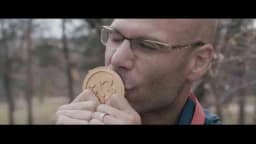
Biscoitos Zezé's Free Net ambient campaign placed hammocks in public spaces across Pelotas, Brazil, inviting passersby to rest offline rather than connect

Biscoitos Zezé Swaps Wi-Fi Promises for Hammocks in Free Net
Biscoitos Zezé's "Free Net" campaign is a 2016 ambient advertising execution produced in Brazil by agency Mark+ and production company Carma Social Interventions, in which physical hammocks were installed in public locations around Pelotas alongside signage mimicking free Wi-Fi offers, only to reveal the invitation to disconnect and rest rather than connect online.
Published in February 2016 and credited to creative directors Ramon Ballverdú and Thomaz Ballverdú, the campaign carried a core message expressed in Portuguese as "Descanse um pouco da internet" — translated as "Take a little break from the internet." The execution comprised a single documented media asset, reflecting the campaign's deliberately contained, street-level nature.
The geographic anchor for the campaign is Pelotas, Rio Grande do Sul, the southern Brazilian city where Biscoitos Zezé was founded in 1968, according to Ahoradosul Com Br. Choosing a hometown setting was not incidental. It positioned the brand as a local, human presence in a public environment increasingly saturated with digital connectivity cues. In Brazil, where smartphone penetration and social media usage had grown rapidly through the mid-2010s, the contrast between a promised network connection and an actual woven hammock carried immediate cultural legibility.
"Free Net" — also referenced in Portuguese-language coverage as "Rede Disponível" ("Available Network"), as documented by Somentecoisaslegais Com Br — operated on a deliberate double meaning. In Portuguese, "rede" denotes both a digital network and a hammock. The campaign exploited that linguistic duality to stage a gentle subversion: pedestrians drawn by familiar Wi-Fi signage discovered not a password but a physical invitation to pause. The campaign sits within a broader portfolio of ambient and experiential work created by Mark+ for Biscoitos Zezé, a body of work that includes executions titled "Chair on the Street," "Compliments at the Traffic Light," and "Itinerant Affection," as documented by ahoradosul.com.br. Clapboard scores "Free Net" at 61 out of 100.
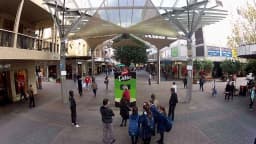
Biscoitos Zezé occupied a regional challenger position in Brazil's confectionery and snacks landscape in 2016. The brand, rooted in Pelotas in Rio Grande do Sul, faced a domestic cookies and crackers market dominated by nationally scaled competitors with significantly greater distribution reach and marketing budgets. M. Dias Branco, the most prominently documented competitor in the segment, held a volume share of 28.6% in Brazil's cookies-and-crackers category for full-year 2016, up from 27.9% in 2015, according to Ri Mdiasbranco Com Br. Another major competitor, Bauducco, competes across the broader sweet biscuit and snack category in Brazil, further crowding the national landscape that regional brands like Biscoitos Zezé must navigate.
Against that competitive backdrop, Mark+ pursued a strategy for Biscoitos Zezé that depended not on media scale but on cultural resonance. Ambient advertising, by its nature, trades reach for intensity of engagement — a single well-placed installation in a high-footfall public space can generate earned media coverage and social sharing that multiplies its effective audience well beyond those who encounter it physically. In Brazil in 2016, that dynamic was particularly relevant: digital and social platforms were already central to how Brazilians shared and consumed content, meaning that a physically executed campaign could gain national visibility through online channels even when its installation footprint was local.
The insight driving "Free Net" was both behavioural and linguistic. Brazilian consumers in urban and semi-urban environments were accustomed to scanning for free Wi-Fi signals in public spaces. By mimicking the visual and textual grammar of those signals — and then substituting rest for connectivity — the campaign positioned Biscoitos Zezé as a brand attuned to a genuine human tension: the fatigue of constant digital availability. As documented by somentecoisaslegais.com.br and popupcity.net, the execution reframed a moment of anticipated connection as an opportunity for pause, aligning the brand's confectionery identity with notions of simple, offline pleasure.
Creative direction for "Free Net" was shared by Ramon Ballverdú and Thomaz Ballverdú at Mark+. The execution was produced by Carma Social Interventions, a production company whose name signals a deliberate orientation toward public-space work with social or cultural dimensions. Together, these credits point to a team practiced in translating brand ideas into physical environments rather than conventional media formats.
The craft of the campaign resided in its construction of expectation and its subsequent subversion. Signage placed in public locations around Pelotas, Brazil, used the established visual language of free Wi-Fi availability — a ubiquitous prompt in Brazilian public spaces by 2016 — to draw the attention of passersby. Where a network password or connection instruction would conventionally follow, the installation instead offered a hammock. The Portuguese word "rede" carried the full weight of that transition: it means both "net" (as in network) and "hammock," and the campaign's entire creative architecture rested on that single semantic pivot, as documented by behance.net and somentecoisaslegais.com.br.
The physical installation itself — a hammock strung in a public location alongside carefully designed signage — required both fabrication precision and an understanding of site-specific placement. The hammock needed to be genuinely usable, not merely symbolic, for the invitation to carry authenticity. The campaign's single documented media asset, as noted by clapboard.com, is consistent with an ambient execution where the installation itself is the primary creative object and documentation functions as a secondary record. The montage quality of the available asset — pairing the signage with the physical intervention — demonstrates how the campaign communicated its central idea through juxtaposition rather than explanation, a craft choice that trusts the audience to close the interpretive gap.
No verified performance data for the "Free Net" campaign is publicly available. No documented figures exist for footfall engagement, earned media reach, social sharing volume, or commercial impact attributable to the Pelotas installations. This is not unusual for regional ambient work produced in Brazil in 2016, where small-scale experiential campaigns frequently generated coverage through specialist creative press rather than through audited effectiveness reporting.
Structurally, however, the campaign exhibits characteristics associated with high-shareability ambient work. The linguistic duality of "rede" — simultaneously "network" and "hammock" in Portuguese — provided a self-contained creative idea that required no additional explanation to be understood by a Brazilian audience, according to coverage documented by somentecoisaslegais.com.br and popupcity.net. That kind of conceptual compression is a reliable driver of organic sharing, because the idea communicates itself in the moment of encounter. The campaign's coverage across platforms including behance.net, trendhunter.com, and Incomum In further suggests that it achieved meaningful creative-press circulation beyond its physical geography in Pelotas, Rio Grande do Sul.
For a regional confectionery and snacks brand competing in a market where M. Dias Branco held more than a quarter of national volume share, according to ri.mdiasbranco.com.br, "Free Net" represented a resource-efficient approach to brand differentiation. Ambient advertising allowed Biscoitos Zezé to occupy cultural territory — specifically, the tension between digital exhaustion and the desire for simple rest — that a larger competitor would be unlikely to claim in a comparable way. Clapboard scores the campaign at 61 out of 100, reflecting a well-executed concept with limited documented evidence of scale or measurable commercial impact.
Biscoitos Zezé's Free Net was a 2016 ambient campaign created by Mark+ and Carma Social Interventions in Pelotas, Brazil. Hammocks were placed in public spaces beside signage mimicking free Wi-Fi offers, revealing the Portuguese double meaning of "rede" — both network and hammock — to invite passersby to rest offline instead of connecting online.
Mark+ created the Free Net campaign for Biscoitos Zezé. Creative direction was led by Ramon Ballverdú and Thomaz Ballverdú, with Carma Social Interventions serving as the production company. The campaign was published in Brazil in February 2016 and is documented across behance.net, somentecoisaslegais.com.br, and popupcity.net among other sources.
Free Net exploits the Portuguese word "rede," which means both network and hammock. The campaign used signage resembling Wi-Fi availability notices to attract attention, then substituted a physical hammock for a digital connection. This linguistic pivot, documented by somentecoisaslegais.com.br, carried the campaign's core message: take a little break from the internet.
Biscoitos Zezé ran Free Net in Pelotas, Rio Grande do Sul, Brazil, in February 2016. Pelotas is the city where the brand was founded in 1968, according to ahoradosul.com.br. The campaign placed hammocks and accompanying signage in public locations around the city, targeting pedestrians in everyday urban environments.
Clapboard scores the Biscoitos Zezé Free Net campaign at 61 out of 100. The score reflects a conceptually coherent ambient execution with strong creative craft and documented creative-press coverage, offset by the campaign's limited scale as a regional installation and the absence of publicly verified performance or commercial effectiveness data.
Free Net is part of a documented series of ambient and experiential campaigns Mark+ produced for Biscoitos Zezé. Related executions, as listed by ahoradosul.com.br, include Chair on the Street, Compliments at the Traffic Light, Pedestrian Guide, Christmas Helpers, Itinerant Affection, and Finger Battle, suggesting a long-running brand strategy built around human-scale public interventions in Brazil.
.webp)
Creative Collaboration Platform: The Backbone of Modern Creative WorkWhat is a creative collaboration platform?Clapboard defines a creative collaboration platform as the operational core for today’s distributed creative teams. This is not a collection of digital collaboration tools stitched together; Clapboard’s system


Understanding the Creative Production MarketplaceWhat is a Creative Production Marketplace?Clapboard defines a creative production marketplace as a structured ecosystem where brands, agencies, and production talent converge to execute video, advertising, and branded content at scale. Unlike the legacy agency or freelanREAD FULL ARTICLE

The Urgent Need for a Creative Production Operating SystemWhy Traditional Creative Production Models Break DownClapboard sees the creative production landscape shifting under pressure. Content velocity is no longer a buzzword—it’s a mandate. Modern advertising demands relentless output across dozens of channels, each wREAD FULL ARTICLE