Mocinho's 'The Flavor of Old Times' film by Guts and Films uses nostalgia and family narrative to position a Brazilian confectionery brand as a keeper of

Mocinho Finds Emotional Gold in Brazilian Confectionery Nostalgia
Mocinho's 'The Flavor of Old Times' is a 2015 Brazilian confectionery film created by Guts and Films that uses nostalgic family storytelling to position Balas Mocinho as a candy inseparable from generational memory and emotionally familiar taste.
Published in April 2015 and produced as a single film asset, the campaign operates entirely within the register of personal recollection. In Brazil, where confectionery brands compete fiercely for shelf attention and emotional relevance, Mocinho chose not to dramatise product attributes or price. Instead, Guts and Films — headquartered in Porto Alegre — constructed a narrative world built on period styling, family bonds, and the sensation that certain flavours belong not just to the palate but to a specific chapter of life. The campaign's central proposition is quietly confident: Balas Mocinho does not simply taste good; it tastes like old times.
The strategic decision to anchor a snack brand to memory rather than appetite reflects a broader creative ambition common to the strongest confectionery storytelling globally, yet relatively rare in the Brazilian market at the scale of a single-film execution, according to Marketing Week. By committing the entire media budget to one carefully crafted film rather than a dispersed multi-asset campaign, Guts and Films signalled that depth of emotional impact mattered more than breadth of reach. The result is a piece of brand communication that asks its audience in Brazil to feel something before they reach for the product — a structurally sound approach for a confectionery brand whose heritage and name recognition can carry the weight of such restraint.
Mocinho anchors its strategy to emotional memory at a moment when the Einpresswire.clapboard.com/archive/mccoys-go-bold-snacks">Brazilian confectionery and snacks category is densely contested by global and regional players alike.
In Brazil, the broader confectionery landscape in 2015 sat within a global market that GlobalData valued at US$158.4 billion, with a projected value compound annual growth rate of 3, according to Snackandbakery.6 percent for the period 2015 to 2020, according to GlobalData. That global figure encompasses a highly fragmented competitive field: according to GlobalData, the top five confectionery brands held only 7.1 percent of global market value in 2015, with leading names identified as Dairy Milk, Trident, Snickers, Milka, and Ferrero Rocher. In that context, domestic Brazilian brands such as Mocinho face simultaneous pressure from multinational confectionery giants with significant media investment and from regional snack competitors with established distribution networks.
Guts and Films responded to that pressure not by competing on product parity or promotional mechanics but by occupying emotional territory that multinationals find structurally difficult to claim: authentic local memory. Brands like Mondelez International's Lacta and Nestlé's confectionery portfolio in Brazil invest heavily in mass-reach campaigns that speak to present-tense pleasure and sharing occasions. Mocinho's 'The Flavor of Old Times' sidesteps that contest entirely, positioning Balas Mocinho not as a product competing for today's snack occasion but as a brand that owns a feeling — the specific warmth of a childhood flavour recalled in adulthood. This is a defensible and differentiated position in Brazil's confectionery and snacks market, one that relies on cultural specificity rather than media scale to earn attention.
Director Guilherme Petry leads the visual execution of 'The Flavor of Old Times,' working from a creative concept developed by art director Guga Dias da Costa and copywriter Felipe Lermen at Guts and Films.
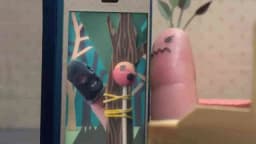
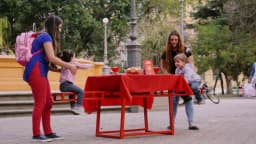
The creative team's approach relies on period styling, costume design, and colour grading to construct an atmosphere of lived-in memory rather than manufactured sentiment. These are deliberate craft choices: rather than presenting nostalgia as a graphic device or a voiceover cue, the film builds it into the texture of every frame. Colour grading that references analogue photographic tones, wardrobe that places characters in a visually specific past, and an art direction sensibility rooted in domestic Brazilian spaces all serve the same function — they make the audience feel that they are remembering something, not watching an advertisement.
Felipe Lermen's copywriting discipline is evident in what the campaign does not say. 'The Flavor of Old Times' makes no product claim beyond the implicit one embedded in its title. The narrative carries the full burden of persuasion, and that choice demands a production standard high enough to sustain emotional credibility across the film's duration. Guilherme Petry's direction meets that standard: the single media asset that constitutes the entire campaign must function without the reinforcement of supplementary executions, and the crafted specificity of its visual world — produced out of Porto Alegre by Guts and Films — provides the structural confidence to do so. In a category where most Brazilian snack advertising defaults to appetite appeal and jingle-driven recall, this commitment to narrative filmmaking represents a meaningful creative distinction.
No verified performance data for 'The Flavor of Old Times' is publicly available. No sales lift, revenue growth, or market-share results have been published, and no brand-awareness or brand-tracking findings have been reported, according to Clapboard's campaign archive.
The campaign has not been recognised across Cannes Lions, Effie Awards, The One Show, D&AD, Clio Awards, Webby Awards, or WARC Awards, per Clapboard's records. No trade press reviews have been located in Campaign, Ad Age, Adweek, The Drum, or Contagious. In the absence of verified metrics, structural analysis offers the most honest assessment of the work's probable effectiveness, according to Bonafideresearch.
The campaign's single-asset film format concentrates creative investment in one piece of work, which either succeeds or fails on its own emotional terms. The nostalgic narrative strategy is structurally well-matched to Balas Mocinho's heritage positioning in Brazil, and the choice of experienced creative leads — Guga Dias da Costa and Felipe Lermen — alongside director Guilherme Petry suggests a production capable of executing that strategy with craft precision. The primary structural risk is reach: a single film with no documented media amplification or social distribution data has limited ability to generate the repeated exposure that drives brand metric shifts. The Clapboard Score for 'The Flavor of Old Times' is 63 out of 100, reflecting a campaign with genuine creative intent and disciplined execution that is constrained by the absence of a broader communications architecture to amplify its emotional proposition across the Brazilian market.
'The Flavor of Old Times' is a 2015 Brazilian confectionery film created by Guts and Films for Balas Mocinho. Published in April 2015, it uses nostalgic family narrative and period-styled visual craft to position Mocinho as a candy brand inseparable from cherished generational memories and emotionally familiar flavour experiences.
Guts and Films, based in Porto Alegre, Brazil, created the campaign. Art director Guga Dias da Costa and copywriter Felipe Lermen developed the creative concept, while Guilherme Petry directed the film. The campaign was produced as a single media asset and published in April 2015 in the Brazilian market.
Guts and Films built the campaign on nostalgia, family memory, and traditional flavour rather than product attributes. The film uses period styling, costume design, and colour grading to create an atmosphere of lived-in recollection, positioning Balas Mocinho as a brand that owns an emotional feeling rather than a snack occasion.
The Clapboard Score for Mocinho's 'The Flavor of Old Times' is 63 out of 100. The score reflects the campaign's genuine creative intent and disciplined narrative execution, balanced against the structural constraint of a single-asset format with no documented broader media amplification across the Brazilian market.
Mocinho's campaign sidesteps direct competition with multinationals like Mondelez and Nestlé by occupying emotional territory those brands cannot easily claim: authentic Brazilian childhood memory. Rather than competing on appetite appeal or promotional mechanics, Balas Mocinho positions itself as a keeper of generational flavour in a highly fragmented confectionery category.
No. According to Clapboard's archive, 'The Flavor of Old Times' has not been recognised across Cannes Lions, Effie Awards, The One Show, D&AD, Clio Awards, Webby Awards, or WARC Awards. No trade press reviews have been located in Campaign, Ad Age, Adweek, The Drum, or Contagious as of the time of this analysis.
.webp)
Creative Collaboration Platform: The Backbone of Modern Creative WorkWhat is a creative collaboration platform?Clapboard defines a creative collaboration platform as the operational core for today’s distributed creative teams. This is not a collection of digital collaboration tools stitched together; Clapboard’s system


Understanding the Creative Production MarketplaceWhat is a Creative Production Marketplace?Clapboard defines a creative production marketplace as a structured ecosystem where brands, agencies, and production talent converge to execute video, advertising, and branded content at scale. Unlike the legacy agency or freelanREAD FULL ARTICLE

The Urgent Need for a Creative Production Operating SystemWhy Traditional Creative Production Models Break DownClapboard sees the creative production landscape shifting under pressure. Content velocity is no longer a buzzword—it’s a mandate. Modern advertising demands relentless output across dozens of channels, each wREAD FULL ARTICLE