BC Greens Bet on Accountability With Stand Behind Words
Stand Behind Words is a 2024 documentary-style political film created by CrackerJackFlash for BC Greens, launched in August 2024 in Canada, in which on-screen text accumulates as the Green Party leader speaks directly to camera, resolving in a payoff that asks voters to choose leadership that stands behind its every word, according to Lims Leg Bc Ca.
The campaign entered the public domain on August 10, 2024, according to the campaign archive record. That timing placed it firmly within the pre-campaign period for the 2024 British Columbia provincial election, which, according to Elections BC, began on July 23, 2024, ahead of the formal campaign window running from September 21 through October 19, 2024. Publishing in August gave the BC Greens a strategic head start, seeding an accountability message before the official campaign noise intensified across the Canadian media landscape.
The creative premise is structural rather than rhetorical, according to Elections Bc Ca. As the BC Greens leader delivers a direct-address presentation to camera, text layers build on screen, visually cataloguing political actions and commitments in real time, according to Free Bcpublications Ca. The accumulation of words is not decorative — it is the argument. By the time the payoff line arrives — This election, vote for leadership that stands behind its every word — the screen itself has become a record of follow-through, transforming the format into evidence. The campaign spans four media assets, all operating within the film medium and classified under the Public Interest category, with a secondary documentary and social-experiment designation that reflects its observational, scrutiny-inviting tone, according to Www2 Gov Bc Ca. In Canada, where trust in political institutions has been a recurring public concern, framing the BC Greens as a party whose leader literally stands behind their stated words carries a precise and pointed resonance.
The BC Greens built Stand Behind Words on a single strategic insight: Canadian voters are increasingly sceptical of the gap between political promises and political action.
In British Columbia, the 2024 provincial election presented a competitive field in which the BC New Democratic Party, led by David Eby, and the BC Conservatives, led by John Rustad, commanded the dominant share of voter attention and party infrastructure, according to reporting by CBC News. For a smaller party like the BC Greens, differentiation could not rest on spending volume or name recognition alone. The strategic decision to anchor the campaign in accountability rather than policy specifics reflects a calculation that emotional and ethical positioning can cut through where resource-intensive advertising cannot.
The documentary and social-experiment framing serves this strategy directly. Rather than producing a conventional political spot with testimonials, music swell, and aspirational imagery, CrackerJackFlash constructed a format that invites voters to watch, evaluate, and judge for themselves. This observational mode positions the BC Greens not as a party making claims about itself, but as one willing to be held to account in real time, on screen, in Canada's most electorally significant western province. According to Elections BC, the formal campaign period ran from September 21 to October 19, 2024, with election advertising prohibited on voting day itself. Launching in August gave Stand Behind Words time to build awareness before regulated periods imposed additional constraints on campaign messaging. The strategic window was deliberately chosen, and the creative concept was calibrated to remain resonant across the full pre-campaign and campaign arc.
Jack Adamson directed Stand Behind Words in his credited role as Director of Visual Story at CrackerJackFlash. The production choice to treat on-screen typography as a structural argument rather than a stylistic accent is the campaign's most distinctive creative decision.
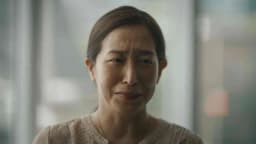
In execution, the BC Greens leader speaks directly to camera in a register that is measured and unadorned, consistent with the documentary classification the campaign carries in the archive. The direct-address format eschews the visual grammar of conventional political advertising — no crowd shots, no sweeping landscapes of British Columbia, no ambient music designed to cue emotional response. Instead, the creative system depends on accumulation: text appears on screen as words are spoken, building a visible, legible record that mirrors and reinforces the verbal content in real time. This layering technique functions as a social experiment in the sense that it asks the viewer to cross-reference what is said with what is displayed, making the act of scrutiny part of the viewing experience itself.
The payoff line — This election, vote for leadership that stands behind its every word — lands with additional weight because the visual system has already demonstrated the concept before stating it. The film resolves not as a slogan but as a conclusion supported by the evidence the format has constructed. CrackerJackFlash submitted four media assets to the campaign archive under this single creative concept, indicating a contained but considered production scope. In the context of Canadian public interest advertising in 2024, the restraint of the craft is itself a creative statement: a party that does not need spectacle to make its case.
No independent third-party performance data for Stand Behind Words is publicly available from trade press or verified research sources at the time of writing.
The archive-hosted video associated with the campaign recorded 286 views, one like, and zero comments, according to the campaign archive record. These figures reflect the reach of the archived asset specifically and are not representative of the campaign's total distribution across paid media, owned channels, or broadcast placements in Canada. According to Bcgreens Ca, the campaign directed audiences to learn more or donate, suggesting the film was deployed as a conversion and awareness tool within a broader electoral communications effort.
Structurally, Stand Behind Words demonstrates several properties that contribute to its communicative effectiveness. The on-screen text accumulation device creates a self-reinforcing feedback loop between spoken and written content, reducing the cognitive distance a viewer must travel to accept the accountability claim. The documentary-style, direct-address format lends the piece a credibility register that produced political advertising — with its layered production values — often deliberately avoids. For a party operating with fewer resources than the BC NDP or BC Conservatives in the 2024 British Columbia election cycle, this is an efficient creative model: high conceptual clarity, low production dependency.
Stand Behind Words receives a Clapboard Score of 63 out of 100, reflecting strong strategic alignment and a distinctive creative mechanism set against limited documented reach and the inherent constraints of small-party political advertising in a competitive Canadian provincial election.
Stand Behind Words is a 2024 political film by CrackerJackFlash for BC Greens in Canada. The campaign features the Green Party leader speaking directly to camera while political actions accumulate as on-screen text, resolving in a call to vote for leadership that stands behind its every word. It launched in August 2024.
CrackerJackFlash created Stand Behind Words for BC Greens. Jack Adamson served as Director of Visual Story on the campaign, which was published in Canada in August 2024. Adamson submitted the campaign to the archive in his credited role at CrackerJackFlash, the agency responsible for the film's creative and production execution.
BC Greens launched Stand Behind Words on August 10, 2024, according to the campaign archive record. This placed it within the pre-campaign period for the 2024 British Columbia provincial election, which Elections BC confirms began on July 23, 2024, ahead of the formal campaign window starting September 21, 2024.
The concept layers on-screen text over the BC Greens leader's direct-address delivery, making visible political commitments accumulate in real time. This documentary and social-experiment format invites viewers to scrutinise leadership claims as they are made. The payoff asks Canadian voters to choose leadership that stands behind its every word.
Stand Behind Words received a Clapboard Score of 63 out of 100. The score reflects the campaign's strong strategic alignment with the BC Greens' accountability positioning and a distinctive typographic creative device, weighed against limited documented audience reach and the competitive constraints of the 2024 British Columbia provincial election landscape.
Stand Behind Words avoids the crowd shots, music, and aspirational imagery typical of Canadian political advertising. Instead, CrackerJackFlash built the film around on-screen text accumulation as structural argument, using documentary-style restraint to position the BC Greens as a party whose leader demonstrates accountability visually rather than simply asserting it through conventional campaign rhetoric.
.webp)
Creative Collaboration Platform: The Backbone of Modern Creative WorkWhat is a creative collaboration platform?Clapboard defines a creative collaboration platform as the operational core for today’s distributed creative teams. This is not a collection of digital collaboration tools stitched together; Clapboard’s system


Understanding the Creative Production MarketplaceWhat is a Creative Production Marketplace?Clapboard defines a creative production marketplace as a structured ecosystem where brands, agencies, and production talent converge to execute video, advertising, and branded content at scale. Unlike the legacy agency or freelanREAD FULL ARTICLE

The Urgent Need for a Creative Production Operating SystemWhy Traditional Creative Production Models Break DownClapboard sees the creative production landscape shifting under pressure. Content velocity is no longer a buzzword—it’s a mandate. Modern advertising demands relentless output across dozens of channels, each wREAD FULL ARTICLE