



Varun Katyal | Founder, Clapboard
Varun Katyal is the Founder & CEO of Clapboard and a former Creative Director at Ogilvy, with 15+ years of experience across advertising, branded content, and film production. He built Clapboard after seeing firsthand that the industry’s traditional ways of sourcing talent, structuring teams, and delivering creative work were no longer built for the volume, velocity, and complexity of modern content. Clapboard is his answer — a video-first creative operating system that brings together a curated talent marketplace, managed production services, and an AI- and automation-powered layer into a single ecosystem for advertising, branded content, and film. It is designed for a market where brands need content at a scale, speed, and level of specialization that legacy agencies and generic freelance platforms were never built to deliver. The thinking, frameworks, and editorial perspective behind this blog are shaped by Varun’s experience across both the agency world and the emerging platform-led future of creative production. LinkedIn: https://www.linkedin.com/in/varun-katyal-clapboard/
Personalization and Data: The New Pillars of Advertising Strategy
How Data-Driven Strategies Are Shaping the Future of Advertising
The future of advertising is defined by data-driven precision and personalization. Campaigns are no longer built around broad demographics or guesswork. Instead, they’re engineered with granular audience targeting, leveraging real-time data signals to optimize every impression. The shift isn’t subtle—it’s foundational. Big data has become the backbone of campaign planning, enabling marketers to move beyond intuition and measure what actually drives action. The result: performance metrics that matter, not just reach or frequency, but actual business outcomes.
Audience segmentation is now an exercise in nuance, not blunt categorization. Marketers can identify micro-cohorts based on purchase intent, behavioral signals, and contextual triggers. This level of detail isn’t theoretical; it’s the operational reality for brands running multi-market campaigns. The days of wasteful blanket spending are numbered. Efficiency is the new creative constraint, forcing teams to justify every dollar with data.
Personalization at Scale: Opportunities and Limits
Personalized ads are the new standard, not a differentiator. Machine learning models parse mountains of data to predict what content resonates with each user—then deliver it at speed and scale. Hyper-personalized creative, tailored to individual preferences and behaviors, drives higher engagement and conversion. But scale brings complexity. The challenge isn’t just building variations; it’s orchestrating them across channels and markets without losing control of brand integrity or spiraling production costs.
Automation has made personalization feasible, but not limitless. There’s a threshold where more personalization delivers diminishing returns or even backfires. Audiences are increasingly savvy; they recognize when targeting crosses the line from relevant to invasive. The smartest strategies blend data-driven insights with creative restraint, ensuring relevance without sacrificing trust.
Navigating Privacy in the Age of Data-Driven Advertising
Consumer privacy is the counterweight to data-driven advertising. Regulatory frameworks and shifting public expectations have forced the industry to rethink data collection and usage. Consent is now a strategic consideration, not a compliance afterthought. Marketers must design campaigns that respect privacy by default, building transparency and control into every touchpoint.
This isn’t just risk mitigation—it’s a commercial imperative. Brands that mishandle data erode trust, lose access to valuable signals, and face real financial penalties. The balance is delicate: maximize relevance without crossing into intrusion. The future belongs to those who treat privacy as a value proposition, not an obstacle. Audience targeting must evolve, prioritizing first-party data and ethical data partnerships to maintain both effectiveness and credibility.
The Commercial Edge: Data and Personalization as Strategic Levers
Data and personalization have shifted from tactical tools to strategic levers. Senior marketers who master these pillars drive more than campaign performance—they shape brand value and market position. The winners are those who see beyond the dashboard, using data not just to optimize ads, but to inform product, experience, and long-term customer relationships.
The real test isn’t technical capability; it’s judgment. Knowing when to push the limits of personalization, when to pull back, and how to navigate the evolving privacy landscape is what separates practitioners from pretenders. The future of advertising will be won by those who combine data fluency with creative discipline—and who never lose sight of the human on the other side of the screen.
Setting the Stage: What Defines the Future of Advertising?
Defining the Future of Advertising: What’s Changing?
The future of advertising is not a single destination—it’s an ongoing recalibration of strategy, technology, and audience expectation. This evolution is driven by the collision of data, automation, and creative ingenuity. Advertising trends are no longer set by agencies alone; they’re dictated by how fast brands can adapt to new distribution channels, measurement standards, and consumer appetites. The digital marketing future is defined by fragmentation, speed, and the relentless pursuit of relevance. The old model—interrupt, broadcast, repeat—is obsolete. Today, the future of advertising is about orchestrating meaningful, measurable touchpoints across a landscape that never stands still.
Why Brands Can’t Ignore Advertising Innovation
Staying ahead isn’t optional—it’s existential. The cost of lagging behind in advertising innovation is not just wasted spend; it’s lost market share, eroded trust, and creative irrelevance. Brands that cling to legacy approaches are outpaced by those willing to experiment, iterate, and invest in smarter distribution mechanics. The economics of production have shifted: efficiency, not just scale, is the new battleground. Every campaign is a test of agility—how quickly can you pivot creative, optimize for platform, and extract actionable insight? The brands that win are those that treat advertising evolution as a core business function, not a side project.
The Impact of Consumer Behavior on Advertising’s Evolution
Consumer expectations are rewriting the rules. Audiences now demand relevance, transparency, and value in every interaction. They’re not passive targets—they’re active participants, shaping the digital marketing future with their choices and feedback loops. Privacy concerns, ad fatigue, and the rise of ad-free environments mean attention is a currency brands must earn, not buy. Personalization is table stakes; authenticity is the differentiator. The future of advertising belongs to those who understand that every touchpoint is a negotiation for trust and attention. If you’re not listening, you’re invisible.
What’s at Stake: The Risks and Rewards for Advertisers
The stakes are high. For senior marketers and creative leaders, the next wave of advertising trends will decide who commands attention and who fades into noise. Success is measured in impact, not impressions. The winners will be those who can synthesize creative vision with commercial discipline—delivering campaigns that cut through, convert, and build brand equity. Those who fail to adapt risk irrelevance, no matter their legacy or budget. This is not about chasing hype—it’s about understanding the structural shifts that define the advertising evolution and acting with intent.
In this landscape, the future of advertising is both a challenge and an opportunity. It demands that brands, marketers, and creative teams move beyond comfort zones and build new playbooks. Understanding what’s changing is not just prudent—it’s the foundation for sustainable, effective growth. The only certainty is that the pace of change will accelerate. Those prepared to rethink, retool, and reinvest will define the next era of advertising.
Storytelling and Brand Narrative in Modern Advertising
Why Storytelling Matters in the Future of Advertising
Brand storytelling in advertising is no longer a creative indulgence—it’s a commercial imperative. Audiences are bombarded with product claims and functional messages every day. Most are ignored. What cuts through is narrative: a structured, human story that frames the brand as more than a commodity. The data is unambiguous—narratives result in a 22% increase in recall compared to straightforward facts (Journal of Consumer Research, 2025). In a market where attention is currency, recall is the dividend that matters.
Storytelling doesn’t just improve memory; it shifts perception. A 2025 meta-analysis of 47 studies found story-structured messaging improves brand attitude by 38% versus feature-based advertising. This isn’t about sentimentality—it’s about shaping preference and driving consideration in a crowded category. The future of advertising belongs to brands that can craft and sustain a narrative arc, not those that simply shout louder about features.
Crafting an Authentic Brand Narrative
Authenticity is the non-negotiable baseline. Today’s audiences spot insincerity instantly. A brand narrative that feels manufactured or opportunistic will backfire, eroding trust rather than building it. Effective storytelling in marketing is anchored in the lived experience of the brand—its origins, values, and the real-world context it operates in. The best narratives are not invented; they are excavated from the brand’s truth and amplified with discipline across every channel.
Consistency is critical. Fragmented messaging across platforms dilutes narrative impact. The story must be recognisable whether it’s encountered in a 15-second pre-roll, a long-form social post, or a brand film. This is where many campaigns falter: they treat each channel as a silo, rather than as a chapter in a larger brand story. Integration is not just operational efficiency—it’s narrative coherence.
Emotional Advertising: Connecting Beyond Products
Emotional advertising is the lever that transforms a brand narrative from noise to influence. Logic informs, but emotion moves. The most effective campaigns use emotional connection not as a veneer but as the engine of persuasion. Brands that adopt storytelling see a 60% higher engagement rate across marketing channels (Nielsen, 2025). This is not accidental. Emotional resonance builds memory structures and drives action—two outcomes every marketer should prioritise.
But emotional connection only works when it’s earned. Forced sentiment or generic “purpose” messaging rings hollow. The audience is not looking for a brand to solve every societal issue; they want evidence that the brand understands their world and can play a credible role within it. The line between emotional advertising and emotional manipulation is thin. Cross it, and the backlash is swift—and public.
Risks and Pitfalls of Inauthentic Storytelling
Not every brand should chase the storytelling trend. Inauthentic narratives are easy to spot and even easier to criticise. The cost of getting it wrong is steep: lost credibility, diminished trust, and wasted investment. Brands must resist the urge to retrofit a story onto a product or campaign. If the narrative doesn’t align with the brand’s reality, audiences will disengage—or worse, call it out.
Ultimately, effective brand storytelling in advertising is about discipline and honesty. It’s about finding the intersection between what the brand truly stands for and what the audience genuinely cares about. When those align, the narrative becomes not just memorable, but commercially effective.

Legal, Ethical, and Privacy Challenges in the Future of Advertising
Navigating Privacy Laws in the Future of Advertising
Advertising privacy regulations are no longer a compliance afterthought—they’re central to how campaigns are conceived and executed. The global regulatory landscape is fragmenting fast. The EU’s GDPR set the tone, but now the Digital Services Act (DSA) and Digital Markets Act (DMA) are redrawing the lines further, banning targeted ads based on sensitive categories and forcing platforms to overhaul their data practices (Basis, 2025). In the US, state-level moves like the CCPA and New York’s 2025 law on AI disclosure are forcing advertisers to rethink creative workflows and distribution, not just legal disclaimers. The bottom line: data collection, targeting, and creative deployment are all now subject to a patchwork of region-specific rules that demand both technical and operational agility.
Building Ethical Advertising Campaigns
Legal compliance is just the starting point. Ethical advertising demands more than checking boxes—it’s about understanding the intent behind regulations and responding with transparency and respect for consumer autonomy. AI and automation have intensified the stakes. When synthetic performers or AI-generated content are used in campaigns, disclosure isn’t optional; it’s mandated by law in some markets, with real penalties for violations (AFS Law, 2026). But the ethical line runs deeper: how data is sourced, how consent is obtained, and how algorithms make decisions all shape brand trust. The smart operators are building processes that go beyond the letter of the law, embedding ethical review into creative sign-off and distribution.
How Legal Changes Are Shaping Marketing Strategies
The impact of new advertising privacy regulations is commercial, not just legal. Marketers who treat compliance as a bolt-on risk missing the strategic shift underway. As targeting narrows and first-party data becomes king, creative must work harder—context, relevance, and value exchange are the new levers. Data compliance is also a brand differentiator; consumers increasingly judge brands by how they handle privacy, not just by what they say in ads. Transparent data practices, clear opt-in flows, and honest messaging are now non-negotiable. The forward-thinking teams are investing in compliance infrastructure, but also in training and cultural change—ensuring everyone from production to strategy understands the stakes.
Finally, the ethical marketing imperative is driving a return to fundamentals: clarity, consent, and credibility. Regulatory pressure will only intensify, especially as AI and automation accelerate. The winners will be those who see compliance not as a constraint, but as a catalyst for smarter, more sustainable advertising.
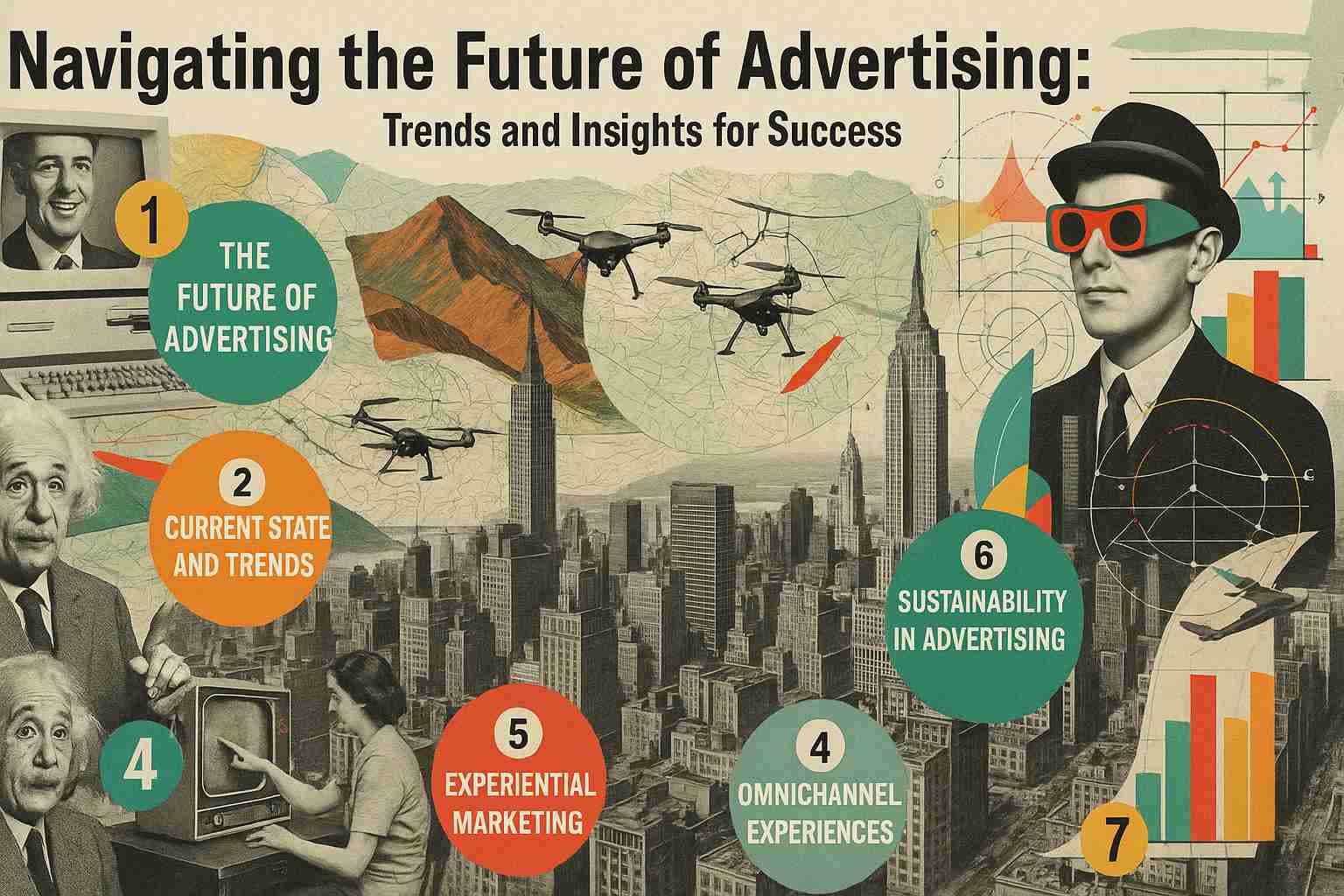
Experiential and Immersive Marketing: Engaging the Senses
Experiential marketing is not a sideshow. It’s where brands prove their relevance by creating moments people actually want to participate in. The most effective campaigns don’t just tell a story—they let consumers step inside it. This is where the lines between audience and participant blur, and where brand experiences become a lever for real commercial impact.
The Power of Experiential Marketing in the Future of Advertising
As traditional advertising fragments, experiential marketing is emerging as a counterweight. When done right, it’s not just memorable—it’s measurable. Senior marketers are shifting budgets from passive impressions to active participation, recognising that attention isn’t given, it’s earned. Immersive advertising isn’t about spectacle for its own sake. It’s about building environments where consumers opt in, engage, and remember.
We’re seeing this in everything from pop-up installations to large-scale event marketing. The best executions are rooted in a clear understanding of the target audience and a willingness to invest in experiences that can’t be replicated online. The goal: create a moment so compelling that it drives both social amplification and direct brand engagement.
Leveraging Technology for Immersive Brand Experiences
AR and VR are no longer novelties. They’re tools for crafting interactive campaigns that invite consumers to see, touch, and feel what a brand stands for. The technology isn’t the point—the experience is. When a retail brand uses AR to let customers visualise products in their own space, or when a festival deploys VR to transport attendees to another world, the technology fades into the background. What matters is the emotional imprint left behind.
But it’s not just about hardware. Data-driven personalisation is making immersive advertising smarter. With the right infrastructure, brands can tailor event marketing in real time, responding to audience behaviours and preferences on the fly. This is where the discipline shifts from theatre to performance marketing, with every interaction mapped and optimised for impact.
Measuring Success in Experiential Campaigns
Measurement remains the friction point. Vanity metrics—footfall, dwell time, social shares—are easy to report but rarely tie back to business outcomes. The leaders in this space are building attribution models that track the full journey from experience to conversion. RFID wristbands, app-based check-ins, and post-event retargeting are closing the loop between physical engagement and digital action.
This rigor is essential. If experiential marketing is to command serious budget, it must prove its worth beyond the highlight reel. That means integrating campaign data with CRM systems, tracking uplift in brand sentiment, and, ultimately, linking experiences to revenue.
Overcoming Barriers to Entry and Scale in Experiential Marketing
Cost and complexity have traditionally limited immersive brand experiences to big players. But that’s changing. Modular event kits, scalable AR platforms, and plug-and-play analytics are lowering the barriers. The smart move isn’t to chase spectacle, but to focus on repeatable formats that can be deployed across markets and tailored to local audiences.
Ultimately, experiential marketing will be judged by its ability to drive business results at scale. The brands that win won’t be those with the flashiest activations, but those that treat every experience as part of a broader, data-connected strategy. For senior marketers, the question isn’t whether to invest in immersive advertising—it’s how to make it accountable, repeatable, and commercially indispensable.
Sustainability and Social Responsibility: Advertising’s New Imperatives
Why Sustainability Is Critical in the Future of Advertising
Sustainable advertising has shifted from a differentiator to a baseline expectation. Boardrooms and creative teams now face pressure from regulators, investors, and—most importantly—consumers who demand more than lip service. The audience is commercially literate and ethically aware. They scrutinize not just what brands say, but what they do. This isn’t about aesthetics or one-off campaigns. It’s about integrating eco-friendly marketing and social impact advertising into the DNA of brand strategy.
For senior marketers, the commercial case is clear: brands that lead with sustainability and ethical branding outperform laggards on long-term trust and loyalty. The next generation of high-value consumers—Gen Z and Millennials—are especially attuned to authenticity. They reward brands that demonstrate real-world responsibility, not just performative gestures. This is driving a recalibration of creative priorities and media investments across the industry.
Avoiding Greenwashing in Brand Messaging
The risk of greenwashing is now a strategic liability. Superficial claims or vague “green” visuals are quickly called out, often with reputational and financial consequences. The market has matured; empty promises don’t just fall flat—they backfire. Authenticity is non-negotiable. Marketers must ensure that every claim, visual, and partnership is backed by verifiable action. This means collaborating with operations, supply chain, and legal to validate sustainability claims before they reach the edit suite.
Purpose-driven branding is only credible when it’s rooted in measurable impact. That means clear reporting, transparent supply chains, and a willingness to acknowledge the work still to be done. Brands that own their journey—warts and all—command more respect than those who overstate progress. The best creative work now starts with operational truth, not just a brief from the comms team.
Communicating Social Responsibility Effectively
Effective social impact advertising isn’t about shouting your virtues. It’s about relevance and resonance. Senior marketers must translate complex sustainability initiatives into messaging that’s both compelling and credible. This requires collaboration across creative, strategy, and business functions. The most effective campaigns make sustainability tangible: showing, not telling, how a brand’s actions create real-world value for people and planet.
Communication strategies must also be tailored to channel and context. What works on a 30-second TVC won’t land the same way on TikTok or in a B2B webinar. Leaders in green marketing understand the nuances of each platform—and the expectations of each audience. They leverage storytelling, data, and design to cut through skepticism and drive belief.
- Embed sustainability into every stage of campaign development—not just the messaging, but the production process itself.
- Audit supply chains and partnerships for alignment with ethical branding standards.
- Use transparent reporting to back up every claim.
- Engage employees and stakeholders in the brand’s sustainability journey to build internal credibility before going public.
The commercial upside is clear: brands that make social responsibility a core operating principle earn trust, loyalty, and long-term advantage. Sustainable advertising isn’t a trend; it’s the new cost of entry. Those who treat it as a box-ticking exercise will be left behind. The leaders will be those who turn responsibility into creative and commercial value—every time they go to market.
The Omnichannel Imperative: Creating Seamless Consumer Journeys
Omnichannel advertising isn’t a trend—it’s the new baseline for brands competing in fragmented, high-velocity markets. At its core, omnichannel means orchestrating every consumer touchpoint—paid, owned, earned—so the experience is continuous, contextually relevant, and frictionless. This is not just cross-channel marketing by another name. Where multichannel efforts often operate in parallel, omnichannel strategies demand integration: data, messaging, and creative execution must move in lockstep to deliver a unified customer experience.
Building an Omnichannel Strategy for the Future of Advertising
Effective omnichannel advertising starts with a clear mapping of the customer journey. Every platform—social, web, in-store, email, CTV—must be understood not as a silo but as a node in a networked path to conversion. Success comes from architecting integrated campaigns that adapt messaging, creative, and offers to each context, while maintaining a single brand narrative. The result is consistency: consumers recognize the brand, understand the value proposition, and encounter fewer disconnects as they move from awareness to purchase.
Data integration is the backbone. Unified IDs, robust attribution models, and real-time analytics allow brands to track behavior and respond with precision. This operational backbone enables agile optimization—budget can be shifted, creative refreshed, and targeting refined based on what’s actually driving engagement, not just what’s planned in a static media calendar.
Overcoming Challenges in Cross-Channel Campaigns
Execution is where most omnichannel ambitions falter. The technical challenge is significant: legacy systems, fragmented data, and channel-specific KPIs create barriers to true integration. Silos—organizational and technological—are the enemy of a seamless journey. For senior marketers, the imperative is ruthless prioritization: invest in platforms and processes that centralize data, automate workflows, and enable a single source of truth for campaign performance.
Measurement remains a sticking point. Traditional attribution models struggle to account for the nonlinear, multi-touch journeys that define modern consumer behavior. Incrementality testing, media mix modeling, and advanced analytics are essential, but they require buy-in from leadership and a willingness to challenge entrenched reporting frameworks. Marketers who can connect the dots across channels—linking impressions to outcomes—hold a real commercial advantage.
Personalizing the Consumer Journey Across Channels
Personalization is where omnichannel advertising moves from functional to effective. Consumers expect relevance, but not at the expense of privacy or control. The best strategies use first-party data to tailor creative, offers, and timing—without crossing the line into surveillance. Dynamic creative optimization and AI-driven segmentation allow brands to deliver individualized experiences at scale, but only if the underlying data is clean, compliant, and actionable.
Every touchpoint should feel like part of a single conversation. That means retargeting isn’t just about frequency—it’s about context. Messaging adapts based on where the consumer is in their journey, what actions they’ve taken, and what signals they’re sending in real time. This level of orchestration is what separates omnichannel leaders from those still stuck in channel-first thinking.
Tools and Technologies for Seamless Experiences
Tech stacks are converging around platforms that enable true omnichannel execution: customer data platforms (CDPs), advanced attribution engines, and creative automation tools. The winners are brands that use these technologies not just to automate, but to inform smarter creative and media decisions. Integration is non-negotiable—if your tools don’t talk to each other, your campaigns won’t either.
Omnichannel advertising is a commercial imperative, not a marketing luxury. The brands that master it will deliver a unified
Artificial Intelligence in Advertising: Hype, Reality, and Next Steps
AI in advertising is not a futuristic promise—it's already a live wire running through the industry’s core processes. From programmatic advertising that optimizes media spend in real time, to machine learning marketing models that segment audiences with surgical precision, AI is changing the mechanics of how campaigns are bought, targeted, and measured. But the narrative is split: on one side, the hype of limitless automation and hyper-personalization; on the other, the reality of technical ceilings, creative constraints, and ethical red flags.
How AI Is Reshaping the Future of Advertising
AI’s most tangible impact is in targeting and creative optimization. Algorithms now parse vast datasets—demographics, behaviors, contextual signals—to predict who’s most likely to respond to an ad, and when. Programmatic advertising platforms use these insights to bid automatically, maximizing efficiency and minimizing waste. On the creative side, AI personalization tools dynamically adapt messaging and visuals, tailoring assets to micro-segments at scale. The result: campaigns that are more relevant and, when well-executed, more effective.
However, this level of automation also exposes the limits of the technology. Machine learning models are only as good as the data they’re trained on. Incomplete or biased datasets can lead to targeting errors and creative misfires—problems that can’t be solved by more automation alone. The promise of AI-powered campaigns is real, but the margin for error is significant, especially when stakes (and budgets) are high.
Balancing Automation and Creativity in Ad Campaigns
The commercial appeal of AI-driven automation is obvious: scale, speed, and efficiency. But there’s a cost. Creative differentiation—the edge that makes a campaign memorable—can get lost in the drive for optimization. AI can generate, test, and iterate variations at pace, but it still struggles with nuance, cultural context, and the intangible quality of brand voice. The most effective campaigns are those that use AI as a force multiplier, not a creative replacement. Human oversight remains essential for quality control and strategic alignment.
For senior marketers and creative leads, the job is to orchestrate this balance. That means building workflows where AI handles the heavy lifting—audience segmentation, automated ad buying, real-time reporting—while creative teams focus on concept, storytelling, and brand integrity. The future isn’t AI versus human; it’s AI plus human, each playing to their strengths.
Addressing Ethical Issues in AI-Powered Advertising
With greater automation comes greater responsibility. AI in advertising raises unique ethical questions: how data is sourced, how transparent targeting decisions are, and how to prevent discriminatory outcomes. The regulatory landscape is evolving, but self-governance is non-negotiable. Teams must audit algorithms for bias, ensure consent in data usage, and be prepared to explain how AI-driven decisions are made. Reputation risk is real, and the consequences of getting it wrong are commercial as much as legal.
Preparing teams for AI adoption is not just a technical exercise—it’s cultural. Upskilling is mandatory, but so is instilling a critical mindset. Leaders must set clear guardrails: where automation ends and human judgment begins, how to measure effectiveness beyond just clicks and conversions, and when to challenge the outputs of the machine. AI is a tool, not a strategy. The winners will be those who understand both its power and its limits, and build for the next phase with eyes wide open.
Adapting for Success: Strategic Shifts for the Future of Advertising
The future of advertising strategies will reward brands that treat change as a permanent condition, not a periodic disruption. The pace of digital transformation in advertising is relentless; those who hesitate risk irrelevance. Success now depends on an operating model built for learning, agility, and adaptation—qualities that can’t be retrofitted when the next wave hits. Senior marketers must engineer these traits into their teams, processes, and culture from the ground up.
Key Strategies for Thriving in the Future of Advertising
Continuous learning isn’t a nice-to-have—it’s a baseline requirement. The most effective marketing adaptation happens when teams are trained to spot, test, and deploy new tactics before they become table stakes. This means allocating time and budget for upskilling, not just in creative or media, but in analytics, automation, and emerging channels. Don’t wait for a crisis to force digital transformation advertising decisions. Proactive investment in talent and tech is the only insurance policy that matters.
Building Adaptable Marketing Teams
Advertising innovation is driven by diverse, multidisciplinary teams that can pivot fast. Homogenous teams—whether by skillset, background, or mindset—breed blind spots and inertia. The future belongs to those who hire for cognitive range and reward experimentation over perfection. Build teams where strategists, creatives, technologists, and analysts work shoulder-to-shoulder. Cross-functional fluency is a non-negotiable asset; so is the humility to kill darlings and move on when the data demands it.
Investing in Innovation for Sustainable Growth
Innovation isn’t about chasing shiny objects. It’s about disciplined experimentation and rapid iteration. Set clear parameters for testing new formats, platforms, and creative approaches—then measure ruthlessly. Not every experiment pays off, but every experiment should teach you something actionable. Make it standard practice to review, learn, and iterate at every stage of the campaign lifecycle. Sustainable growth comes from a portfolio of small bets, not from betting the farm on a single breakthrough.
Finally, measure what matters. Vanity metrics are distractions; focus on indicators that tie directly to business outcomes. Build feedback loops that inform not just creative optimisation, but product development, media mix, and even business model decisions. The brands that thrive in the future of advertising strategies will be those that treat adaptability as a core competency, not a slogan. In this landscape, survival isn’t about being the biggest or the loudest—it’s about being the fastest to learn and the quickest to act.
Conclusion
The advertising landscape is in a state of constant recalibration. Consumer behavior no longer shifts in predictable cycles—it pivots in response to new technologies, cultural moments, and the relentless pace of digital innovation. The most effective marketers are those who recognize that yesterday’s playbook is obsolete. They adapt, interrogate every assumption, and build strategies that respond to the real-time signals of their audience. This is not about chasing the latest trend for its own sake; it’s about staying relevant in a market where attention is both fragmented and fiercely contested.
Technology’s role is no longer limited to enabling distribution or automating campaigns. It has become the backbone of modern advertising strategy, underpinning everything from customer journey mapping to creative iteration. Data-driven personalization is now table stakes, not a differentiator. The brands that outperform are those that leverage technology to create feedback loops—using analytics not just to measure, but to inform and evolve creative output in near real time. This is the foundation of advertising innovation: rapid, informed experimentation, grounded in commercial reality.
Yet as the tools and tactics become more sophisticated, the ethical stakes rise in parallel. The digital marketing future will be defined not only by what is possible, but by what is responsible. Consumers are increasingly aware of how their data is used and expect transparency as a baseline. Ethical advertising is no longer a compliance issue—it’s a core pillar of brand trust and long-term value. Marketers who fail to embed ethical considerations into their workflows will find themselves outpaced by those who do.
What emerges is a landscape where adaptability, technological fluency, and ethical rigor are non-negotiable. Senior marketers and creative leaders must look beyond short-term metrics and focus on building systems that respond to the evolving realities of their audience. The future belongs to those who can synthesize data, creativity, and integrity—delivering campaigns that not only perform, but endure. That is the new standard for effective advertising.
FAQs
What is the future of advertising?
Advertising is moving toward a landscape defined by precision, accountability, and adaptability. The future is shaped by data-driven insight, platform convergence, and an unrelenting focus on measurable business outcomes. Brands that adapt quickly—integrating technology with creative agility—will outperform those clinging to legacy playbooks and vanity metrics.
How is personalization changing advertising strategies?
Personalization has shifted from a “nice-to-have” to a baseline expectation. Data now informs every stage of campaign development, from creative concept to media placement. The result is messaging that’s more relevant and timely, driving higher engagement and efficiency. Brands that ignore this shift risk irrelevance and wasted spend.
What are the legal challenges in advertising today?
Regulatory scrutiny is intensifying, especially around data privacy and transparency. Laws like GDPR and CCPA have forced advertisers to rethink consent, targeting, and data handling. The cost of non-compliance is high—financially and reputationally. Marketers must now build legal and ethical considerations into every campaign from the outset.
Why is storytelling important in advertising?
Storytelling cuts through noise and builds genuine connection. In a fragmented media environment, authentic brand narratives drive recall and loyalty. It’s not about crafting the most cinematic ad, but about creating relevance and resonance with the audience. Storytelling is the lever that turns attention into action.
How can brands implement sustainable advertising practices?
Sustainability must be operational, not just a message. This means auditing supply chains, choosing low-impact media channels, and designing campaigns with lifecycle in mind. Transparent reporting and genuine commitments—not greenwashing—are now the cost of entry for brands that want to remain credible with conscious consumers.
What is omnichannel marketing and why is it important?
Omnichannel marketing orchestrates consistent brand experiences across every consumer touchpoint—digital, physical, and social. It’s essential because audiences expect seamless journeys. Fragmented efforts create friction and erode trust. Brands that master omnichannel execution see better retention, higher conversion, and more actionable insights.
How is AI transforming the advertising industry?
AI is redefining targeting, optimization, and creative production. Algorithms identify patterns humans miss, powering dynamic content and real-time bidding. But AI also raises questions around bias, transparency, and creative originality. The winners will be those who harness AI’s strengths while maintaining strategic oversight and ethical guardrails.
.webp)
Creative Collaboration Platform: The Backbone of Modern Creative WorkWhat is a creative collaboration platform?Clapboard defines a creative collaboration platform as the operational core for today’s distributed creative teams. This is not a collection of digital collaboration tools stitched together; Clapboard’s system

Understanding the Creative Production MarketplaceWhat is a Creative Production Marketplace?Clapboard defines a creative production marketplace as a structured ecosystem where brands, agencies, and production talent converge to execute video, advertising, and branded content at scale. Unlike the legacy agency or freelanREAD FULL ARTICLE

The Urgent Need for a Creative Production Operating SystemWhy Traditional Creative Production Models Break DownClapboard sees the creative production landscape shifting under pressure. Content velocity is no longer a buzzword—it’s a mandate. Modern advertising demands relentless output across dozens of channels, each wREAD FULL ARTICLE
JOIN THE NEWSLETTER.
Content Production insights, videos, books, and freebies, delivered to your inbox weekly


LEAVE A COMMENT
Your email address will not be published.