



Varun Katyal | Founder, Clapboard
Varun Katyal is the Founder & CEO of Clapboard and a former Creative Director at Ogilvy, with 15+ years of experience across advertising, branded content, and film production. He built Clapboard after seeing firsthand that the industry’s traditional ways of sourcing talent, structuring teams, and delivering creative work were no longer built for the volume, velocity, and complexity of modern content. Clapboard is his answer — a video-first creative operating system that brings together a curated talent marketplace, managed production services, and an AI- and automation-powered layer into a single ecosystem for advertising, branded content, and film. It is designed for a market where brands need content at a scale, speed, and level of specialization that legacy agencies and generic freelance platforms were never built to deliver. The thinking, frameworks, and editorial perspective behind this blog are shaped by Varun’s experience across both the agency world and the emerging platform-led future of creative production. LinkedIn: https://www.linkedin.com/in/varun-katyal-clapboard/
How Generative AI is Transforming Business Operations
Streamlining Business Processes with Generative AI
Generative AI in business is no longer a speculative edge case. It’s an operational lever, driving measurable efficiency across sectors. The shift isn’t about replacing people; it’s about compressing timelines, eliminating manual bottlenecks, and reallocating human capital to where it counts. At the core, AI-driven automation is recasting workflows that once demanded hours of repetitive input. Finance teams use generative models to reconcile transactions and flag anomalies in real time. In HR, onboarding sequences and policy documentation are now generated, reviewed, and distributed with minimal human intervention. The result: reduced cycle times, fewer errors, and a workforce that can focus on high-value analysis rather than rote admin. For leaders serious about business process transformation, the question isn’t if, but how fast you adapt.
Automating Content and Report Generation at Scale
Content generation, once a resource drain, is now a case study in AI-driven automation. Generative AI platforms can draft, iterate, and localize marketing copy, internal comms, or compliance reports at a pace that simply wasn’t possible with traditional teams. For multi-market campaigns, this means nuanced messaging tailored for each region—without ballooning headcount or deadlines. The same technology is transforming report writing: sales updates, performance dashboards, and board presentations can be auto-generated using live business data, freeing senior talent to focus on interpretation and decision-making. The operational upside is clear: faster output, consistent quality, and the ability to scale content production without scaling costs. If your competitors aren’t already doing this, they will be soon.
Enhancing Data Processing and Analysis Capabilities
Data is only as valuable as your ability to extract actionable insight. Generative AI in business is pushing past static dashboards, enabling dynamic analysis and narrative generation from raw data. Instead of waiting for quarterly reviews, leaders can now query AI models for real-time summaries, trend detection, and predictive insights—no data science degree required. This shift is especially potent in sectors awash with unstructured data, from customer feedback to supply chain logs. Automated analysis not only accelerates decision cycles but also surfaces patterns human analysts might miss. The impact on speed and accuracy is direct: smarter decisions, made faster, with less risk of oversight. For any organisation chasing workflow optimization with AI, this is the new baseline.
Real-World Examples of AI-Driven Business Transformation
Across industries, the practical impact of generative AI is already visible. Retailers deploy AI-powered chatbots that resolve customer queries and process returns without human touchpoints. Financial services firms use generative models to draft regulatory disclosures and flag compliance risks in real time. Even creative agencies, once thought immune, are leveraging AI to storyboard campaign concepts and automate post-production edits. The common thread: resource allocation shifts from repetitive execution to strategic oversight. This isn’t theoretical. It’s happening now, and the operational delta between early adopters and laggards is widening. Businesses that embrace AI-driven automation are seeing leaner teams, faster turnaround, and a measurable uptick in both productivity and morale.
The bottom line: generative AI in business is a force multiplier for operational efficiency. It doesn’t just automate tasks—it transforms the economics of how work gets done. The leaders who understand this aren’t waiting for a perfect use case. They’re building the future of business process transformation, one workflow at a time.
What is Generative AI in Business? Unpacking the Fundamentals
Generative AI in business refers to artificial intelligence systems that don’t just analyze data—they create new content, ideas, or solutions from scratch. Unlike traditional algorithms that classify, recommend, or predict based on historical patterns, generative models in business are designed to output original text, images, audio, or even product concepts. This isn’t theoretical: businesses are already deploying these systems to automate creative tasks, accelerate R&D, and unlock new forms of customer engagement. The distinction matters—understanding what generative AI can (and can’t) do is now a baseline requirement for any decision-maker considering AI adoption.
How Generative AI Differs from Traditional AI in Business
Most business AI applications until recently have been predictive. Predictive AI excels at identifying patterns in data—forecasting sales, segmenting customers, flagging anomalies. Generative AI, by contrast, is built to produce new artifacts. The difference is practical: predictive AI optimizes existing workflows, while generative models in business create new possibilities entirely. For example, a predictive model might forecast demand for a product; a generative model could design new product variants or generate personalized marketing assets at scale. The creative leap is the point.
Key Concepts: Vector Spaces and Content Generation Explained
Generative AI’s mechanics are rooted in how it represents and manipulates data. At the core are vector spaces—mathematical structures that encode information about words, images, or other data as multidimensional points. These vectors capture relationships and context, enabling the model to “understand” and recombine inputs in novel ways. During content generation, the AI samples from these vector spaces to produce outputs that are contextually relevant yet distinct from the training data. This is how generative models in business can draft original copy, synthesize imagery, or simulate scenarios without rote copying.
Understanding the Core Value of Generative AI in Business
The commercial appeal of generative AI in business is direct: it enables scale, speed, and creative expansion that were previously impossible. Businesses care because generative AI doesn’t just automate repetitive tasks—it opens up new categories of work. Marketers can iterate dozens of campaign variations in hours, not weeks. Product teams can prototype features or content on demand. The result is not just efficiency, but a step-change in what’s possible for business AI applications. The organizations that grasp these fundamentals now are positioned to set the pace, not play catch-up.
Practical Applications of Generative AI in Business Today
Top Use Cases for Generative AI in Business
Generative AI business applications are no longer theoretical—they’re operational, scaled, and driving measurable impact across sectors. The highest-value use cases are clustering around four functions: marketing, customer service, product development, and business intelligence. These are not fringe pilots; they are redefining workflows, cost structures, and customer expectations.
In customer operations, generative AI is a force multiplier. Automated chatbots and virtual agents now resolve issues at speeds and volumes that outstrip even the best-staffed human teams. For large-scale deployments, response times have dropped by 82%—from 11 minutes to just 2—while matching the output of 700 full-time agents (SR Analytics, 2024). This is not marginal efficiency; it’s a structural rewrite of service economics. For leaders focused on customer service automation, the question is no longer if, but how fast to scale.
Generative AI in Marketing and Customer Engagement
AI in marketing is moving beyond segmentation and targeting. Today’s generative models are producing creative assets—copy, video variants, campaign concepts—at a velocity and relevance that human teams can’t match. The result: hyper-personalized marketing at scale, with 76% of CMOs saying generative AI will fundamentally change how marketing operates. Campaigns using AI-driven creative are seeing click-through rates up to 85% higher than traditional campaigns (IBM, 2024). The economics are clear: more relevance, less waste, faster iteration.
For practitioners, this means content pipelines that flex to audience signals in real time. Video strategists, in particular, are leveraging these tools to generate platform-native edits, A/B test creative, and adapt messaging for regional markets—without ballooning production costs. This is the new baseline for effective, performance-led content.
Enhancing Product Development with AI Tools
Generative AI use cases in product and engineering are equally disruptive. Code generation tools are accelerating software development cycles, automating boilerplate, and reducing the time from concept to MVP. In R&D-heavy sectors, AI is drafting technical documentation, simulating product iterations, and even generating synthetic data sets for faster prototyping. The impact is not just speed—it’s a reduction in error rates and a tighter feedback loop between customer insight and product release.
Business report automation is another front. Generative models can ingest raw data and output executive-ready reports, freeing analysts to focus on interpretation, not assembly. This elevates the strategic value of analytics teams and compresses decision timelines.
Cross-Industry Momentum and Next Steps
The momentum is clear: about 75% of the value from generative AI use cases is concentrated in customer operations, marketing and sales, software engineering, and R&D (McKinsey, 2023). These are not isolated wins—they signal a fundamental shift in how businesses compete, allocate talent, and deliver value. For leaders, the imperative is to identify high-friction processes and deploy generative AI where it moves the commercial needle, not just where it looks innovative.
The bottom line: generative AI business applications are already reshaping the landscape for those willing to move decisively. The laggards won’t be outpaced—they’ll be outmoded.

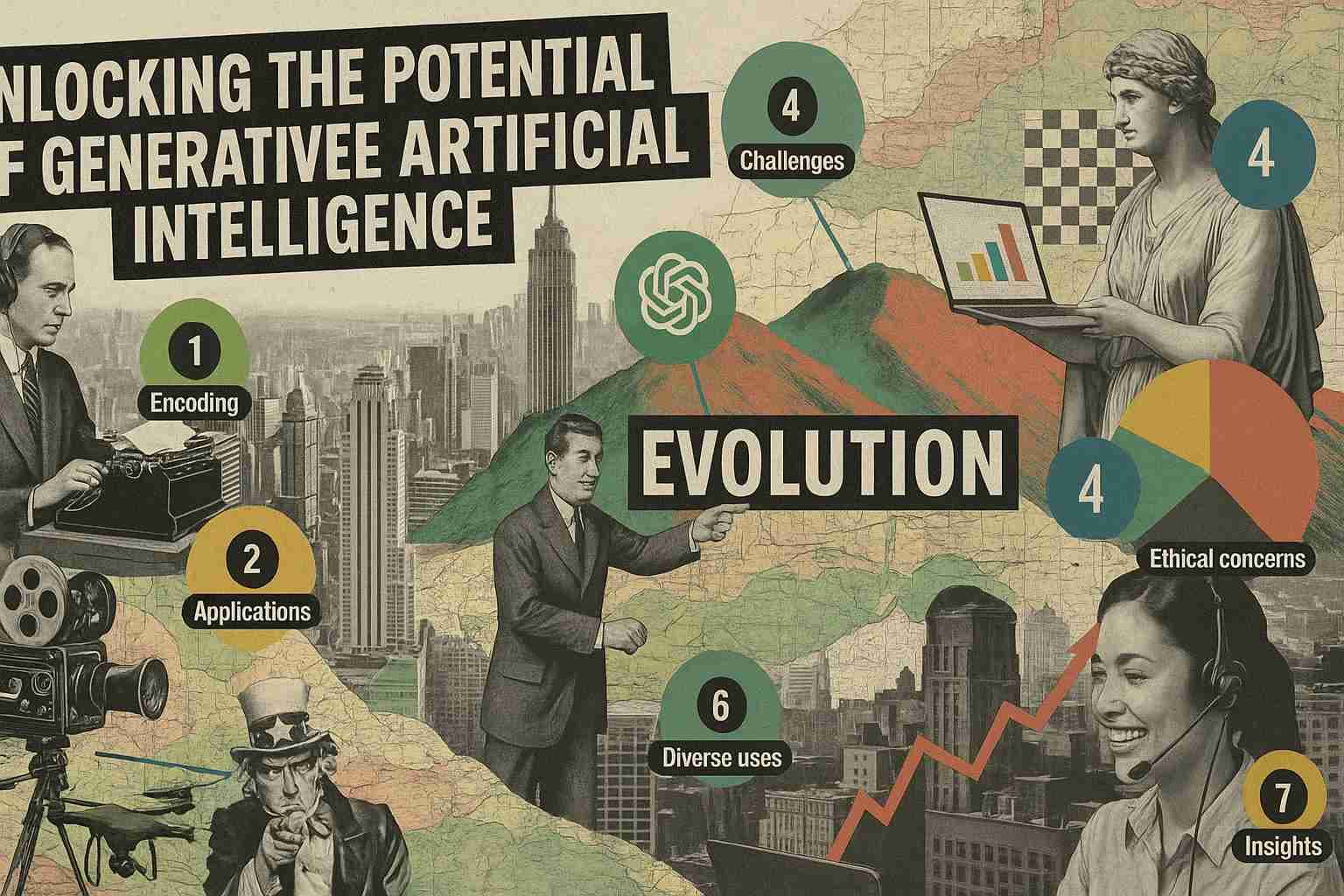
The Evolution of Generative AI Models in the Business Landscape
How Generative AI Models Have Evolved for Business Use
The evolution of generative AI in business is a story of rapid acceleration, marked by clear technological milestones and relentless commercial pressure. Early generative models were novelties—statistical engines producing simple text or images with little precision. The arrival of transformers and GANs changed the game, shifting AI from a support tool to a strategic asset. Transformers unlocked scale and context, enabling models to generate language, code, and even creative concepts with coherence. GANs brought realism to imagery, paving the way for synthetic media and advanced simulation. These advancements didn’t just improve outputs—they redefined what business could automate, create, and optimise.
From Text to 3D: The Expanding Capabilities of Generative AI
Today, generative AI is no longer limited to text or static visuals. The frontier has moved into 3D modeling, product design, and digital twins—domains where speed, iteration, and customisation drive competitive advantage. Businesses are deploying AI to prototype products, simulate environments, and generate assets for marketing or virtual experiences. This expansion isn’t theoretical; it’s operational. BMW Group, for example, leverages generative AI to automate reporting and scheduling, directly supporting assembly line efficiency and production targets (Yalantis, 2024). The result: faster cycles, fewer manual handoffs, and measurable gains in product quality. For creative leaders, this means AI is now shaping both the process and the outcome.
Major Technological Breakthroughs Impacting Business
What’s driving adoption isn’t just technical prowess—it’s business impact. AI model advancements have enabled companies to tackle high-value, high-volume tasks that previously demanded significant human resource. The data is clear: about 75% of the value from generative AI use cases is now concentrated in customer operations, marketing and sales, software engineering, and R&D (McKinsey, 2023). Customer support leads the charge, but the ripple effect is industry-wide. Klarna’s generative AI agent, for instance, now resolves the workload of 700 support agents across 23 markets, delivering faster customer resolutions and significant cost savings (IoT Analytics, 2024). These aren’t pilot projects—they’re operational shifts that recalibrate cost structures and service expectations.
Generative AI as a Core Business Enabler
The most significant shift is strategic: generative AI is moving from a peripheral tool to a core business enabler. Where once AI augmented repetitive work, it now underpins product design, customer experience, and operational decision-making. The business technology trends are clear—generative AI is not a bolt-on, but a foundation for innovation and scale. The companies that win will be those that integrate these models directly into their value chains, not just as a productivity lever, but as a source of differentiation. This is not about chasing hype; it’s about recognising that the evolution of generative AI in business is already reshaping the competitive landscape—and the pace is only accelerating.
Decision-Making with Generative AI: New Opportunities and Trade-Offs
Enhancing Business Decisions with Generative AI
Generative AI in business decision-making is no longer a theoretical advantage — it’s a practical lever for leaders who want to move fast and see around corners. Predictive insights and scenario planning, once the domain of specialist analysts, are now accessible at scale. AI-driven decisions can process market signals, historical data, and emerging trends with a velocity and granularity that the human brain simply can’t match. For multi-market campaigns, this means rapid iteration: creative concepts, media allocations, and even audience segmentations can be tested and refined before a single dollar is spent. The result is not just efficiency, but a new level of business intelligence with AI that can anticipate outcomes and inform strategy in near real-time.
Navigating the Risks of AI-Driven Choices
The flip side of this speed is risk. Over-reliance on AI-generated outputs can create a false sense of certainty. Models are only as good as their training data — and if that data is incomplete, biased, or outdated, the recommendations will be off the mark. There’s also the issue of explainability. When a generative model suggests a strategic pivot or a creative direction, it rarely provides a rationale that satisfies a boardroom. Blindly following AI guidance without understanding its assumptions or limitations is a shortcut to costly missteps. Leaders must interrogate outputs, not just accept them. The promise of automation is real, but so is the need for oversight.
Human-AI Collaboration in Strategic Planning
Effective decision-making in this new landscape isn’t about choosing AI over intuition — it’s about combining them. Human judgment remains essential, especially in ambiguous scenarios where context, brand nuance, or cultural sensitivity matter. The best results come when AI augments human expertise, providing options, stress-testing assumptions, and surfacing patterns that might otherwise go unnoticed. But the final call should rest with leaders who understand both the creative and commercial stakes. This collaboration is where generative AI in business decision-making delivers its highest value: accelerating analysis without abdicating accountability.
Trade-Offs: Speed vs. Accuracy, Automation vs. Oversight
Every advance comes with a trade-off. Generative AI accelerates the pace of decision-making, but speed can come at the cost of depth. Automation reduces manual effort, but unchecked, it can erode critical thinking and creative differentiation. The challenge for senior marketers and business leaders is to calibrate this balance. Use AI for what it does best — processing scale, surfacing insights, and stress-testing scenarios — but don’t cede the strategic high ground. The future of business intelligence with AI is not about replacing human decision-makers, but equipping them to make sharper, faster, and more informed calls. That’s the edge that will separate leaders from followers as this technology matures.
Challenges and Limitations of Generative AI in Business
Common Pitfalls When Implementing Generative AI
The challenges of generative AI in business begin with a simple truth: these systems are only as effective as their training data and integration context. Many businesses underestimate the operational friction of deploying generative AI at scale. Model hallucinations—where AI confidently generates plausible but incorrect or fabricated information—are not edge cases; they are endemic. When these errors slip into customer-facing content or internal decision tools, the reputational and operational risks are immediate. Integration is another stumbling block. Generative AI rarely plugs cleanly into legacy workflows or data stacks. Adapting infrastructure, retraining staff, and setting up robust monitoring are all non-trivial investments that often get glossed over in the pitch deck phase. The result: stalled pilots, ballooning costs, and projects that never leave the sandbox.
Addressing Bias and Hallucinations in Business AI
AI limitations are not just about technical glitches—they are about systemic bias and fairness. Generative models inherit the prejudices of their data, amplifying historical inequities or introducing new ones. For regulated industries, this is a compliance minefield. Even in less-regulated sectors, the reputational risk of biased outputs can erode trust quickly. Hallucinations compound the issue. Unlike deterministic systems, generative AI can invent “facts” with total confidence, making it difficult for even experienced operators to detect subtle misinformation. Businesses must invest in continuous auditing, human-in-the-loop review, and clear escalation paths for suspect outputs. Anything less is operational negligence.
Ensuring Reliability in AI-Generated Business Content
Content authenticity is now a frontline concern. Deepfakes and synthetic media are no longer theoretical risks—they are commercial realities. For brands, the threat is twofold: being impersonated by malicious actors, and inadvertently publishing AI-generated content that undermines credibility. The challenge is compounded by the sophistication of modern generative models, which can produce text, images, and video that evade basic detection tools. Verification workflows, digital watermarking, and cross-referencing with trusted data sources are essential, but they add friction and cost. Reliability is not a given; it must be engineered and maintained.
Scalability, Integration, and the Real Cost of Business AI
Scaling generative AI beyond pilot projects exposes business AI risks that are often invisible at small volumes. Data pipelines must be robust enough to feed models with current, high-quality information. Integration with existing systems—CRM, DAM, analytics—demands custom engineering, not off-the-shelf connectors. And every new integration point is a potential failure mode or security risk. The economics of generative AI are also frequently misunderstood. Training and inference costs can spike unpredictably, especially when models require constant retraining to stay relevant. Without a disciplined approach to measuring ROI and managing AI risks, businesses risk burning capital for marginal gains.
The challenges of generative AI in business are not theoretical—they’re operational, technical, and reputational. Success demands more than curiosity and a budget; it requires a clear-eyed assessment of limitations, active risk management, and a willingness to say no when the technology isn’t fit for purpose. For leaders, the only sustainable approach is to treat generative AI as a tool—powerful, but never infallible.
Ethical and Regulatory Considerations for Generative AI in Business
Navigating Ethical Risks of Generative AI in Business
The ethical considerations of generative AI in business are no longer theoretical. When algorithms shape creative outputs, campaign targeting, or even customer interactions, the risk of bias and discrimination is not just a technical bug—it’s a commercial liability. Businesses deploying generative AI must audit models for fairness, not just performance. Bias can creep in through training data or flawed prompt engineering. If unchecked, it undermines brand credibility and exposes organisations to reputational and legal risks. Senior leaders can’t delegate this to the IT department; AI ethics for business is a board-level concern.
Accountability is another non-negotiable. Generative AI can produce content or decisions at scale, but that scale multiplies the impact of errors. Who is responsible when an AI-generated campaign misrepresents a demographic or breaches advertising standards? The answer must be clear. Assigning accountability—internally and contractually with vendors—mitigates risk and signals maturity to regulators and customers alike.
Data Privacy and Compliance for AI Solutions
Data privacy and compliance are at the heart of the regulatory debate. Generative AI thrives on vast datasets, often scraped or sourced from public and proprietary channels. The line between innovative use and privacy violation is thin. Consent for data usage is not just a legal checkbox; it’s a strategic imperative. Mishandling personal data invites regulatory scrutiny, fines, and long-term erosion of customer trust. Every business deploying AI must have a clear stance on data privacy and compliance—especially as regulations tighten.
AI regulation is evolving rapidly. The EU’s AI Act, for example, sets a precedent for risk-based oversight, demanding transparency, explainability, and human oversight for high-impact systems. Other jurisdictions are moving in similar directions, and multinational campaigns must anticipate cross-border complexity. Businesses can’t afford to treat compliance as an afterthought; regulatory agility is now part of operational resilience.
Building Trust with Responsible AI Practices
Trust is the currency of AI adoption. Customers, partners, and regulators expect transparency in how AI systems are trained, deployed, and monitored. Responsible AI practices mean more than publishing an ethics statement. They require ongoing risk assessments, bias mitigation, and transparent reporting of AI-generated outputs. This is not about over-engineering or virtue signalling—it’s about making AI work for business without compromising stakeholder confidence.
The ethical considerations of generative AI in business are inseparable from commercial outcomes. Addressing them head-on—through robust governance, clear accountability, and proactive compliance—positions brands to lead, not react, as the regulatory landscape matures. In this environment, ethical lapses are not just PR problems; they are existential threats.
Business Model Disruption: Rethinking Value Creation with Generative AI
How Generative AI is Reshaping Business Models
Generative AI business model disruption isn’t about incremental process tweaks—it’s a wholesale reconfiguration of how value is created, captured, and scaled. Traditional supply chains, once defined by labor, expertise, and time, are now being compressed by algorithms that generate content, code, and even strategy at a fraction of the historical cost. This isn’t theoretical; it’s already visible in the rapid commoditization of creative outputs and the emergence of new, AI-first competitors. The pace and scale at which generative AI can iterate, test, and deliver outputs is forcing established players to rethink not just their workflows, but their core value proposition.
For senior leaders, the question isn’t whether generative AI will impact their business model, but how soon and how fundamentally. The companies that treat AI-driven innovation as a bolt-on efficiency play will be outflanked by those who see it as an engine for business model transformation. The winners will be those who reimagine their value chains—leveraging AI to create differentiated offerings, not just cheaper versions of existing products.
Adapting to Workforce Changes from AI Adoption
The introduction of generative AI is redrawing the map of organizational roles. Routine creative, analytical, and even some strategic functions are being automated or augmented, shifting the focus of human talent to higher-order tasks: curation, orchestration, and decision-making. This isn’t a simple matter of headcount reduction; it’s a reallocation of expertise. The value of deep domain knowledge is now tied to its ability to guide, refine, and direct AI outputs, rather than to execute repetitive tasks.
For creative industries, this raises urgent questions about intellectual property and ownership. When an AI generates a campaign concept, a script, or a design, who owns the rights? The legal frameworks are lagging, but the commercial reality is clear: the organizations that can rapidly integrate AI into their talent model—upskilling, redeploying, and redefining roles—will build a more agile, future-proof workforce. Those that can’t will see their cost structures and creative edge eroded by faster, AI-native rivals.
Unlocking New Value Streams with AI-Generated Content
Generative AI is not just a cost-saving tool; it’s a source of new revenue streams. AI-generated products and services—personalized video, automated design, synthetic media, and more—are already being packaged and sold at scale. The economics are compelling: near-zero marginal cost, infinite scalability, and the ability to address hyper-niche markets that were previously unviable.
This opens up opportunities for brands and agencies to move beyond traditional service models. Subscription-based creative platforms, dynamic content marketplaces, and even licensing of proprietary AI models are all on the table. The challenge is to move quickly: barriers to entry are low, and first-mover advantage is real. The organizations that experiment, iterate, and commercialize new AI-driven offerings will redefine what value creation looks like in their sector.
Strategies for Navigating Business Model Disruption
Adapting to AI disruption demands more than technical adoption—it requires strategic clarity and organizational courage. Leaders must audit their existing value chains, identify where AI can create leverage, and be prepared to cannibalize legacy revenue streams in pursuit of higher-margin, AI-enabled growth. This means investing in business innovation strategies that prioritize experimentation, cross-functional collaboration, and a relentless focus on outcomes over tradition.
Generative AI business model disruption is not a distant threat—it’s a present reality. The playbook is being written now by those willing to rethink, re
Critical Factors for Successful Adoption of Generative AI in Business
Adopting generative AI in business isn’t about chasing novelty—it’s about creating operational leverage and sustainable advantage. The difference between a pilot project and enterprise-wide impact hinges on a clear, commercial AI adoption strategy that addresses readiness, risk, and ROI from day one. Here’s what actually matters when moving from experimentation to scale.
Best Practices for Adopting Generative AI in Business
Start with a hard assessment of your current state. Infrastructure isn’t just cloud capacity—it’s about whether your data pipelines, integration layers, and governance frameworks can support real-time, high-volume AI workloads. Talent is next. If your teams lack machine learning engineers or AI-literate product leads, you’ll burn cash on consultancy with little internal capability built. Data quality is non-negotiable; generative models amplify noise as much as insight. Investing in data readiness upfront saves months of rework later.
Strategically, map AI use cases to business value, not just technical feasibility. Every project should have a clear path to measurable outcomes—cost reduction, revenue lift, or customer experience gains. Avoid the trap of proof-of-concept purgatory by setting commercial KPIs at the outset and tying them to the broader AI implementation roadmap.
Overcoming Barriers to AI Implementation
Risk is not theoretical. Ethics, privacy, and compliance are existential for brands operating at scale. Build cross-functional guardrails into every stage of your business AI implementation: legal, risk, and compliance teams must be involved from the start, not as afterthoughts. Develop and document clear policies for model transparency, data usage, and bias mitigation. Treat these as living frameworks, not one-off checkboxes—regulatory expectations will only tighten.
Change management is the silent killer of AI projects. Resistance isn’t just about fear of automation; it’s about the perceived threat to established processes and roles. Leaders must set the narrative: generative AI augments creative and analytical work, not replaces it. Early engagement, clear communication, and visible executive sponsorship are non-negotiable. Upskilling is equally critical—offer targeted training that goes beyond basic AI literacy to practical, role-specific applications.
Building an AI-Ready Organization
Scaling AI in business requires more than technical pilots. It demands organizational rewiring. Establish cross-functional squads—blending product, data, creative, and compliance—to accelerate delivery and embed accountability. Incentivize experimentation, but enforce commercial discipline: sunset initiatives that don’t deliver measurable impact.
ROI measurement is where most AI adoption strategies stall. Move beyond vanity metrics. Track end-to-end impact: time-to-market, margin improvement, error reduction, and customer retention. Build feedback loops into every deployment, using real business outcomes to refine models and inform future investment. The goal is not just to implement AI, but to create a learning organization that compounds value with every iteration.
In summary, successful adoption of generative AI in business is a function of readiness, risk management, and relentless focus on commercial impact. The organizations that win will treat AI not as a side project, but as a core driver of transformation—measured, managed, and scaled with intent.
Conclusion
Generative AI has become a defining force in business, not as a passing trend but as a catalyst for real operational change. The emergence of generative models in business is shifting the value equation: automation is no longer just about efficiency, but about unlocking new forms of creativity, accelerating decision cycles, and reducing friction between ideation and execution. Businesses that once viewed AI as a back-office tool now confront a reality where AI-driven innovation sits at the core of market differentiation.
We’ve seen that the impact of generative AI extends far beyond content creation or process automation. Its real significance lies in business process transformation—reshaping workflows, augmenting human capability, and enabling entirely new approaches to problem-solving. The most effective organisations are those that treat generative AI as a lever for strategic change, not just a technical add-on. This demands a clear-eyed view of both the upside and the operational realities: integration costs, talent gaps, and the challenge of scaling prototypes into robust, compliant systems.
Yet, as generative AI’s footprint grows, so does the weight of ethical responsibility. The risks—bias amplification, data privacy exposure, and model transparency—are not abstract. They are board-level concerns that require deliberate governance and continual oversight. Responsible adoption is not optional; it is foundational to trust, reputation, and long-term commercial viability. Leaders must ensure that frameworks for managing AI risks are not just written, but operationalised and enforced across the organisation.
In summary, the trajectory of generative AI in business is set: it will underpin the next wave of business innovation strategies, transform value chains, and redefine competitive advantage. The winners will be those who combine technical capability with strategic intent, and who embed ethics and governance into every stage of AI deployment. The future belongs to organisations that move beyond experimentation, building scalable, ethical, and commercially effective generative AI systems—delivering impact without compromise.
FAQs
How does Generative AI work?
Generative AI uses machine learning models, often built on neural networks, to analyze large data sets and learn underlying patterns. It then creates new content—text, images, video, or audio—by predicting what comes next based on its training. The core mechanism is probability-driven, not rule-based, which enables originality but demands rigorous data input.
What are the applications of Generative AI in business?
Generative AI is leveraged for rapid content creation, product design prototyping, personalized marketing, automated customer support, and data augmentation. It’s reshaping sectors from media and advertising to finance and healthcare by streamlining processes, reducing manual effort, and enabling new forms of customer engagement at scale.
What challenges does Generative AI face?
Key challenges include data quality, model bias, explainability, and high computational costs. Generative AI can amplify existing data flaws, generate unpredictable outputs, and often acts as a “black box” that’s difficult to audit. Scalability also hinges on significant infrastructure investment and ongoing technical oversight.
What ethical concerns are related to Generative AI technology?
Ethical risks include deepfakes, misinformation, copyright infringement, and privacy breaches. There’s also the question of accountability for AI-generated decisions. Regulatory frameworks are still catching up, leaving businesses exposed to reputational and legal risks if governance isn’t prioritized from the outset.
How is Generative AI transforming business processes?
Generative AI automates repetitive creative and analytical tasks, freeing up teams for higher-value work. It accelerates content pipelines, personalizes customer interactions, and enables rapid iteration in product and campaign development. The result: faster go-to-market cycles and improved operational efficiency, provided the integration is disciplined.
What is the future of Generative AI models?
Generative AI models are evolving toward greater contextual understanding and multimodal capabilities. Expect tighter integration with enterprise systems, improved guardrails for safety, and models tailored to specific industries. The next wave will prioritize transparency, control, and measurable business impact over novelty.
How can businesses successfully adopt Generative AI?
Effective adoption starts with clear objectives, robust data governance, and cross-functional collaboration. Pilot projects should be tightly scoped and outcomes measured against business KPIs, not hype. Upskilling teams and aligning legal, compliance, and IT are non-negotiable for sustainable, scalable deployment.
.webp)
Creative Collaboration Platform: The Backbone of Modern Creative WorkWhat is a creative collaboration platform?Clapboard defines a creative collaboration platform as the operational core for today’s distributed creative teams. This is not a collection of digital collaboration tools stitched together; Clapboard’s system

Understanding the Creative Production MarketplaceWhat is a Creative Production Marketplace?Clapboard defines a creative production marketplace as a structured ecosystem where brands, agencies, and production talent converge to execute video, advertising, and branded content at scale. Unlike the legacy agency or freelanREAD FULL ARTICLE

The Urgent Need for a Creative Production Operating SystemWhy Traditional Creative Production Models Break DownClapboard sees the creative production landscape shifting under pressure. Content velocity is no longer a buzzword—it’s a mandate. Modern advertising demands relentless output across dozens of channels, each wREAD FULL ARTICLE

JOIN THE NEWSLETTER.
Content Production insights, videos, books, and freebies, delivered to your inbox weekly


LEAVE A COMMENT
Your email address will not be published.