Whataburger's 'The Beacon' pairs Grammy winner Lainey Wilson with late-night drive-thru culture across a 16-state footprint as part of its 75th-anniversary

Whataburger and Lainey Wilson Light Up Late-Night America in The Beacon
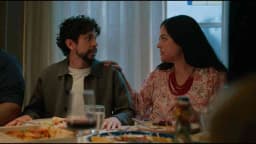
Whataburger's 'The Beacon' is a 30-second television commercial released in March 2025 in the United States, featuring Grammy Award-winning country artist Lainey Wilson as a familiar orange light on the road — a late-night constant for touring musicians and anyone far from home who finds comfort in a familiar meal.
The campaign debuted on March 11, 2025, according to MediaPost, and was created by McGarrah Jessee, Whataburger's long-standing agency of record. Production was handled by Tool of North America. The spot carries the subtitle 'A Taste of Home' in its commercial execution and anchors a broader ambassador relationship: Whataburger announced Wilson as its official 2025 brand ambassador in January 2025, as reported by MediaPost. The campaign is distributed across broadcast, cable, streaming, social, out-of-home, and programmatic media channels, reaching the chain's 16-state footprint and approximately 1,090 restaurant locations, per Clapboard's editorial research.
'The Beacon' is not a standalone activation. It forms a central creative pillar of Whataburger's year-long 75th-anniversary celebration in 2025, as noted by MediaPost and LBB Online, connecting the brand's half-century heritage to a contemporary cultural figure who embodies the transient, road-bound life that Whataburger restaurants have long served in the southern and central United States. By positioning the chain as a literal beacon — a glowing landmark visible from the highway after a long night on tour — the campaign frames late-night traditions not as indulgence but as emotional necessity. In the United States, where drive-thru dining and regional fast-food loyalty run deep, the creative choice to build around a touring musician's perspective is strategically deliberate and culturally specific. The Clapboard Score for 'The Beacon' is 60 out of 100.
Whataburger operates within one of the most contested segments of the United States food industry. The quick-service restaurant market in the US sits within a global QSR sector that market research firm 6W Research estimates at between 0.9 and 1.1 trillion dollars in 2025, growing at roughly 8 to 10 percent annually. Within that environment, Whataburger competes not by scale but by regional conviction, a strategic posture that 'The Beacon' expresses directly.
National competitors including McDonald's, which according to 6W Research generates an estimated 42.3 billion dollars in global revenue across more than 41,200 locations in 150 countries, and Burger King pursue mass-market universality. Whataburger's approach runs in the opposite direction. Rather than competing on ubiquity, the brand leans into its 16-state southern and central US footprint as a point of pride and differentiation. The choice of Lainey Wilson — a Louisiana-born, Nashville-based artist whose country music fanbase maps closely to Whataburger's geographic stronghold — is a precise demographic and cultural calculation, not a generic celebrity endorsement. According to News Designrush, Wilson's appointment as brand ambassador was announced in January 2025, framing the partnership as a year-long commitment rather than a one-off appearance.
The consumer insight underneath 'The Beacon' is the emotional weight of late-night traditions for people who live on the road. For touring musicians, long-haul drivers, and shift workers across the southern United States, a recognisable restaurant at a highway exit represents stability. McGarrah Jessee, which according to Indie Agency News has held the Whataburger account for more than 17 years, channels that insight into a narrative about belonging. In a food industry where most QSR advertising centres on price, speed, or novelty, this campaign stakes its ground on emotional memory — a meaningful strategic distinction in 2025.
McGarrah Jessee built 'The Beacon' around a single, sustaining image. The orange glow of a Whataburger sign at night functions as the campaign's visual and emotional anchor — a lighthouse metaphor rendered in fast-food neon, visible from a highway after hours of driving. That image requires restraint to work, and the 30-second format demands that every frame earns its place.
Production was carried out by Tool of North America, a production company with a substantial track record in US commercial work. Production credits beyond the company name for 'The Beacon' are not publicly documented in available sources. What is evident from the campaign's construction is a deliberate tonal choice: the spot favours warmth and stillness over kinetic energy. Where many food industry commercials reach for appetite-driven close-ups or comedic momentum, 'The Beacon' operates closer to a short film sensibility — unhurried, atmospheric, and grounded in a specific lived experience.
Lainey Wilson's presence as the campaign's creative centrepiece is not purely a media placement decision. As a Grammy Award-winning artist whose public persona is built on authenticity and Southern roots, she brings credibility to the late-night traditions narrative that a purely fictional character could not supply. According to LBB Online, 'The Beacon' represents Wilson's first major Whataburger creative execution following her January 2025 ambassador announcement, making the spot a formal introduction of the partnership to US audiences. McGarrah Jessee's creative approach continues a platform built over more than 17 years on the account, per Indie Agency News, treating 'The Beacon' as an evolution of an established brand voice rather than a creative reset. The result is a campaign that speaks most directly to audiences in the southern and central United States for whom Whataburger is already freighted with personal meaning.
 ARCHIVE
No verified performance data for 'The Beacon' is publicly available at the time of this analysis. The campaign launched on March 11, 2025, according to MediaPost, and its recency means that independently audited results — including television ratings, digital engagement figures, or sales attribution — have not entered the public record. What the campaign's structural architecture does reveal, however, is a brand making a high-confidence bet on emotional resonance over promotional mechanics.
The decision to distribute the spot across broadcast, cable, streaming, social, out-of-home, and programmatic channels simultaneously — reaching approximately 1,090 Whataburger locations across 16 states, per Clapboard's research — indicates a media investment consistent with a flagship anniversary campaign rather than a tactical promotion. The year-long ambassador commitment with Lainey Wilson, as reported by MediaPost and news.designrush.com, similarly signals that Whataburger and McGarrah Jessee are building toward cumulative brand equity rather than short-cycle conversion. In the United States food industry, that kind of sustained platform investment tends to generate stronger long-term brand preference metrics than promotional campaigns, though no specific figures for 'The Beacon' can yet be cited. The campaign's 60 out of 100 Clapboard Score reflects a well-executed creative execution with clear cultural logic, moderated by the absence of verifiable outcome data and the inherent challenge of distinguishing emotional sincerity from calculated sentimentality at this stage of the campaign's life.
'The Beacon' is a 30-second television commercial released by Whataburger in March 2025. It features country artist Lainey Wilson and frames Whataburger restaurants as a late-night constant for touring musicians and travellers across the southern and central United States, drawing on the emotional weight of familiar late-night traditions far from home.
McGarrah Jessee created 'The Beacon' and Tool of North America handled production. The campaign launched on March 11, 2025, according to MediaPost. McGarrah Jessee has served as Whataburger's agency of record for more than 17 years, per Indie Agency News, making this an evolution of a long-established creative partnership.
Whataburger announced Lainey Wilson as its official 2025 brand ambassador in January 2025, according to MediaPost. Wilson is a Grammy Award-winning country artist with Louisiana roots whose fanbase closely mirrors Whataburger's 16-state southern and central US footprint, making the partnership a culturally and geographically specific choice rather than a generic celebrity endorsement.
'The Beacon' is a central creative pillar of Whataburger's year-long 75th-anniversary celebration in 2025, as reported by MediaPost and LBB Online. The campaign distributed across broadcast, cable, streaming, social, out-of-home, and programmatic channels reaching approximately 1,090 Whataburger restaurants, anchoring the anniversary platform with sustained emotional storytelling across the US market.
'The Beacon' holds a Clapboard Score of 60 out of 100. The score reflects a well-crafted campaign with clear cultural logic and a strong celebrity fit in Lainey Wilson, moderated by the absence of publicly verified performance data and the challenge of distinguishing genuine emotional resonance from calculated sentimentality at this early stage of the campaign's life.
.webp)
Creative Collaboration Platform: The Backbone of Modern Creative WorkWhat is a creative collaboration platform?Clapboard defines a creative collaboration platform as the operational core for today’s distributed creative teams. This is not a collection of digital collaboration tools stitched together; Clapboard’s system


Understanding the Creative Production MarketplaceWhat is a Creative Production Marketplace?Clapboard defines a creative production marketplace as a structured ecosystem where brands, agencies, and production talent converge to execute video, advertising, and branded content at scale. Unlike the legacy agency or freelanREAD FULL ARTICLE

The Urgent Need for a Creative Production Operating SystemWhy Traditional Creative Production Models Break DownClapboard sees the creative production landscape shifting under pressure. Content velocity is no longer a buzzword—it’s a mandate. Modern advertising demands relentless output across dozens of channels, each wREAD FULL ARTICLE