 ARCHIVE
ExxonMobil Sugar Wings DDB Colombia Reframes Fuel as Freedom
How ExxonMobil 's Sugar Wings Campaign Reframes Fuel as Emotional Freedom in Colombia Sugar Wings...
Volkswagen Tree Guy Puts a Face on Blind-Spot Danger
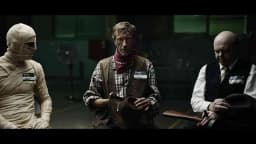
Volkswagen's "Tree Guy" is a 2013 German film campaign created by DDB Tribal Berlin that dramatises the brand's Side Assist blind-spot detection technology by personifying a roadside tree as a sentient hazard aware of the danger drivers cannot see.
Published in Germany in October 2013, the campaign centres on a single film asset in which an anthropomorphic tree at the roadside reacts to vehicles passing too close, embodying the unseen risk that Volkswagen's Side Assist system is engineered to eliminate. The creative logic is direct: if a hazard could speak, it would warn the driver. Since it cannot, Side Assist does. That substitution — the tree as surrogate alert system — gives an abstract driver-assistance feature a memorable, emotionally legible form. The campaign was developed by DDB Tribal Berlin, with production handled by Radical Media Berlin and direction by Greg Bray, whose work shapes the film's tone of wry, observational humour rather than conventional automotive spectacle.
The campaign's geographic anchor is the German market, where Volkswagen occupies its home territory and where safety technology features carry particular weight as differentiators in a competitive automotive landscape. According to Media Vw, Volkswagen Group delivered 9.73 million vehicles globally in 2013, representing approximately 11.4% of global vehicle sales that year as reported by autoweek.com. In Germany specifically, Volkswagen functions not merely as a car brand but as a cultural institution, which gives safety-focused communications both commercial and reputational stakes. "Tree Guy" sits within that context as product-led advertising that prioritises feature education without sacrificing creative distinctiveness. Clapboard's editorial record dates the campaign's submission as more than eleven years ago, placing it firmly within an era when automotive film advertising in Germany was beginning to lean harder into technology storytelling.
Volkswagen Side Assist is a driver-alert system designed to detect vehicles in and approaching blind spots, warning the driver through indicator light signals in the wing mirrors. Communicating this technology to a general audience presents a familiar strategic challenge: the feature is invisible during normal driving, its benefit is defined by an accident that does not happen, and its mechanism — a sensor system — is inherently abstract. DDB Tribal Berlin's strategic response was to make the hazard visible rather than the technology, transferring the drama from the car's interior electronics to the world outside the vehicle.
This approach reflects a well-established principle in safety advertising: consequence-led communication outperforms specification-led communication when the audience has no prior frame of reference for the product. By the time "Tree Guy" reached German screens in October 2013, the automotive safety technology segment was growing across European markets. Competitors including Mercedes-Benz and BMW had already introduced blind-spot monitoring systems under their own proprietary names, meaning Volkswagen's Side Assist was entering a category with established rival offerings rather than pioneering entirely new consumer territory. In that environment, creative distinctiveness becomes a strategic asset — a brand that makes safety feel more human and less clinical earns attention that specification sheets cannot.
The German automotive market in 2013 was operating within a global industry that, according to wardsauto.com, counted approximately 83.23 million new vehicles sold worldwide that year. Asia-Pacific represented 44.5% of that global volume as reported by autoweek.com, underscoring how competitive the broader landscape had become and why European manufacturers were investing in technology-differentiation narratives to defend premium positioning. For Volkswagen in its home German market, a campaign that made Side Assist feel intuitively necessary — rather than technically optional — served a clear commercial purpose, connecting a product feature to the kind of storytelling that earns genuine viewer attention.
Greg Bray directed "Tree Guy" for Radical Media Berlin, bringing to the project a sensibility attuned to character-driven comedy in short-form film — a register that suits the campaign's conceit precisely.
The film's central performance challenge is that its protagonist is a tree. Bray's direction resolves this by committing fully to the anthropomorphic premise: the tree is treated not as a visual metaphor but as a character with agency, reaction, and point of view. The cinematographer — whose full name is documented in production credits as beginning with "Christia" per Reclame Md, with the complete credit not fully available in public documentation — frames the roadside environment in a way that normalises the tree's presence before the comedy of its sentience lands. This restraint is what makes the absurdism work: the world around the tree behaves as if nothing is unusual, so the viewer's attention is drawn entirely to the hazard's perspective rather than distracted by stylised treatment of the environment.
The creative leadership at DDB Tribal Berlin brought a clear editorial voice to the project. Executive creative director Matthias Schmidt and chief creative officer Eric Schoeffler set the strategic and tonal frame, while creative directors Mark Isken and Nils Haseborg shaped the specific execution. Copywriters Christian Anhut and Rodrigo Linhares da Silva are credited with the verbal architecture of the campaign, and sound and music direction by Richard Blaha completes a production roster that, as documented by reclame.md, represents a well-resourced creative team working within Volkswagen's German advertising infrastructure. The result is a film that earns its runtime through character economy — communicating a technically specific safety feature through a creative device simple enough to be understood immediately and memorable enough to outlast the viewing experience. Production credits for the full cinematography role in the Volkswagen "Tree Guy" campaign are partially documented across public sources, with the complete surname not fully confirmed in available records.
No verified performance data for the Volkswagen "Tree Guy" campaign is publicly available. No sales lift, awareness tracking, brand consideration shift, media reach, or impressions figures have been documented in public sources, and no awards recognition for the campaign has been recorded in available industry databases.
Clapboard scores "Tree Guy" at 69 out of 100, a result that reflects the campaign's creative coherence and strategic clarity while acknowledging the limitations of a single-asset film execution without documented amplification or measurable outcome data.
Structurally, the campaign demonstrates several markers of effective product communication. The creative device — personifying the hazard rather than the detection system — solves a genuine communication problem without resorting to technical exposition. The film format is appropriate for the emotional register the campaign requires: comedy dependent on timing, reaction, and sustained character commitment cannot be delivered in static media. The single-asset approach, while limiting in terms of reach architecture, concentrates creative investment and avoids the dilution that can affect multi-format campaigns where tonal consistency is harder to maintain.
The campaign's primary structural limitation is the absence of any documented media strategy beyond the film itself. Without evidence of how the asset was distributed, in what contexts it appeared, or how it was supported by paid or earned media in the German market, it is not possible to assess whether the creative quality translated into meaningful audience exposure. In a home market as competitive as Germany — where, according to media.vw.com, Volkswagen operates under significant brand scrutiny — the gap between creative excellence and campaign effectiveness is bridged by distribution strategy, and that dimension of "Tree Guy" remains unverifiable from public sources.
Volkswagen's Tree Guy is a 2013 German film campaign by DDB Tribal Berlin promoting the brand's Side Assist blind-spot detection technology. The film personifies a roadside tree as a sentient hazard that reacts to passing vehicles, making an invisible safety feature emotionally immediate and easy to understand without technical explanation.
Greg Bray directed the Volkswagen Tree Guy film, with production handled by Radical Media Berlin. The creative team at DDB Tribal Berlin included executive creative director Matthias Schmidt, chief creative officer Eric Schoeffler, and creative directors Mark Isken and Nils Haseborg, as documented by reclame.md and clapboard.com.
Tree Guy advertises Volkswagen Side Assist, a driver-alert system that detects vehicles in and approaching the driver's blind spot and signals a warning through the wing mirrors. The 2013 campaign communicates this feature by dramatising the roadside hazard's perspective rather than explaining the sensor technology directly.
DDB Tribal Berlin created Volkswagen Tree Guy, published in Germany in October 2013. DDB Tribal Berlin served as the lead agency, with Radical Media Berlin handling film production. The campaign represents one of several DDB-produced Volkswagen safety communications in the German market during this period, according to clapboard.com.
Tree Guy shares creative lineage with Volkswagen's earlier Tree, Rock, Moose print campaign from June 2010, also created by DDB and published in Germany, as documented by clapboard.com. Both campaigns dramatise roadside hazards through personified or symbolic objects, though no formal campaign continuity between the two executions has been publicly documented.
Clapboard scores Volkswagen Tree Guy at 69 out of 100. The score reflects the campaign's strong creative coherence and clear strategic rationale in communicating Side Assist technology, balanced against the absence of verified performance data, documented media distribution strategy, and awards recognition in publicly available industry records.
.webp)
Creative Collaboration Platform: The Backbone of Modern Creative WorkWhat is a creative collaboration platform?Clapboard defines a creative collaboration platform as the operational core for today’s distributed creative teams. This is not a collection of digital collaboration tools stitched together; Clapboard’s system


Understanding the Creative Production MarketplaceWhat is a Creative Production Marketplace?Clapboard defines a creative production marketplace as a structured ecosystem where brands, agencies, and production talent converge to execute video, advertising, and branded content at scale. Unlike the legacy agency or freelanREAD FULL ARTICLE

The Urgent Need for a Creative Production Operating SystemWhy Traditional Creative Production Models Break DownClapboard sees the creative production landscape shifting under pressure. Content velocity is no longer a buzzword—it’s a mandate. Modern advertising demands relentless output across dozens of channels, each wREAD FULL ARTICLE