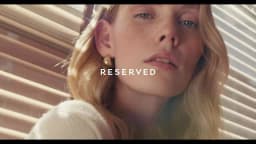
Vogue's 'The Short Report With Sabrina Carpenter' is a 2025 parody newscast fashion film starring Carpenter as four fictional correspondents for her March

How Vogue Turned Sabrina Carpenter Into a One-Woman News Network
Vogue's "The Short Report With Sabrina Carpenter" is a 2025 fashion film in which pop star Sabrina Carpenter portrays four fictional television correspondents inside a parody newsroom format, released in the United States as part of the publication's March 2025 cover package.
Vogue published the film on February 10, 2025, according to vogue.com, with the accompanying March 2025 cover story following on February 11, 2025. The production places Carpenter at the centre of every segment: she anchors the broadcast as Katrina Sharpenter, covers red-carpet arrivals as Serena Carpen-Terra, delivers a meteorological forecast as Christina Barbenter, and files a sports report as Regina Harpenter. Each persona is a playful phonetic riff on the star's own surname, a recurring in-joke that rewards attentive viewers and amplifies social shareability. The format borrows the visual language of twenty-four-hour cable news — desk sets, lower-third chyrons, correspondent handoffs — and filters it through Vogue's signature high-fashion aesthetic, creating a film that sits equally at home on a fashion media page and in a social-video feed.
The campaign was produced for the United States market and released as a single film asset, classified by Clapboard's editorial team as a parody or borrowed-format execution. It earned a Clapboard Score of 86 out of 100, reflecting strong marks for concept originality, performance craft, and format fluency. In the United States, where fashion-media brands compete fiercely for audience attention across streaming, social, and editorial channels, Vogue's decision to lead its March 2025 cover moment with a fully produced comedy-news vehicle signals a deliberate shift in how luxury publishing frames its celebrity storytelling. The film targets a digitally fluent audience already familiar with Carpenter's self-aware pop persona — the espresso-obsessed, self-deprecating chart act whose cultural footprint expanded sharply through 2024 — and meets that audience in a format native to short-form video consumption without sacrificing the production values Vogue's brand equity demands.
Vogue recognised a specific cultural moment in Sabrina Carpenter's crossover appeal. By early 2025, Carpenter had established herself in the United States not merely as a chart presence but as a performer whose public image was built substantially on wit, self-reference, and an audience relationship that rewarded irony over sincerity. Vogue's editorial team, as documented on vogue.com, framed the March 2025 cover package around that persona rather than suppressing it in favour of conventional fashion portraiture.
The strategic logic is grounded in the competitive dynamics of fashion media publishing in the United States. Rival titles including Harper's Bazaar and Elle regularly deploy celebrity cover packages anchored in editorial photography and longform interview text. Vogue's choice to lead with a comedy film — rather than a behind-the-scenes video or a straightforward interview clip — represents a deliberate differentiation of format. The parody newscast structure allows the brand to generate multiple distinct content moments from a single production: each correspondent segment functions as a standalone clip for social distribution while the full film rewards sustained viewing.
The fashion magazine publishing market in the United States sits within a broader sector that, according to Dataintelo, is estimated at approximately one point one eight billion dollars globally in 2025, with a compound annual growth rate of around three percent through 2031. In that environment, digital engagement metrics and social-platform reach have become primary indicators of a campaign's commercial value alongside traditional circulation figures. Vogue's strategic shift toward social-first celebrity coverage accelerated following the pandemic period, according to condenast.com, with the Condé Nast parent organisation investing in short-form video production for platforms including TikTok and Instagram Reels. "The Short Report" represents a maturation of that strategy: a film built for social fragmentation but produced at editorial-film scale.
The film was directed by Max Bartick, according to production records associated with the campaign, with Harbinger personnel involved in the production process. The creative execution rests almost entirely on Carpenter's ability to sustain four distinct comic registers within a single continuous format — a performance demand closer to sketch television than conventional fashion filmmaking.
Each alter ego is differentiated through costuming, delivery tempo, and set design rather than heavy prosthetics or digital manipulation, a constraint that keeps the film visually cohesive with Vogue's fashion identity while foregrounding Carpenter's range as a performer. Katrina Sharpenter, the news anchor, operates at a clipped, authoritative cadence; Serena Carpen-Terra adopts the breathless register of live red-carpet broadcasting; Christina Barbenter's weather segment leans into innuendo with deliberate deadpan; and Regina Harpenter's sports reporting closes the film with the absurdist escalation that parody formats depend on for resolution. The pacing between segments mirrors genuine broadcast television segues, making the format recognition immediate for the target audience in the United States.
The production design deploys recognisable broadcast furniture — the curved anchor desk, the chromakey weather wall, the standing-reporter position — and renders each in a palette that reads simultaneously as news-set functional and Vogue-adjacent aspirational. Lower-third graphics carry the fictional correspondent names, extending the alter-ego joke through graphic design as well as performance. The result is a film that functions as both fashion content and comedy content, a dual classification that expands its potential distribution surface across editorial, entertainment, and fan-driven social channels. In the United States, where fashion film as a format has been explored by brands from luxury houses to mass-market retailers, the newsroom parody structure distinguishes this execution from the ambient or runway-adjacent films that dominate the category.
The film generated verifiable audience engagement at scale. According to the archive record associated with the campaign, "The Short Report With Sabrina Carpenter" accumulated two million three hundred seventy thousand one hundred seventy views, one hundred forty-four thousand four hundred and one likes, and two thousand and fourteen comments across its documented distribution window. These figures position the film among the higher-performing single-asset fashion video productions in Vogue's recent output, though no independent audit of these numbers has been published by a third-party measurement organisation.
No trade-press performance reviews from Campaign, Ad Age, Adweek, The Drum, or Contagious are publicly available for this campaign. Assessment of structural effectiveness therefore draws on the film's design logic. The parody format generates four discrete social clips from one production, multiplying distribution opportunities without proportional increase in production cost. Carpenter's established fanbase in the United States provides a guaranteed first-wave audience whose engagement behaviour — sharing, quoting, and reacting to comedy content — is well suited to algorithmic amplification on video platforms. The alter-ego device also generates press-friendly moments: each fictional correspondent name was reported and quoted across fan communities, according to activity documented on reddit.com, extending the campaign's conversational footprint beyond the initial publication window.
Clapboard scores this campaign 86 out of 100, reflecting the strength of its concept, the precision of its execution, and its clear alignment between Vogue's editorial brand and Carpenter's public persona. The score acknowledges the film's effectiveness as both a cover-launch vehicle and a standalone piece of fashion entertainment content within the United States market.
"The Short Report With Sabrina Carpenter" is a 2025 Vogue fashion film in which Carpenter plays four fictional news correspondents inside a parody newsroom. Released on February 10, 2025, in the United States, it served as the primary video component of Carpenter's Vogue March 2025 cover package, according to vogue.com.
The film was directed by Max Bartick, according to production records associated with the campaign. Harbinger personnel were also involved in the production. No additional crew credits have been publicly confirmed by Vogue or by a named trade-press source covering the March 2025 cover package.
Sabrina Carpenter plays four alter egos in the film. They are Katrina Sharpenter, a news anchor; Serena Carpen-Terra, a red-carpet correspondent; Christina Barbenter, a meteorologist; and Regina Harpenter, a sports reporter. Each name is a phonetic variation of Carpenter's own surname, according to vogue.com.
The film accumulated over two million three hundred seventy thousand views, alongside more than one hundred forty-four thousand likes and two thousand comments, according to the archive record for the campaign. No independent third-party audit of these figures has been published by an external measurement organisation.
Clapboard awarded "The Short Report With Sabrina Carpenter" a score of 86 out of 100. The score reflects strong performance across concept originality, comedic execution, and alignment between Vogue's editorial identity and Carpenter's established public persona in the United States market.
The campaign is classified by Clapboard as a parody or borrowed-format execution, distinguishing it from ambient or runway-adjacent fashion films common among competitors including Harper's Bazaar and Elle. Its multi-persona structure generates several distributable social clips from one production, a format advantage in the United States digital publishing environment.
.webp)
Creative Collaboration Platform: The Backbone of Modern Creative WorkWhat is a creative collaboration platform?Clapboard defines a creative collaboration platform as the operational core for today’s distributed creative teams. This is not a collection of digital collaboration tools stitched together; Clapboard’s system


Understanding the Creative Production MarketplaceWhat is a Creative Production Marketplace?Clapboard defines a creative production marketplace as a structured ecosystem where brands, agencies, and production talent converge to execute video, advertising, and branded content at scale. Unlike the legacy agency or freelanREAD FULL ARTICLE

The Urgent Need for a Creative Production Operating SystemWhy Traditional Creative Production Models Break DownClapboard sees the creative production landscape shifting under pressure. Content velocity is no longer a buzzword—it’s a mandate. Modern advertising demands relentless output across dozens of channels, each wREAD FULL ARTICLE